 Kwisi: O dinosaure efe?
 Ntwa ya didinosaure
 Peiso ya didinosaure
 Dipapadi tse nyane tsa didinosaure
 Albamo ya ditikara
 Manane a TOP a didinosaure
 Nkgethele!
Gravisaurus
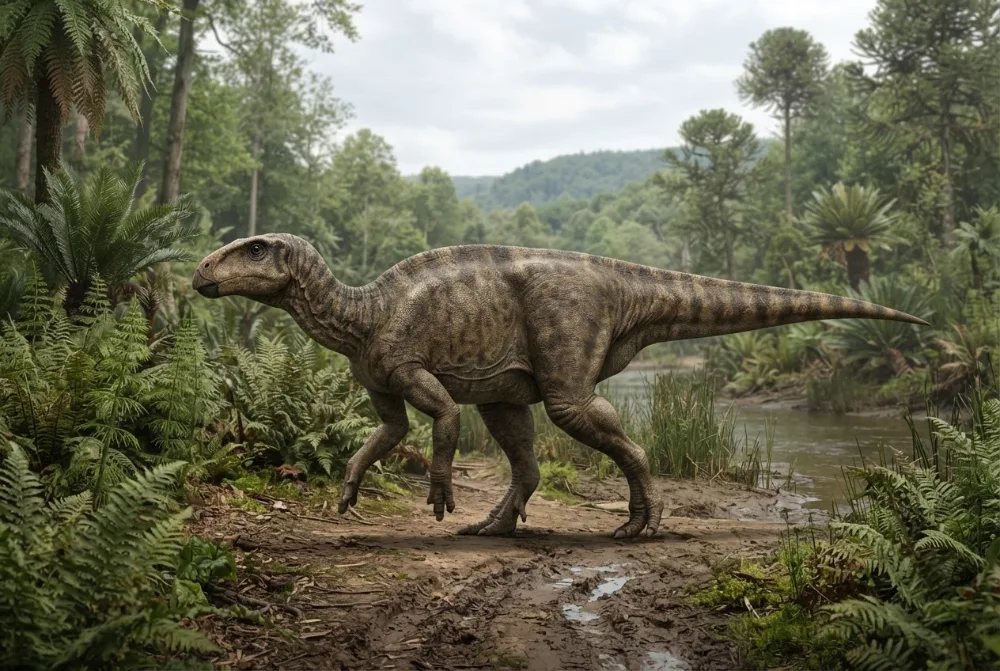
Gravisaurus was a heavy, plant-eating dinosaur that lived in what is now Niger, Africa, about 112 million years ago. It had a small head, a long neck, a round body, and strong front legs with big claws. Scientists think it moved slowly and may have looked a bit like a giant ground sloth.1
E phetse neng?
E ne e le kgolo hakae?
E ne e le telele hakae?
E ne e phahame hakae?
E ne e le boima hakae?
 telele jwaloka dikoloi tse 2 tse pakilweng ka mola🍌telele jwaloka dibanana tse 50 di behilwe ka mola
 e batla e le boima jwaloka tlou🍉boima jwaloka mahapu a 1100🎒boima jwaloka ditlelase tse feletseng tse 7 tsa bana ba sekolo🐻❄️boima jwaloka dibere tse tshweu tse 12🏃e ne e ka matha dimitara tse 100 ka metsotswana e 16 (motho ya lebelo ka ho fetisisa o hloka 9,6)
Gravisaurus e ne e le kgolo hakae ha e bapiswa le WENA?
Ke dipalo feela ho browser ya hao. Ha ho letho le bolokwang kapa le romelwang kae kapa kae.
E ne e le lebelo hakae?


Dintlha tse monate
Gravisaurus was first described in 1988 by paleontologist Souad Chabli in her PhD thesis, but the name was not officially published until 1999.21
Its thumb spike was huge, much bigger than in other iguanodonts.1
Gravisaurus may have been the first ornithischian dinosaur with graviportal anatomy, meaning its legs were built to support a very heavy body.1
Its stomach was only about 70 centimetres (2 feet 4 inches) off the ground when it stood on all fours.1
Gravisaurus lived in a forested river environment alongside other dinosaurs like Ouranosaurus, Nigersaurus, and the giant crocodile Sarcosuchus.1
Some scientists think Gravisaurus behaved like a hippopotamus, spending time in water and moving slowly on land.1
Dipotso tse botswang haholo ka Gravisaurus
?How big was Gravisaurus?
Gravisaurus was about 7 to 9 metres (23 to 30 feet) long and 2 metres (6.6 feet) tall on all fours. It weighed between 2.5 and 5.5 tonnes (2.8 to 6.1 short tons), which is as heavy as a large hippo.3
?What did Gravisaurus eat?
Gravisaurus was a plant-eater. It lived in a forested area with soft plants like ferns and horsetails, which it likely ate.3
?Did Gravisaurus have any predators?
Yes, Gravisaurus lived alongside big meat-eaters like the spinosaurid Suchomimus and the carcharodontosaurid Eocarcharia. Its huge thumb spike was probably used for defense.3
?Could Gravisaurus swim?
Some scientists think Gravisaurus may have behaved like a hippo, spending time in water. Its heavy body and strong legs suggest it could move in rivers, but nobody knows for sure if it swam.3
?Why did Gravisaurus have a thumb spike?
Gravisaurus had a massive thumb spike that scientists think was used for defense against predators.3
?Is Gravisaurus a dinosaur?
Yes, Gravisaurus is a dinosaur. It is a type of iguanodont ornithischian dinosaur from the Early Cretaceous period.3
Bakeng sa ditsebi tsa didinosaure
- Lebitso la saense
- Gravisaurus
- E rehilwe ke
- Chabli 19884
- Sehlopha
- Dija-dimela tse nang le melomo
- Lelapa / leloko
- Iguanodontoidea4
- Tlhophiso
- Ornithischia > Ornithopoda > Iguanodontia4
- Dilemo tsa mafika
- dilemo tse dimilione tse 113 ho isa ho 100 (Albian)4
- Direkoto tsa difosili
- 1 ho The Paleobiology Database4
- Ho sibollwa
- The first skeleton of Gravisaurus was found in 1965 by French paleontologist Philippe Taquet in the Tenere desert of Niger. It was named Gravisaurus tenerensis by Souad Chabli in 1988, but later renamed Lurdusaurus arenatus in 1999.12
- E sa ntse e phehwa kgang
- Scientists disagree on how heavy Gravisaurus was. One estimate says about 5.5 tonnes, while another says only 2.5 tonnes.1
Moo dintlha di tswang teng
- Lurdusaurus (en.wikipedia.org)
- Etude anatomique et systematique de gravisaurus tenerensis n. G. N. Sp. Dinosaurien, ornithischien) du gisement de gadoufaoua (aptien du niger) | Theses.fr (theses.fr)
- Lurdusaurus (en.wikipedia.org)
- Gravisaurus in The Paleobiology Database (CC BY 4.0): dilemo, dibaka, dibopeho tsa mafika, tlhophiso.
Ntlha e nngwe le e nngwe leqepheng lena e na le nomoro e supang mohlodi wa yona. Haeba re fositse ho hong, re kopa tshwarelo, re balatedi ba didinosaure, ha re koranta ya saense. Re bolelle ho [email protected] mme re tla e lokisa.
 Rex o lapile! Dino Wiki ke projeke ya ntate bakeng sa mora wa hae ya ratang didinosaure, ke mahala, ha ho dipapatso, ha ho disebedi. Batho ba baholo ba ka fepa Rex seneke ho thusa hore e dule e le inthaneteng.Fepa Rex
 Iguanodon
 Tenontosaurus
 Thescelosaurus
 Zalmoxes
 Camptosaurus
 Rhabdodon
 Stegosaurus
 Archaeopteryx
 Giganotosaurus
 Microraptor
 Deinonychus
 Baryonyx