 Kwisi: O dinosaure efe?
 Ntwa ya didinosaure
 Peiso ya didinosaure
 Dipapadi tse nyane tsa didinosaure
 Albamo ya ditikara
 Manane a TOP a didinosaure
 Nkgethele!
Hudiesaurus
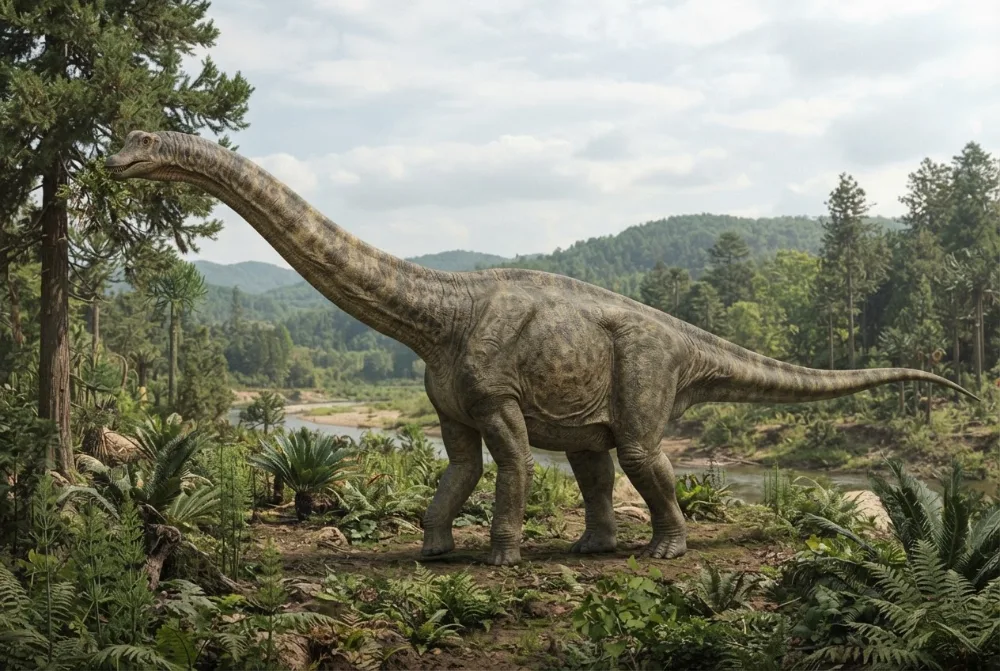
Hudiesaurus was a gigantic, long-necked plant-eater that stomped through Late Jurassic China. It was one of the biggest dinosaurs ever, with a neck so long it could probably reach high into the treetops. Its name comes from the butterfly-like split on its backbone spines.1
E phetse neng?
E ne e le kgolo hakae?
E ne e le telele hakae?
E ne e phahame hakae?
E ne e le boima hakae?

 telele jwaloka dikoloi tse 7 tse pakilweng ka mola🍌telele jwaloka dibanana tse 180 di behilwe ka mola🍉boima jwaloka mahapu a 11000🎒boima jwaloka ditlelase tse feletseng tse 69 tsa bana ba sekolo🐻❄️boima jwaloka dibere tse tshweu tse 120🏢e phahame hoo e ka nyarelang ka fensetere mokatong wa 2🏃e ne e ka matha dimitara tse 100 ka metsotswana e 40 (motho ya lebelo ka ho fetisisa o hloka 9,6)
Hudiesaurus e ne e le kgolo hakae ha e bapiswa le WENA?
Ke dipalo feela ho browser ya hao. Ha ho letho le bolokwang kapa le romelwang kae kapa kae.
E ne e le lebelo hakae?


Dintlha tse monate
Hudiesaurus might have been as long as three school buses parked end to end, reaching up to 32 metres (105 feet).1
Its backbone had a split spine at the top, which helped strong neck muscles attach. This gave it extra control over its long neck.1
The only definite fossil is a single backbone, but it was huge, measuring 55 centimetres (22 inches) long.1
Hudiesaurus lived about 154 to 143 million years ago, during the Late Jurassic period.1
Some bones that were once thought to be Hudiesaurus are now given to another dinosaur called Rhomaleopakhus.1
It had air-filled cavities in its backbone, which made its huge bones lighter, like a bird's bones.1
Dipotso tse botswang haholo ka Hudiesaurus
?How big was Hudiesaurus?
It was one of the largest dinosaurs, possibly reaching 32 metres in length and weighing 55 tonnes. Some estimates put it at 30.5 metres and 44 tonnes.1
?What did Hudiesaurus eat?
It was a plant-eater, eating leaves and other vegetation. As a sauropod with a long neck, it could reach high into trees or browse low plants.1
?When did Hudiesaurus live?
It lived during the Late Jurassic period, about 154 to 143 million years ago.1
Mosenyi wa ditshomo
Tshomo: Hudiesaurus is sometimes said to be a meat-eater because of its big teeth.
Nnete: Actually, Hudiesaurus was a plant-eater. Its teeth were for stripping leaves, not for hunting.1
Bakeng sa ditsebi tsa didinosaure
- Lebitso la saense
- Hudiesaurus
- E rehilwe ke
- Dong 19972
- Sehlopha
- Melala e melelele
- Lelapa / leloko
- Mamenchisauridae2
- Tlhophiso
- Sauropodomorpha > Sauropoda2
- Dilemo tsa mafika
- dilemo tse dimilione tse 152 ho isa ho 143 (Kimmeridgian / Tithonian)2
- Dibopeho tsa mafika
- Kalazha2
- Dinaha
- Tjhaena2
- Direkoto tsa difosili
- 1 ho The Paleobiology Database2
- Ho sibollwa
- Hudiesaurus was named by Chinese paleontologist Dong Zhiming in 1997, after the Sino-Japanese Silk Road Expedition found its fossils in 1993 near Qiketai, China.1
- E sa ntse e phehwa kgang
- Scientists still debate whether the single backbone came from the neck or the back, which changes the size estimate.1
Moo dintlha di tswang teng
- Hudiesaurus (en.wikipedia.org)
- Hudiesaurus in The Paleobiology Database (CC BY 4.0): dilemo, dibaka, dibopeho tsa mafika, tlhophiso.
Ntlha e nngwe le e nngwe leqepheng lena e na le nomoro e supang mohlodi wa yona. Haeba re fositse ho hong, re kopa tshwarelo, re balatedi ba didinosaure, ha re koranta ya saense. Re bolelle ho [email protected] mme re tla e lokisa.
 Rex o lapile! Dino Wiki ke projeke ya ntate bakeng sa mora wa hae ya ratang didinosaure, ke mahala, ha ho dipapatso, ha ho disebedi. Batho ba baholo ba ka fepa Rex seneke ho thusa hore e dule e le inthaneteng.Fepa Rex
 Brachiosaurus
 Diplodocus
 Brontosaurus
 Argentinosaurus
 Camarasaurus
 Morosaurus
 Allosaurus
 Compsognathus
 Camptosaurus
 Nanosaurus
 Rhamphorhynchus
 Ceratosaurus