 Kwisi: O dinosaure efe?
 Ntwa ya didinosaure
 Peiso ya didinosaure
 Dipapadi tse nyane tsa didinosaure
 Albamo ya ditikara
 Manane a TOP a didinosaure
 Nkgethele!
Kaatedocus
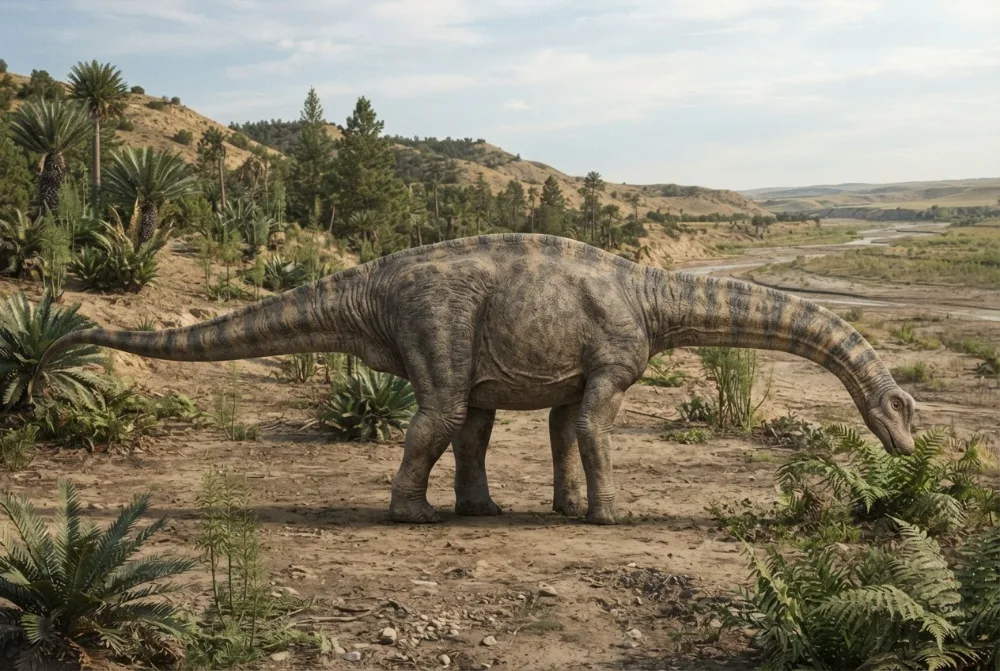
Kaatedocus was a long-necked sauropod that lived in what is now Wyoming during the Late Jurassic. It was smaller than many of its relatives, only about 14 metres long. Its well-preserved skull and neck helped scientists learn how sauropods held their heads.12
E phetse neng?
E ne e le kgolo hakae?
E ne e le telele hakae?
E ne e phahame hakae?
kakanyo
 telele jwaloka dikoloi tse 3 tse pakilweng ka mola🍌telele jwaloka dibanana tse 78 di behilwe ka mola🏃e ne e ka matha dimitara tse 100 ka metsotswana e 21 (motho ya lebelo ka ho fetisisa o hloka 9,6)
Kaatedocus e ne e le kgolo hakae ha e bapiswa le WENA?
Ke dipalo feela ho browser ya hao. Ha ho letho le bolokwang kapa le romelwang kae kapa kae.
E ne e le lebelo hakae?


Dintlha tse monate
Kaatedocus was named in 2012 by paleontologists Emanuel Tschopp and Octávio Mateus.1
Its name comes from the Crow Indian word 'kaate' meaning 'small' and 'docus' from Diplodocus, so 'small beam'.1
The only known specimen includes a nearly complete skull and a neck made of at least 14 vertebrae.1
The skull and neck together measured about 3.8 metres (12 feet) long.1
The fossils were originally thought to belong to Barosaurus or Diplodocus before being recognized as a new dinosaur.2
Scientists used CT scans and 3D printing to study Kaatedocus's neck vertebrae and learn how sauropods held their necks upright.1
Dipotso tse botswang haholo ka Kaatedocus
?How big was Kaatedocus?
About 14 metres (46 feet) long. That is smaller than many of its relatives like Diplodocus.12
?What did Kaatedocus eat?
Plants. It was a sauropod with peg-like teeth at the front of its mouth, good for stripping leaves.2
?When did Kaatedocus live?
It lived during the Late Jurassic, about 155 million years ago.1
?Why is it called Kaatedocus?
Its name comes from the Crow Indian word 'kaate' meaning 'small' and 'docus' from Diplodocus, so 'small beam'.1
Mosenyi wa ditshomo
Tshomo: Some scientists thought Kaatedocus was just a young Barosaurus or Diplodocus.
Nnete: Kaatedocus is now considered a distinct genus based on unique features in its skull and vertebrae.2
Bakeng sa ditsebi tsa didinosaure
- Lebitso la saense
- Kaatedocus
- E rehilwe ke
- Tschopp and Mateus 20134
- Sehlopha
- Melala e melelele
- Lelapa / leloko
- Dicraeosauridae4
- Tlhophiso
- Sauropodomorpha > Sauropoda > Diplodocoidea4
- Dilemo tsa mafika
- dilemo tse dimilione tse 155 ho isa ho 149 (Kimmeridgian)4
- Dibopeho tsa mafika
- Morrison4
- Dinaha
- Amerika4
- Direkoto tsa difosili
- 1 ho The Paleobiology Database4
- Ho sibollwa
- Fossils were first excavated in 1934 by Barnum Brown's team at Howe Quarry in Wyoming. The dinosaur was named Kaatedocus siberi in 2012 by Emanuel Tschopp and Octávio Mateus.1
- E sa ntse e phehwa kgang
- Scientists are not sure if Kaatedocus is a distinct genus or a juvenile of another sauropod like Barosaurus.2
Moo dintlha di tswang teng
- Kaatedocus (en.wikipedia.org)
- Jurassic Boneyard Yields Hidden Dinosaur | National Geographic (nationalgeographic.com)
- PBDB Taxon (paleobiodb.org)
- Kaatedocus in The Paleobiology Database (CC BY 4.0): dilemo, dibaka, dibopeho tsa mafika, tlhophiso.
Ntlha e nngwe le e nngwe leqepheng lena e na le nomoro e supang mohlodi wa yona. Haeba re fositse ho hong, re kopa tshwarelo, re balatedi ba didinosaure, ha re koranta ya saense. Re bolelle ho [email protected] mme re tla e lokisa.
 Rex o lapile! Dino Wiki ke projeke ya ntate bakeng sa mora wa hae ya ratang didinosaure, ke mahala, ha ho dipapatso, ha ho disebedi. Batho ba baholo ba ka fepa Rex seneke ho thusa hore e dule e le inthaneteng.Fepa Rex
 Brachiosaurus
 Diplodocus
 Brontosaurus
 Argentinosaurus
 Camarasaurus
 Morosaurus
 Allosaurus
 Compsognathus
 Camptosaurus
 Nanosaurus
 Rhamphorhynchus
 Ceratosaurus