 Kwisi: O dinosaure efe?
 Ntwa ya didinosaure
 Peiso ya didinosaure
 Dipapadi tse nyane tsa didinosaure
 Albamo ya ditikara
 Manane a TOP a didinosaure
 Nkgethele!
Magnamanus
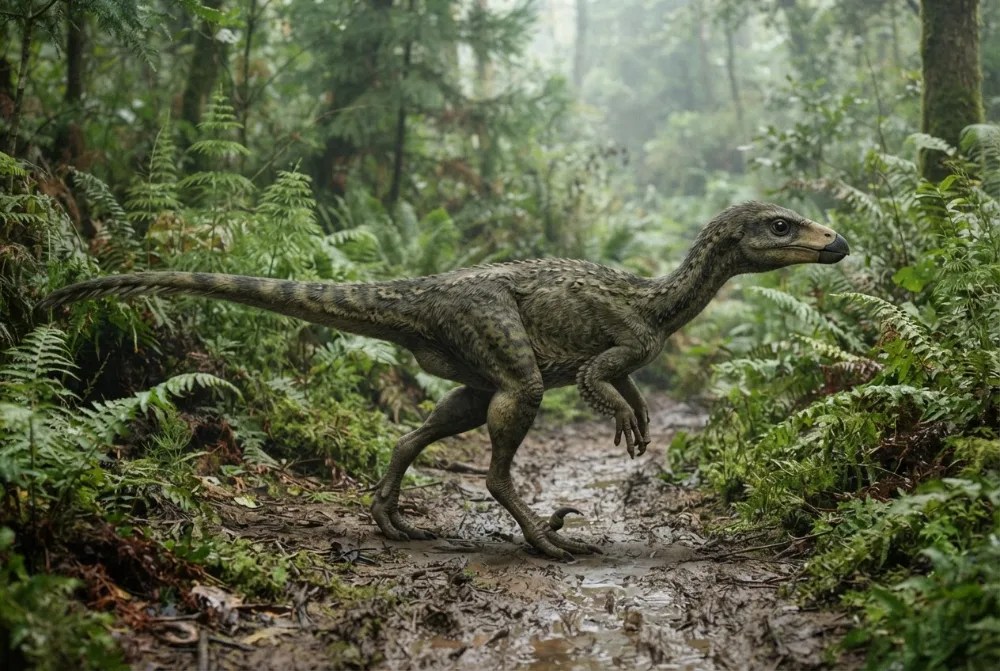
Magnamanus was a big, plant-eating dinosaur that lived in what is now Spain about 130 million years ago. It had huge hands with a thumb spike and a fifth finger, which helped it grab plants. This dinosaur was as long as a bus and weighed as much as a small car.1
E phetse neng?
E ne e le kgolo hakae?
E ne e le telele hakae?
E ne e phahame hakae?
kakanyo
E ne e le boima hakae?
 telele jwaloka dikoloi tse 2 tse pakilweng ka mola🍌telele jwaloka dibanana tse 56 di behilwe ka mola
 boima jwaloka dintja tse 150🍉boima jwaloka mahapu a 600🎒boima jwaloka ditlelase tse feletseng tse 4 tsa bana ba sekolo🐻❄️boima jwaloka dibere tse tshweu tse 7🏃e ne e ka matha dimitara tse 100 ka metsotswana e 15 (motho ya lebelo ka ho fetisisa o hloka 9,6)
Magnamanus e ne e le kgolo hakae ha e bapiswa le WENA?
Ke dipalo feela ho browser ya hao. Ha ho letho le bolokwang kapa le romelwang kae kapa kae.
E ne e le lebelo hakae?


Dintlha tse monate
Magnamanus had a hand that was very wide, with the wrist making up 70% of the hand's length.1
Its thumb had a sharp spike, similar to the famous Iguanodon, which might have been used for defense or digging.1
The name Magnamanus means 'large hand' in Latin, because its hands were big compared to its body.1
This dinosaur lived during the Early Cretaceous period, about 130 million years ago, in a warm, wet environment with rivers and lakes.1
The skeleton of Magnamanus was found scattered over an area of eight square meters, but all bones belonged to one old adult.1
Magnamanus is a styracosternan, a group of plant-eating dinosaurs that includes Iguanodon and its close relatives.1
Dipotso tse botswang haholo ka Magnamanus
?How big was Magnamanus?
Magnamanus was about 9 to 10 metres long and weighed around 3 tonnes, about the size of a bus and as heavy as a large elephant.1
?What did Magnamanus eat?
Magnamanus was a herbivore, meaning it ate plants. It used its big hands and thumb spike to grab and pull plants.1
?Why is it called Magnamanus?
The name Magnamanus means 'large hand' in Latin, because its hands were big compared to its body.1
?Where was Magnamanus found?
Magnamanus was found in the Golmayo Formation near Soria, Spain. Its skeleton was discovered in a marsh area called Zorralbo I.1
Bakeng sa ditsebi tsa didinosaure
- Lebitso la saense
- Magnamanus
- E rehilwe ke
- Fuentes Vidarte et al. 20162
- Sehlopha
- Dija-dimela tse nang le melomo
- Lelapa / leloko
- Styracosterna2
- Tlhophiso
- Ornithischia > Ornithopoda > Iguanodontia2
- Dilemo tsa mafika
- dilemo tse dimilione tse 133 ho isa ho 121 (Hauterivian / Barremian)2
- Dibopeho tsa mafika
- Golmayo2
- Dinaha
- Sepania2
- Direkoto tsa difosili
- 1 ho The Paleobiology Database2
- Ho sibollwa
- Magnamanus was discovered between 2000 and 2004 by Carolina Fuentes and Manuel Meijide, along with their children, at the Zorralbo I site near Soria, Spain. It was named and described in 2016 by Fuentes Vidarte and colleagues.1
- E sa ntse e phehwa kgang
- Scientists are still debating exactly where Magnamanus fits on the family tree of iguanodontian dinosaurs, as it has some unique features in its hands and wrists.1
Moo dintlha di tswang teng
- Magnamanus (en.wikipedia.org)
- Magnamanus in The Paleobiology Database (CC BY 4.0): dilemo, dibaka, dibopeho tsa mafika, tlhophiso.
Ntlha e nngwe le e nngwe leqepheng lena e na le nomoro e supang mohlodi wa yona. Haeba re fositse ho hong, re kopa tshwarelo, re balatedi ba didinosaure, ha re koranta ya saense. Re bolelle ho [email protected] mme re tla e lokisa.
 Rex o lapile! Dino Wiki ke projeke ya ntate bakeng sa mora wa hae ya ratang didinosaure, ke mahala, ha ho dipapatso, ha ho disebedi. Batho ba baholo ba ka fepa Rex seneke ho thusa hore e dule e le inthaneteng.Fepa Rex
 Iguanodon
 Tenontosaurus
 Thescelosaurus
 Zalmoxes
 Camptosaurus
 Rhabdodon
 Stegosaurus
 Archaeopteryx
 Giganotosaurus
 Microraptor
 Deinonychus
 Baryonyx