 Kwisi: O dinosaure efe?
 Ntwa ya didinosaure
 Peiso ya didinosaure
 Dipapadi tse nyane tsa didinosaure
 Albamo ya ditikara
 Manane a TOP a didinosaure
 Nkgethele!
E phetse neng?

E ne e le kgolo hakae?
E ne e le telele hakae?
E ne e phahame hakae?
kakanyo
E ne e le boima hakae?
 telele jwaloka dikoloi tse 3 tse pakilweng ka mola🍌telele jwaloka dibanana tse 83 di behilwe ka mola
 boima jwaloka ditlou tse 1.5🍉boima jwaloka mahapu a 2000🎒boima jwaloka ditlelase tse feletseng tse 12 tsa bana ba sekolo🐻❄️boima jwaloka dibere tse tshweu tse 22🏃e ne e ka matha dimitara tse 100 ka metsotswana e 20 (motho ya lebelo ka ho fetisisa o hloka 9,6)
Malawisaurus e ne e le kgolo hakae ha e bapiswa le WENA?
Ke dipalo feela ho browser ya hao. Ha ho letho le bolokwang kapa le romelwang kae kapa kae.
E ne e le lebelo hakae?


Dintlha tse monate
Malawisaurus had a blunter snout than most other sauropods, which is unusual for this group.2
Its teeth were flattened, not pencil-shaped like many other sauropods. This suggests that pencil-shaped teeth evolved more than once in sauropods.2
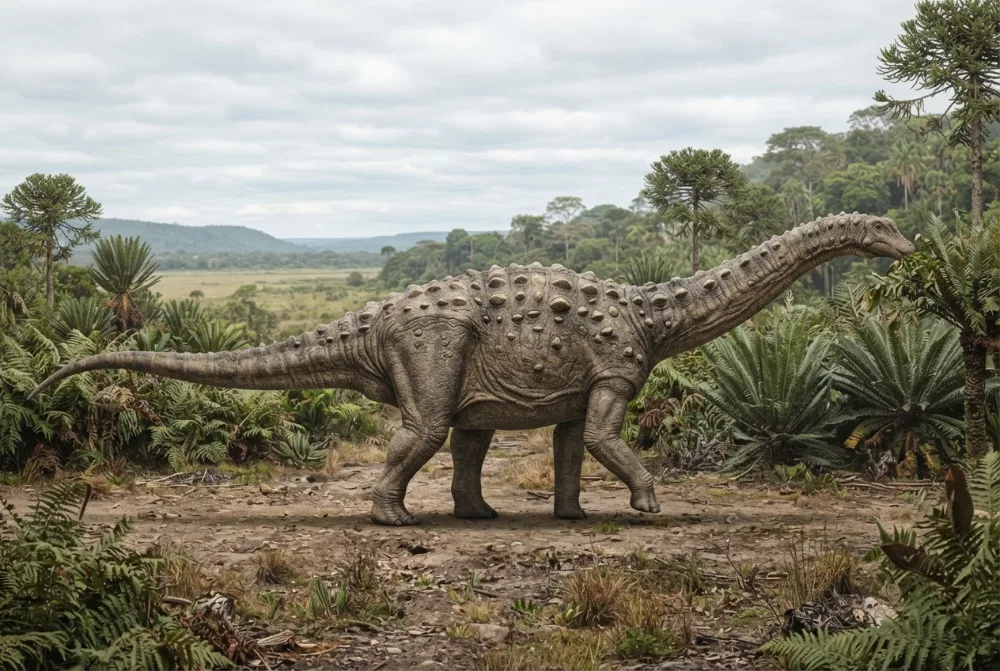
Bony plates called ossicles have been found with Malawisaurus, which probably covered its skin like armor.1
The vertebrae in the middle of its tail were longer than those in other parts, which is a unique feature.1
Malawisaurus lived about 121 to 113 million years ago, during the Aptian stage of the Early Cretaceous.4
An isolated tooth from Brazil might belong to Malawisaurus, which would mean it also lived in South America.1
Dipotso tse botswang haholo ka Malawisaurus
?How big was Malawisaurus?
About 15 metres (49 feet) long and weighed about 10 tonnes (11 short tons), though a 2020 estimate gave a smaller size of 11 metres (36 feet) and 2.8 tonnes (3.1 short tons).1
?Where did Malawisaurus live?
It lived in what is now northern Malawi in Africa, during the Early Cretaceous period about 121 to 112 million years ago.13
?What did Malawisaurus eat?
It was an herbivore, meaning it ate plants.3
?Did Malawisaurus have armor?
Yes, bony plates called ossicles or dermal scutes were found with the skeleton, suggesting it had armor in its skin like some other titanosaurs.1
Mosenyi wa ditshomo
Tshomo: Some people think Malawisaurus was a giant like Argentinosaurus.
Nnete: Malawisaurus was actually one of the smaller sauropods, reaching only about 11 to 15 metres long.1
Bakeng sa ditsebi tsa didinosaure
- Lebitso la saense
- Malawisaurus
- E rehilwe ke
- Jacobs et al. 19934
- Sehlopha
- Melala e melelele
- Lelapa / leloko
- Lithostrotia4
- Tlhophiso
- Sauropodomorpha > Sauropoda > Titanosauria > Macronaria4
- Dilemo tsa mafika
- dilemo tse dimilione tse 121 ho isa ho 113 (Aptian)4
- Dibopeho tsa mafika
- Dinosaur Beds4
- Dinaha
- Malawi4
- Direkoto tsa difosili
- 8 ho The Paleobiology Database4
- Ho sibollwa
- The first fossils were found around 1924 in Malawi, and Sidney H. Haughton named the species in 1928. In 1993, Louis L. Jacobs and colleagues gave it the new name Malawisaurus after more bones were found.1
- E sa ntse e phehwa kgang
- Scientists are not sure if Malawisaurus lived in South America too, because only a single tooth from Brazil might belong to it.1
Moo dintlha di tswang teng
- Malawisaurus (en.wikipedia.org)
- New material of an Early Cretaceous titanosaurid sauropod dinosaur from Malawi | The Palaeontological Association (palass.org)
- Malawisaurus | Natural History Museum (nhm.ac.uk)
- Malawisaurus in The Paleobiology Database (CC BY 4.0): dilemo, dibaka, dibopeho tsa mafika, tlhophiso.
Ntlha e nngwe le e nngwe leqepheng lena e na le nomoro e supang mohlodi wa yona. Haeba re fositse ho hong, re kopa tshwarelo, re balatedi ba didinosaure, ha re koranta ya saense. Re bolelle ho [email protected] mme re tla e lokisa.
 Rex o lapile! Dino Wiki ke projeke ya ntate bakeng sa mora wa hae ya ratang didinosaure, ke mahala, ha ho dipapatso, ha ho disebedi. Batho ba baholo ba ka fepa Rex seneke ho thusa hore e dule e le inthaneteng.Fepa Rex
 Brachiosaurus
 Diplodocus
 Brontosaurus
 Argentinosaurus
 Camarasaurus
 Morosaurus
 Stegosaurus
 Iguanodon
 Archaeopteryx
 Giganotosaurus
 Microraptor
 Deinonychus