 Kwisi: O dinosaure efe?
 Ntwa ya didinosaure
 Peiso ya didinosaure
 Dipapadi tse nyane tsa didinosaure
 Albamo ya ditikara
 Manane a TOP a didinosaure
 Nkgethele!
Mierasaurus
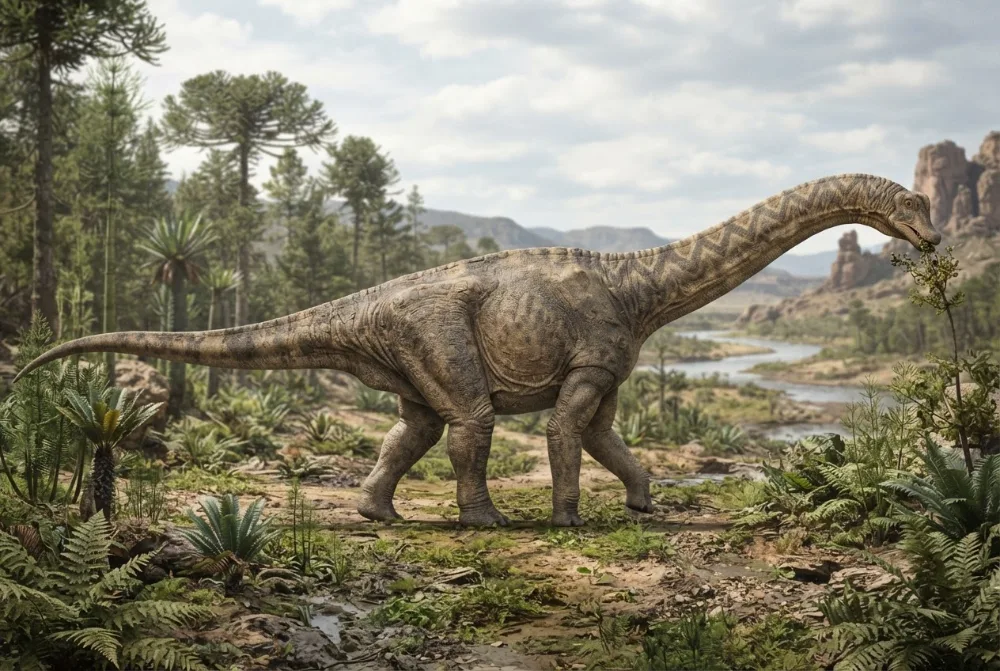
Mierasaurus was a giant long necked plant eater that lived in what is now Utah, USA. It was one of the last survivors of an older group of sauropods, the turiasaurs, that were once only known from Europe. Its fossils are some of the most complete sauropod remains ever found in North America.12
E phetse neng?
E ne e le kgolo hakae?
E ne e le telele hakae?
E ne e phahame hakae?
kakanyo
E ne e le boima hakae?
 telele jwaloka dikoloi tse 2.5 tse pakilweng ka mola🍌telele jwaloka dibanana tse 64 di behilwe ka mola
 e batla e le boima jwaloka tlou🍉boima jwaloka mahapu a 960🎒boima jwaloka ditlelase tse feletseng tse 6 tsa bana ba sekolo🐻❄️boima jwaloka dibere tse tshweu tse 11🏃e ne e ka matha dimitara tse 100 ka metsotswana e 19 (motho ya lebelo ka ho fetisisa o hloka 9,6)
Mierasaurus e ne e le kgolo hakae ha e bapiswa le WENA?
Ke dipalo feela ho browser ya hao. Ha ho letho le bolokwang kapa le romelwang kae kapa kae.
E ne e le lebelo hakae?


Dintlha tse monate
Mierasaurus is named after Bernardo de Miera y Pacheco, the first European scientist to explore Utah in 1776.12
Its fossils were dug up from a huge bone bed covering about 5,000 square meters, like almost one and a half football fields.2
Mierasaurus is a turiasaur, a group of sauropods that scientists thought lived only in Europe until this dinosaur was found in North America.1
The type specimen is a subadult, because some bones like the vertebrae were not fully fused together.1
The Doelling's Bowl site has also produced bones of an iguanodont dinosaur and a spiky armored ankylosaur.1
Dipotso tse botswang haholo ka Mierasaurus
?How big was Mierasaurus?
Scientists do not know its exact size yet, but it was a large sauropod. The only known skeleton is from a subadult, so it was still growing when it died.24
?What did Mierasaurus eat?
Mierasaurus was a plant eater. It had heart-shaped teeth that helped it strip leaves from plants.2
?Where was Mierasaurus found?
Its fossils were found in east-central Utah, USA, at a site called Doelling's Bowl in the Cedar Mountain Formation.24
?Is Mierasaurus a dinosaur?
Yes, Mierasaurus is a dinosaur. It is a type of sauropod, which is a long-necked, plant-eating dinosaur.2
Bakeng sa ditsebi tsa didinosaure
- Lebitso la saense
- Mierasaurus
- E rehilwe ke
- Royo-Torres et al. 20175
- Sehlopha
- Melala e melelele
- Lelapa / leloko
- Turiasauria5
- Tlhophiso
- Sauropodomorpha > Sauropoda5
- Dilemo tsa mafika
- dilemo tse dimilione tse 139 ho isa ho 133 (Berriasian / Valanginian)5
- Dibopeho tsa mafika
- Cedar Mountain5
- Dinaha
- Amerika5
- Direkoto tsa difosili
- 1 ho The Paleobiology Database5
- Ho sibollwa
- Mierasaurus was named and described in 2017 by Rafael Royo-Torres and colleagues. They studied a mostly complete skeleton dug up at Doelling's Bowl in eastern Utah, USA, during excavations by the Utah Geological Survey starting in 2005.12
- E sa ntse e phehwa kgang
- Scientists are not sure exactly how big Mierasaurus grew, because the only known skeleton is from a subadult that had not finished growing.1
Moo dintlha di tswang teng
- preview-www.nature.com (preview-www.nature.com)
- Mierasaurus (en.wikipedia.org)
- Mierasaurus bobyoungi | Dinosaur Database by DinoAnimals.com (dinoanimals.com)
- Descendants of the Jurassic turiasaurs from Iberia found refuge in the Early Cretaceous of western USA | Scientific Reports (nature.com)
- Mierasaurus in The Paleobiology Database (CC BY 4.0): dilemo, dibaka, dibopeho tsa mafika, tlhophiso.
Ntlha e nngwe le e nngwe leqepheng lena e na le nomoro e supang mohlodi wa yona. Haeba re fositse ho hong, re kopa tshwarelo, re balatedi ba didinosaure, ha re koranta ya saense. Re bolelle ho [email protected] mme re tla e lokisa.
 Rex o lapile! Dino Wiki ke projeke ya ntate bakeng sa mora wa hae ya ratang didinosaure, ke mahala, ha ho dipapatso, ha ho disebedi. Batho ba baholo ba ka fepa Rex seneke ho thusa hore e dule e le inthaneteng.Fepa Rex
 Brachiosaurus
 Diplodocus
 Brontosaurus
 Argentinosaurus
 Camarasaurus
 Morosaurus
 Stegosaurus
 Iguanodon
 Archaeopteryx
 Giganotosaurus
 Microraptor
 Deinonychus