 Kwisi: O dinosaure efe?
 Ntwa ya didinosaure
 Peiso ya didinosaure
 Dipapadi tse nyane tsa didinosaure
 Albamo ya ditikara
 Manane a TOP a didinosaure
 Nkgethele!
E phetse neng?

E ne e le kgolo hakae?
E ne e le telele hakae?
E ne e phahame hakae?
kakanyo
E ne e le boima hakae?
 telele jwaloka dintja tse 5 ho tloha nkong ho isa mohatleng🍌telele jwaloka dibanana tse 28 di behilwe ka mola🍉boima jwaloka mahapu a 100🧸boima jwaloka bana ba kereshe ba 26🎒boima jwaloka bana ba sekolo ba 16🏃e ne e ka matha dimitara tse 100 ka metsotswana e 9.5 (motho ya lebelo ka ho fetisisa o hloka 9,6)
Owenodon e ne e le kgolo hakae ha e bapiswa le WENA?
Ke dipalo feela ho browser ya hao. Ha ho letho le bolokwang kapa le romelwang kae kapa kae.
E ne e le lebelo hakae?


Dintlha tse monate
Owenodon is known mostly from a partial lower jaw with ten teeth, found in a limestone block.1
It was first named Iguanodon hoggii by Richard Owen in 1874, honoring naturalist A.J. Hogg who collected the fossil.1
The jaw was damaged while stored in a museum collection, breaking one tooth crown and part of the bone.1
Owenodon lived in a warm, Mediterranean-like climate with lakes, lagoons, and salty marshes.1
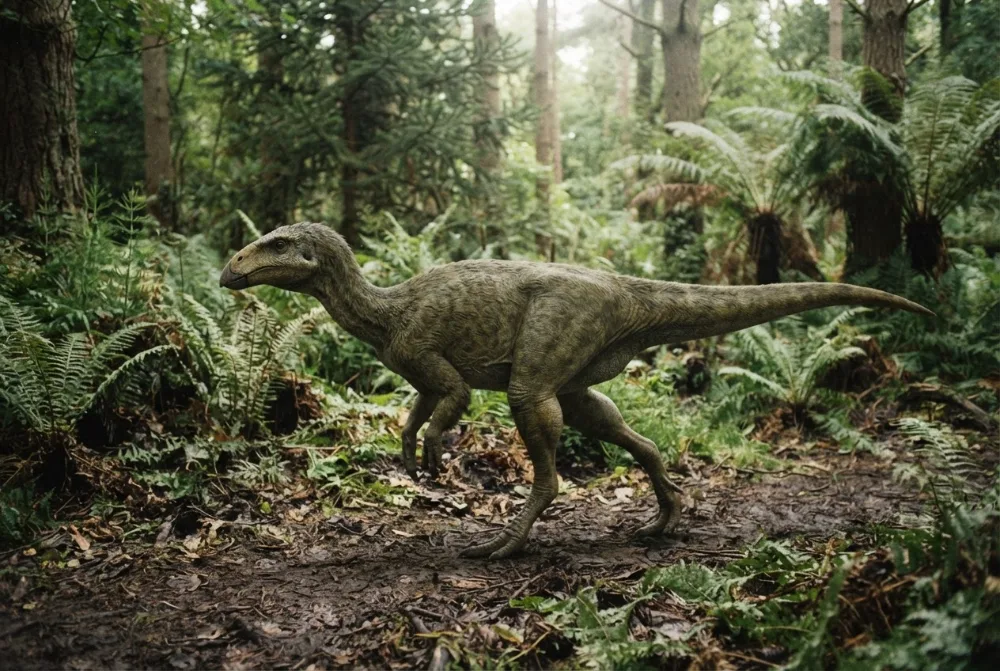
Scientists think Owenodon was an intermediate ornithopod, between Camptosaurus and Iguanodon in evolution.1
Dipotso tse botswang haholo ka Owenodon
?How big was Owenodon?
Scientists do not know for sure, because only a partial lower jaw has been found. It was probably a small ornithopod, but no exact size is known.1
?When did Owenodon live?
Owenodon lived during the Early Cretaceous, about 140 million years ago, in the Berriasian stage.1
?Where was Owenodon found?
The only definite Owenodon fossil was found in Dorset, United Kingdom, in the Lulworth Formation. Some teeth from Romania and Spain may also belong to it.1
Bakeng sa ditsebi tsa didinosaure
- Lebitso la saense
- Owenodon
- E rehilwe ke
- Galton 20093
- Sehlopha
- Dija-dimela tse nang le melomo
- Lelapa / leloko
- Dryomorpha3
- Tlhophiso
- Ornithischia > Ornithopoda > Iguanodontia3
- Dilemo tsa mafika
- dilemo tse dimilione tse 149 ho isa ho 137 (Tithonian / Berriasian)3
- Dibopeho tsa mafika
- Lower Bauxite, Lulworth3
- Dinaha
- Romania, United Kingdom3
- Direkoto tsa difosili
- 6 ho The Paleobiology Database3
- Ho sibollwa
- The fossil was discovered by A.J. Hogg in the Purbeck Limestone of Dorset, England, and described by Richard Owen in 1874 as Iguanodon hoggii. It was given its own genus Owenodon by Peter Galton in 2009.1
- E sa ntse e phehwa kgang
- Scientists are not sure exactly where Owenodon fits in the ornithopod family tree, because the fossils are so few and incomplete.1
Moo dintlha di tswang teng
- Owenodon (en.wikipedia.org)
- Owenodon hoggii | Dinosaur Database by DinoAnimals.com (dinoanimals.com)
- Owenodon in The Paleobiology Database (CC BY 4.0): dilemo, dibaka, dibopeho tsa mafika, tlhophiso.
Ntlha e nngwe le e nngwe leqepheng lena e na le nomoro e supang mohlodi wa yona. Haeba re fositse ho hong, re kopa tshwarelo, re balatedi ba didinosaure, ha re koranta ya saense. Re bolelle ho [email protected] mme re tla e lokisa.
 Rex o lapile! Dino Wiki ke projeke ya ntate bakeng sa mora wa hae ya ratang didinosaure, ke mahala, ha ho dipapatso, ha ho disebedi. Batho ba baholo ba ka fepa Rex seneke ho thusa hore e dule e le inthaneteng.Fepa Rex
 Iguanodon
 Tenontosaurus
 Thescelosaurus
 Zalmoxes
 Camptosaurus
 Rhabdodon
 Stegosaurus
 Archaeopteryx
 Giganotosaurus
 Microraptor
 Deinonychus
 Baryonyx