 Kwisi: O dinosaure efe?
 Ntwa ya didinosaure
 Peiso ya didinosaure
 Dipapadi tse nyane tsa didinosaure
 Albamo ya ditikara
 Manane a TOP a didinosaure
 Nkgethele!
E phetse neng?

E ne e le kgolo hakae?
E ne e le telele hakae?
E ne e phahame hakae?
E ne e le boima hakae?

 telele jwaloka dintja tse 6 ho tloha nkong ho isa mohatleng🍌telele jwaloka dibanana tse 33 di behilwe ka mola
 e batla e le boima jwaloka tlou🍉boima jwaloka mahapu a 900🎒boima jwaloka ditlelase tse feletseng tse 6 tsa bana ba sekolo🐻❄️boima jwaloka dibere tse tshweu tse 10🏃e ne e ka matha dimitara tse 100 ka metsotswana e 28 (motho ya lebelo ka ho fetisisa o hloka 9,6)
Peloroplites e ne e le kgolo hakae ha e bapiswa le WENA?
Ke dipalo feela ho browser ya hao. Ha ho letho le bolokwang kapa le romelwang kae kapa kae.
E ne e le lebelo hakae?


Dintlha tse monate
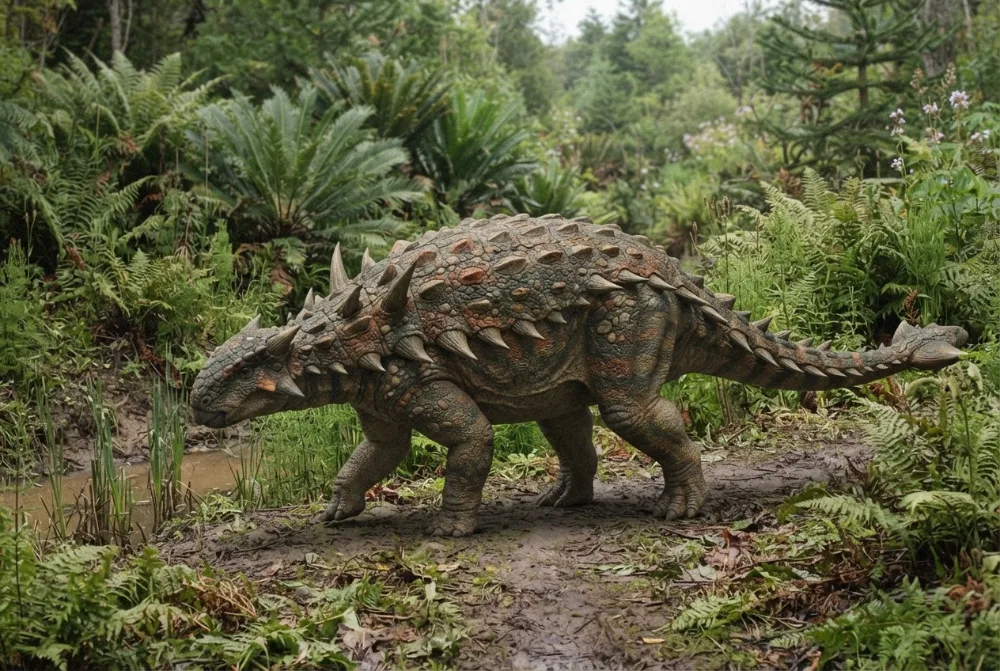
Peloroplites is one of the largest known nodosaurids, a group of armored dinosaurs.1
Its body was covered in bony armor plates and long spikes that protected it from big predators like Acrocanthosaurus.2
The name Peloroplites means 'monstrous heavy one' in Greek, referring to its huge size and heavy armor.1
Only one species is known: Peloroplites cedrimontanus, named after the Cedar Mountain Formation where it was found.1
Its skeleton was put together from bones dug up by staff and volunteers from the USU Prehistoric Museum.2
Utah has more species of armored dinosaurs than any other U.S. state, and Peloroplites is one of them.2
Peloroplites lived in a wet, swampy environment near the edge of the Western Interior Seaway.1
Dipotso tse botswang haholo ka Peloroplites
?How big was Peloroplites?
Peloroplites was about 6 metres (20 feet) long and weighed around 2 tonnes (4,410 lbs). That makes it one of the largest known nodosaurids.12
?What did Peloroplites eat?
Peloroplites was a plant-eater. It had small teeth and a wide beak at the front of its mouth to crop low vegetation.23
?When did Peloroplites live?
Peloroplites lived during the Late Cretaceous Period, about 98 to 93 million years ago.1
?Where was Peloroplites found?
Peloroplites was discovered in the Cedar Mountain Formation in Emery County, Utah, USA.12
?Was Peloroplites a dinosaur?
Yes, Peloroplites was a dinosaur. It belongs to a group of armored dinosaurs called nodosaurids.1
Bakeng sa ditsebi tsa didinosaure
- Lebitso la saense
- Peloroplites
- E rehilwe ke
- Carpenter et al. 20084
- Sehlopha
- Didinosaure tse nang le sesireletsi
- Lelapa / leloko
- Nodosauridae4
- Tlhophiso
- Ornithischia > Ankylosauria > Nodosauridae > Thyreophora4
- Dilemo tsa mafika
- dilemo tse dimilione tse 121 ho isa ho 100 (Aptian / Albian)4
- Dibopeho tsa mafika
- Cedar Mountain4
- Dinaha
- Amerika4
- Direkoto tsa difosili
- 1 ho The Paleobiology Database4
- Ho sibollwa
- Peloroplites was named in 2008 by Kenneth Carpenter and colleagues from a partial skull and other bones found in the Price River II quarry in Utah.1
- E sa ntse e phehwa kgang
- Scientists are not sure exactly how large Peloroplites grew, because different estimates give lengths from 5 to 6 metres.1
Moo dintlha di tswang teng
- Peloroplites (en.wikipedia.org)
- Armored Monster Invades USU Eastern Prehistoric Museum (usu.edu)
- Peloroplites cedrimontanus (eastern.usu.edu)
- Peloroplites in The Paleobiology Database (CC BY 4.0): dilemo, dibaka, dibopeho tsa mafika, tlhophiso.
Ntlha e nngwe le e nngwe leqepheng lena e na le nomoro e supang mohlodi wa yona. Haeba re fositse ho hong, re kopa tshwarelo, re balatedi ba didinosaure, ha re koranta ya saense. Re bolelle ho [email protected] mme re tla e lokisa.
 Rex o lapile! Dino Wiki ke projeke ya ntate bakeng sa mora wa hae ya ratang didinosaure, ke mahala, ha ho dipapatso, ha ho disebedi. Batho ba baholo ba ka fepa Rex seneke ho thusa hore e dule e le inthaneteng.Fepa Rex
 Ankylosaurus
 Sauropelta
 Pinacosaurus
 Scutellosaurus
 Struthiosaurus
 Euoplocephalus
 Stegosaurus
 Iguanodon
 Archaeopteryx
 Giganotosaurus
 Microraptor
 Deinonychus