 Kwisi: O dinosaure efe?
 Ntwa ya didinosaure
 Peiso ya didinosaure
 Dipapadi tse nyane tsa didinosaure
 Albamo ya ditikara
 Manane a TOP a didinosaure
 Nkgethele!
Polycotylus
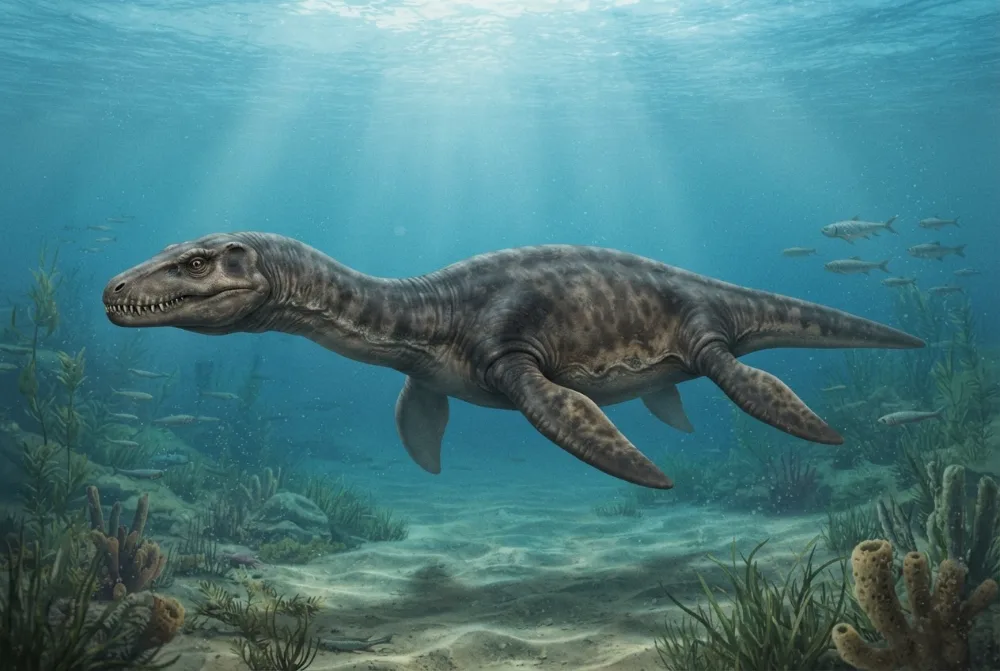
Polycotylus was a short-necked plesiosaur that swam in the warm seas of North America and Europe during the Cretaceous. It had a big head, strong flippers, and gave birth to live babies in the water, just like whales do today.1
E phetse neng?
E ne e le kgolo hakae?
E ne e le telele hakae?
E ne e le boima hakae?
 telele jwaloka dintja tse 5 ho tloha nkong ho isa mohatleng🍌telele jwaloka dibanana tse 30 di behilwe ka mola🍉boima jwaloka mahapu a 200🧸boima jwaloka bana ba kereshe ba 53🎒boima jwaloka bana ba sekolo ba 31🐻❄️boima jwaloka dibere tse tshweu tse 2🏊e ne e ka sesa bolelele ba letamo le leholo la ho sesa (50 m) ka metsotswana e 6.7
Polycotylus e ne e le kgolo hakae ha e bapiswa le WENA?
Ke dipalo feela ho browser ya hao. Ha ho letho le bolokwang kapa le romelwang kae kapa kae.
E ne e le lebelo hakae?


Dintlha tse monate
Polycotylus was named by famous paleontologist Edward Drinker Cope in 1869 from fossils found in Kansas.1
A fossil of Polycotylus found in Kansas contains a single large fetus inside the mother, proving that these plesiosaurs gave live birth.1
The baby Polycotylus was about 1.5 metres (4.9 feet) long, which is about 32 percent of the mother's length.1
Polycotylus had a short neck and a long head, making it look a bit like a pliosaur, but it is actually a type of plesiosaur called a polycotylid.1
Its name means 'much-cupped vertebrae' because the bones in its spine have deep cup-like hollows.1
Polycotylus lived in the Western Interior Seaway, a shallow sea that split North America in two during the Cretaceous.1
Scientists think Polycotylus gave birth to just one large baby at a time, a strategy called K-selection.1
Dipotso tse botswang haholo ka Polycotylus
?How big was Polycotylus?
Polycotylus was a medium-sized plesiosaur, measuring about 4.7 to 5.4 metres (15 to 18 feet) long and weighing over 1 metric ton (1.1 short tons).1
?Did Polycotylus have a short neck?
Yes, Polycotylus had a short neck and a long head, unlike the long-necked plesiosaurs like Elasmosaurus.1
?What did Polycotylus eat?
Polycotylus had thick teeth with striations on their surfaces, which suggests it ate fish and other marine animals, but the sources do not give a specific diet.1
?When did Polycotylus live?
Polycotylus lived toward the end of the Cretaceous period, about 84 to 66 million years ago.1
Mosenyi wa ditshomo
Tshomo: Many people think all plesiosaurs had long necks like the Loch Ness Monster.
Nnete: Polycotylus had a short neck and a large head, very different from long-necked plesiosaurs like Elasmosaurus.1
Bakeng sa ditsebi tsa didinosaure
- Lebitso la saense
- Polycotylus
- E rehilwe ke
- Cope 18693
- Sehlopha
- Diplesiosaure
- Lelapa / leloko
- Polycotylidae3
- Tlhophiso
- Plesiosauria > Sauropterygia3
- Dilemo tsa mafika
- dilemo tse dimilione tse 152 ho isa ho 72 (Kimmeridgian / Campanian)3
- Dibopeho tsa mafika
- Niobrara, Frontier, Mooreville Chalk3
- Dinaha
- Amerika, Fora, Russia3
- Direkoto tsa difosili
- 10 ho The Paleobiology Database3
- Ho sibollwa
- Edward Drinker Cope named Polycotylus in 1869 from fragmentary bones found in the Niobrara Formation of Kansas. A nearly complete skeleton was later found in Alabama in 1949 but not described until 2002.1
- E sa ntse e phehwa kgang
- Scientists are not sure exactly how many species of Polycotylus existed, and some species may be the same as others.1
Moo dintlha di tswang teng
- Polycotylus (en.wikipedia.org)
- PBDB Taxon (paleobiodb.org)
- Polycotylus in The Paleobiology Database (CC BY 4.0): dilemo, dibaka, dibopeho tsa mafika, tlhophiso.
Ntlha e nngwe le e nngwe leqepheng lena e na le nomoro e supang mohlodi wa yona. Haeba re fositse ho hong, re kopa tshwarelo, re balatedi ba didinosaure, ha re koranta ya saense. Re bolelle ho [email protected] mme re tla e lokisa.
 Rex o lapile! Dino Wiki ke projeke ya ntate bakeng sa mora wa hae ya ratang didinosaure, ke mahala, ha ho dipapatso, ha ho disebedi. Batho ba baholo ba ka fepa Rex seneke ho thusa hore e dule e le inthaneteng.Fepa Rex
 Elasmosaurus
 Pliosaurus
 Plesiosaurus
 Cimoliasaurus
 Colymbosaurus
 Trinacromerum
 Stegosaurus
 Iguanodon
 Archaeopteryx
 Giganotosaurus
 Microraptor
 Deinonychus