 Kwisi: O dinosaure efe?
 Ntwa ya didinosaure
 Peiso ya didinosaure
 Dipapadi tse nyane tsa didinosaure
 Albamo ya ditikara
 Manane a TOP a didinosaure
 Nkgethele!
E phetse neng?

E ne e le kgolo hakae?
E ne e le telele hakae?
E ne e phahame hakae?
E ne e le boima hakae?
 telele jwaloka dintja tse 3 ho tloha nkong ho isa mohatleng🍌telele jwaloka dibanana tse 18 di behilwe ka mola🍉boima jwaloka mahapu a 13🧸boima jwaloka bana ba kereshe ba 3🎒boima jwaloka bana ba sekolo ba 2🏃e ne e ka matha dimitara tse 100 ka metsotswana e 7.2 (motho ya lebelo ka ho fetisisa o hloka 9,6)
Richardoestesia e ne e le kgolo hakae ha e bapiswa le WENA?
Ke dipalo feela ho browser ya hao. Ha ho letho le bolokwang kapa le romelwang kae kapa kae.
E ne e le lebelo hakae?


Dintlha tse monate
Richardoestesia is known only from its teeth, not from whole skeletons. Scientists call it a 'form taxon' because they group similar-looking teeth together.1
The teeth of Richardoestesia are very long and slender compared to other meat-eating dinosaurs. They look like thin blades.1
If all the teeth assigned to Richardoestesia really belong to the same kind of dinosaur, it would have lived for over 80 million years, from the Late Jurassic to the end of the Cretaceous.1
Richardoestesia teeth have been found all over the world, including North America, Europe, and Asia. That would make it one of the most widespread dinosaurs ever.1
The name Richardoestesia honors paleontologist Richard Estes, who studied small fossils and dinosaur teeth.1
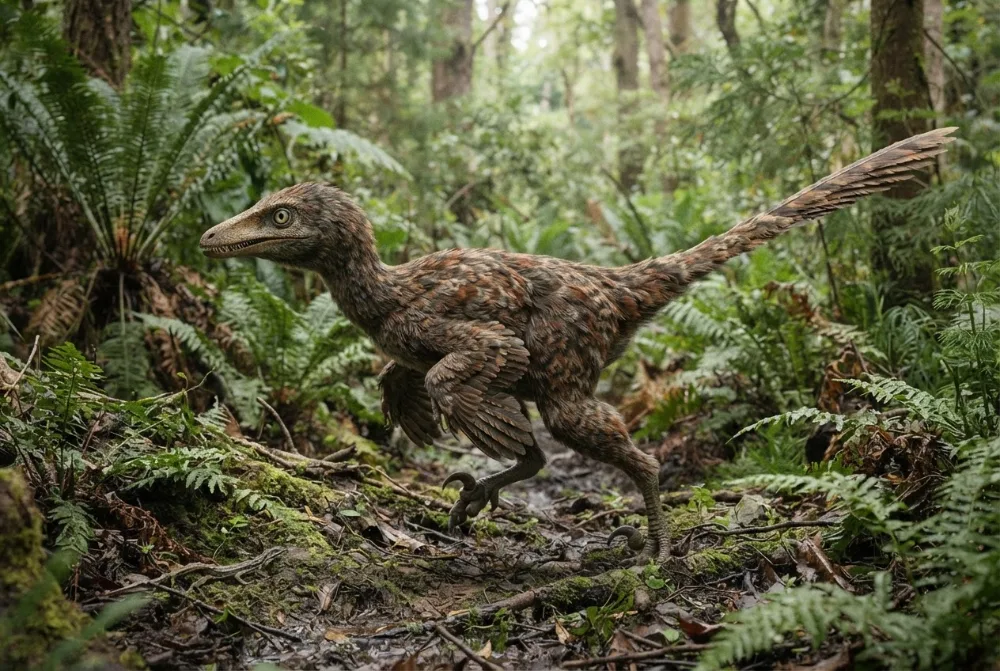
Some scientists think Richardoestesia might have been a dromaeosaur (a raptor) or a troodontid, but nobody knows for sure because no body fossils have been found.5
Dipotso tse botswang haholo ka Richardoestesia
?What did Richardoestesia eat?
Richardoestesia was a meat-eating dinosaur, and some studies think it may have eaten fish because its teeth are often found in marine sites. Its long, slender teeth were good for catching small animals like lizards and mammals.14
?How big was Richardoestesia?
Nobody knows for sure because only its teeth have been found. One estimate from a tooth in Wyoming suggests it weighed about 100 kilograms (220 pounds), but scientists are not certain.4
?When did Richardoestesia live?
Richardoestesia lived during the Late Cretaceous, about 76.5 to 75 million years ago, based on teeth from the Dinosaur Park Formation. Some similar teeth are much older, from the Late Jurassic, but those may belong to different dinosaurs.1
?Was Richardoestesia a dinosaur?
Yes, Richardoestesia was a theropod dinosaur, a meat-eater related to raptors and other bird-like dinosaurs. It is known only from its teeth, not from a full skeleton.1
?Why is Richardoestesia known only from teeth?
Scientists have only found Richardoestesia's teeth, not its body fossils. That is why it is called a 'form taxon', because they group similar-looking teeth together without knowing the whole animal.1
?Could Richardoestesia swim?
Some scientists think Richardoestesia might have eaten fish because its teeth are often found in marine rocks, but nobody knows if it could swim. It was probably a land dinosaur that sometimes hunted near water.1
Mosenyi wa ditshomo
Tshomo: Richardoestesia is a well-known dinosaur with a complete skeleton.
Nnete: Richardoestesia is only known from isolated teeth. No complete skeleton has ever been found, so scientists are not sure what it looked like.1
Bakeng sa ditsebi tsa didinosaure
- Lebitso la saense
- Richardoestesia
- E rehilwe ke
- Currie et al. 19905
- Sehlopha
- Diraptor
- Lelapa / leloko
- Dromaeosauridae5
- Tlhophiso
- Theropoda > Dromaeosauridae5
- Dilemo tsa mafika
- dilemo tse dimilione tse 155 ho isa ho 66 (Kimmeridgian / Maastrichtian)5
- Dibopeho tsa mafika
- Hell Creek, Milk River, Dinosaur Park5
- Dinaha
- Amerika, Kanada, Sepania, Uzbekistan, Romania, Meksiko5
- Direkoto tsa difosili
- 239 ho The Paleobiology Database5
- Ho sibollwa
- The first Richardoestesia fossils were jaws found in 1917 by Charles Hazelius Sternberg and his sons in Dinosaur Provincial Park, Alberta, Canada. The name was given in 1990 by paleontologist Philip Currie and colleagues.1
- E sa ntse e phehwa kgang
- Scientists are not sure if all the teeth called Richardoestesia really belong to the same dinosaur. Many may come from different species that have not been named yet.1
Moo dintlha di tswang teng
- Richardoestesia (en.wikipedia.org)
- Richardoestesia (elmirador.edu.co)
- Richardoestesia gilmorei | Dinosaur Database by DinoAnimals.com (dinoanimals.com)
- University of Colorado Museum of Natural History: Harvester Ants: Richardoestesia Tooth (cumuseum-archive.colorado.edu)
- Richardoestesia in The Paleobiology Database (CC BY 4.0): dilemo, dibaka, dibopeho tsa mafika, tlhophiso.
Ntlha e nngwe le e nngwe leqepheng lena e na le nomoro e supang mohlodi wa yona. Haeba re fositse ho hong, re kopa tshwarelo, re balatedi ba didinosaure, ha re koranta ya saense. Re bolelle ho [email protected] mme re tla e lokisa.
 Rex o lapile! Dino Wiki ke projeke ya ntate bakeng sa mora wa hae ya ratang didinosaure, ke mahala, ha ho dipapatso, ha ho disebedi. Batho ba baholo ba ka fepa Rex seneke ho thusa hore e dule e le inthaneteng.Fepa Rex
 Velociraptor
 Microraptor
 Deinonychus
 Asiamericana
 Saurornitholestes
 Troodon
 Stegosaurus
 Iguanodon
 Archaeopteryx
 Giganotosaurus
 Baryonyx
 Paronychodon