 Kwisi: O dinosaure efe?
 Ntwa ya didinosaure
 Peiso ya didinosaure
 Dipapadi tse nyane tsa didinosaure
 Albamo ya ditikara
 Manane a TOP a didinosaure
 Nkgethele!
Sirindhorna
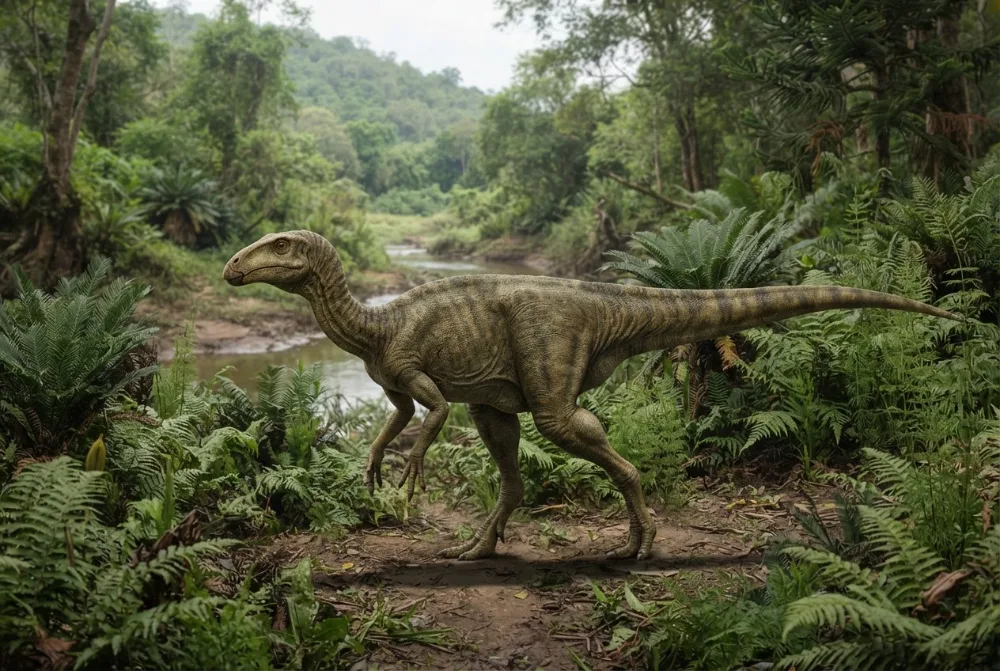
Sirindhorna was a plant-eating dinosaur that lived in what is now Thailand about 120 million years ago. It had a beak and lots of teeth for chewing tough plants. It is one of the best skulls ever found from a dinosaur like this in Southeast Asia.12
E phetse neng?
E ne e le kgolo hakae?
E ne e le telele hakae?
E ne e phahame hakae?
E ne e le boima hakae?
 telele jwaloka dintja tse 6 ho tloha nkong ho isa mohatleng🍌telele jwaloka dibanana tse 33 di behilwe ka mola🍉boima jwaloka mahapu a 200🧸boima jwaloka bana ba kereshe ba 53🎒boima jwaloka bana ba sekolo ba 31🐻❄️boima jwaloka dibere tse tshweu tse 2🏃e ne e ka matha dimitara tse 100 ka metsotswana e 11 (motho ya lebelo ka ho fetisisa o hloka 9,6)
Sirindhorna e ne e le kgolo hakae ha e bapiswa le WENA?
Ke dipalo feela ho browser ya hao. Ha ho letho le bolokwang kapa le romelwang kae kapa kae.
E ne e le lebelo hakae?


Dintlha tse monate
Sirindhorna is known from a nearly complete skull and lower jaws, which is very rare for dinosaurs from Southeast Asia.2
It had a long ridge on top of its skull called a sagittal crest, which helped anchor strong jaw muscles.2
Its teeth had a main ridge and a secondary ridge, which helped grind plant material.2
The fossils were found by farmers digging a reservoir, and then scientists studied the site.1
Sirindhorna lived in a semi-arid environment with meandering rivers, about 120 million years ago.2
It is one of the most primitive members of the group Hadrosauroidea, which includes the duck-billed dinosaurs.2
Dipotso tse botswang haholo ka Sirindhorna
?What did Sirindhorna eat?
It was a plant-eater. Its teeth had a main ridge and a secondary ridge to help grind tough plants.14
?How big was Sirindhorna?
Scientists don't know its exact size yet, because only skull and jaw bones have been found. It was a medium-sized ornithopod dinosaur.14
Bakeng sa ditsebi tsa didinosaure
- Lebitso la saense
- Sirindhorna
- E rehilwe ke
- Shibata et al. 20155
- Sehlopha
- Dija-dimela tse nang le melomo
- Lelapa / leloko
- Hadrosauroidea5
- Tlhophiso
- Ornithischia > Ornithopoda > Iguanodontia5
- Dilemo tsa mafika
- dilemo tse dimilione tse 121 ho isa ho 113 (Aptian)5
- Dibopeho tsa mafika
- Khok Kruat5
- Dinaha
- Thailand5
- Direkoto tsa difosili
- 1 ho The Paleobiology Database5
- Ho sibollwa
- Sirindhorna was named in 2015 by a team of Japanese, Thai, and Chinese scientists. The fossils were found at Ban Saphan Hin in Thailand, and the name honors Princess Maha Chakri Sirindhorn.12
- E sa ntse e phehwa kgang
- Scientists are not sure about the exact age of the rocks where Sirindhorna was found, but they think it lived during the Aptian stage, about 120 million years ago.12
Moo dintlha di tswang teng
- Sirindhorna (en.wikipedia.org)
- A New Basal Hadrosauroid Dinosaur from the Lower Cretaceous Khok Kruat Formation in Nakhon Ratchasima Province, Northeastern Thailand (journals.plos.org)
- Meet ‘Sirindhorna Khoratensis,’ New Dinosaur Discovered in Korat (khaosodenglish.com)
- A New Basal Hadrosauroid Dinosaur from the Lower Cretaceous Khok Kruat Formation in Nakhon Ratchasima Province, Northeastern Thailand | PLOS One (journals.plos.org)
- Sirindhorna in The Paleobiology Database (CC BY 4.0): dilemo, dibaka, dibopeho tsa mafika, tlhophiso.
Ntlha e nngwe le e nngwe leqepheng lena e na le nomoro e supang mohlodi wa yona. Haeba re fositse ho hong, re kopa tshwarelo, re balatedi ba didinosaure, ha re koranta ya saense. Re bolelle ho [email protected] mme re tla e lokisa.
 Rex o lapile! Dino Wiki ke projeke ya ntate bakeng sa mora wa hae ya ratang didinosaure, ke mahala, ha ho dipapatso, ha ho disebedi. Batho ba baholo ba ka fepa Rex seneke ho thusa hore e dule e le inthaneteng.Fepa Rex
 Iguanodon
 Tenontosaurus
 Thescelosaurus
 Zalmoxes
 Camptosaurus
 Rhabdodon
 Stegosaurus
 Archaeopteryx
 Giganotosaurus
 Microraptor
 Deinonychus
 Baryonyx