 Kwisi: O dinosaure efe?
 Ntwa ya didinosaure
 Peiso ya didinosaure
 Dipapadi tse nyane tsa didinosaure
 Albamo ya ditikara
 Manane a TOP a didinosaure
 Nkgethele!
Tatenectes
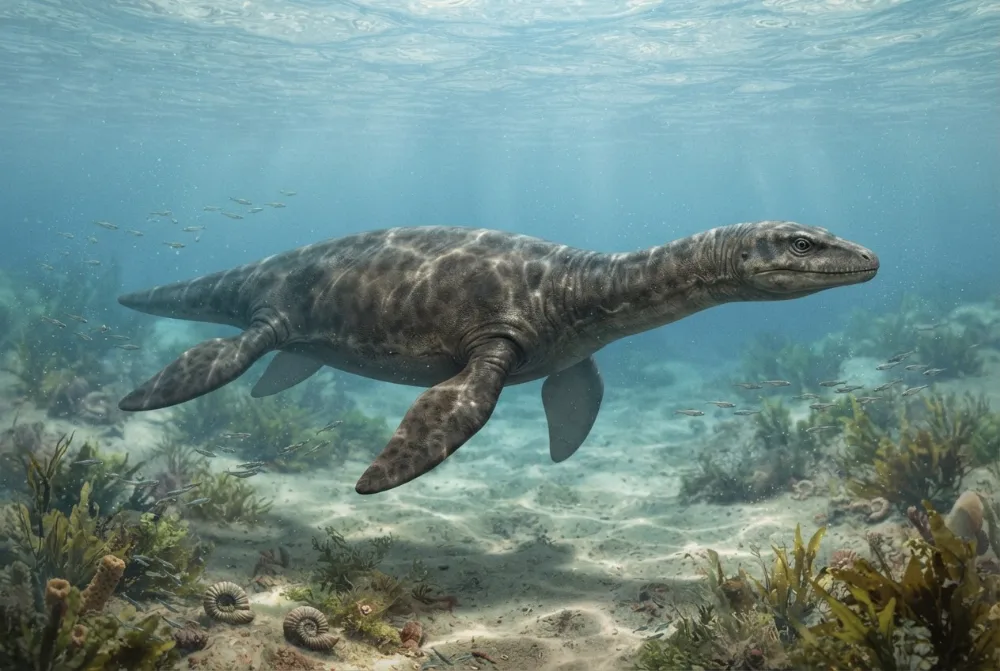
Tatenectes was a small plesiosaur that lived in a shallow sea that covered much of North America during the Jurassic Period. It had a flattened, boxy body and a long neck, and it swam using four flippers like paddles.1
E phetse neng?
E ne e le kgolo hakae?
E ne e le telele hakae?
 telele jwaloka dintja tse 3 ho tloha nkong ho isa mohatleng🍌telele jwaloka dibanana tse 17 di behilwe ka mola🏊e ne e ka sesa bolelele ba letamo le leholo la ho sesa (50 m) ka metsotswana e 6.4
Tatenectes e ne e le kgolo hakae ha e bapiswa le WENA?
Ke dipalo feela ho browser ya hao. Ha ho letho le bolokwang kapa le romelwang kae kapa kae.
E ne e le lebelo hakae?


Dintlha tse monate
Tatenectes had a very unusual body shape for a plesiosaur: its torso was flattened and boxy, and its belly ribs were thickened, which helped it stay stable in turbulent water.1
The first fossil of Tatenectes was described in 1900 by Wilbur Clinton Knight, who thought it was a species of Cimoliosaurus. That original specimen has since been lost.1
Tatenectes lived in the Sundance Sea, a shallow inland sea that was less than 40 meters (130 feet) deep and covered parts of western North America during the Jurassic.1
Its teeth were small and thin, with long roots and low enamel ridges, perfect for catching slippery prey like fish and squid.1
Tatenectes shared its sea home with other marine reptiles, including the plesiosaur Pantosaurus and the large pliosaur Megalneusaurus.1
Scientists think Tatenectes could have used lung deflation to help it dive, just like some modern sea turtles do.1
Bakeng sa ditsebi tsa didinosaure
- Lebitso la saense
- Tatenectes
- E rehilwe ke
- O'Keefe and Wahl 20033
- Sehlopha
- Diplesiosaure
- Lelapa / leloko
- Cryptoclididae3
- Tlhophiso
- Plesiosauria > Sauropterygia3
- Dilemo tsa mafika
- dilemo tse dimilione tse 162 ho isa ho 155 (Oxfordian)3
- Dibopeho tsa mafika
- Sundance3
- Dinaha
- Amerika3
- Direkoto tsa difosili
- 3 ho The Paleobiology Database3
- Ho sibollwa
- The first fossil was described by Wilbur Clinton Knight in 1900 as a new species of Cimoliosaurus. In 2003, F. Robin O'Keefe and William Wahl Jr. gave it its own genus, Tatenectes, based on a new specimen found in Wyoming.12
- E sa ntse e phehwa kgang
- Scientists are still debating whether the gastroliths (stomach stones) found in plesiosaurs like Tatenectes were used for ballast, digestion, or something else.1
Moo dintlha di tswang teng
- Tatenectes (en.wikipedia.org)
- "Preliminary Report on the Osteology and Relationships of a New Aberran" by F. Robin O’Keefe and William Wahl Jr. (mds.marshall.edu)
- Tatenectes in The Paleobiology Database (CC BY 4.0): dilemo, dibaka, dibopeho tsa mafika, tlhophiso.
Ntlha e nngwe le e nngwe leqepheng lena e na le nomoro e supang mohlodi wa yona. Haeba re fositse ho hong, re kopa tshwarelo, re balatedi ba didinosaure, ha re koranta ya saense. Re bolelle ho [email protected] mme re tla e lokisa.
 Rex o lapile! Dino Wiki ke projeke ya ntate bakeng sa mora wa hae ya ratang didinosaure, ke mahala, ha ho dipapatso, ha ho disebedi. Batho ba baholo ba ka fepa Rex seneke ho thusa hore e dule e le inthaneteng.Fepa Rex
 Elasmosaurus
 Pliosaurus
 Plesiosaurus
 Cimoliasaurus
 Colymbosaurus
 Trinacromerum
 Brachiosaurus
 Diplodocus
 Allosaurus
 Brontosaurus
 Compsognathus
 Camarasaurus