 Kwisi: O dinosaure efe?
 Ntwa ya didinosaure
 Peiso ya didinosaure
 Dipapadi tse nyane tsa didinosaure
 Albamo ya ditikara
 Manane a TOP a didinosaure
 Nkgethele!
Uragasaurus
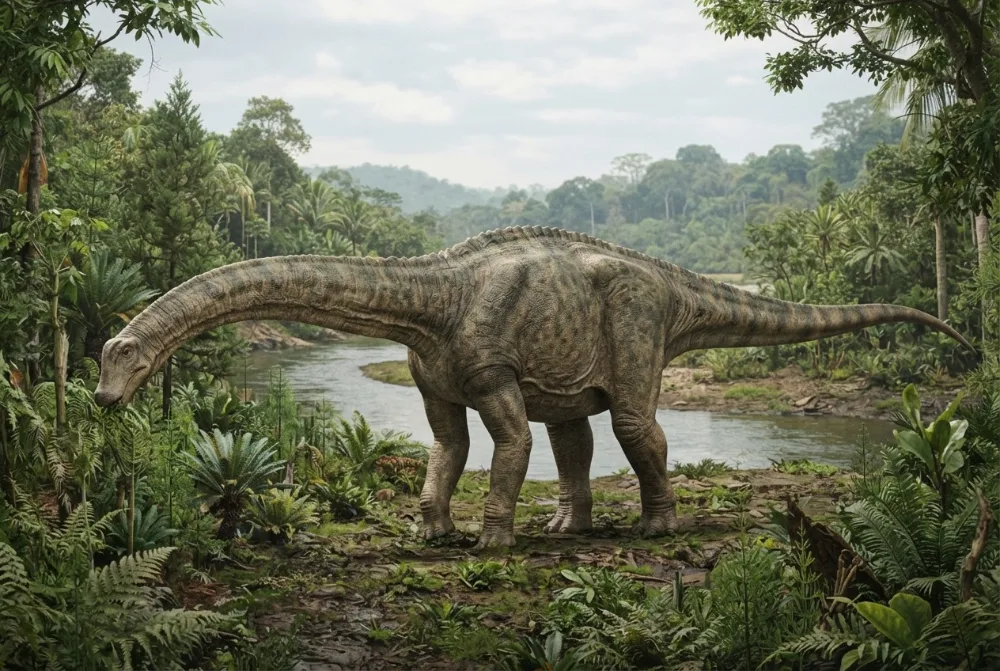
Uragasaurus was a long-necked plant-eater that lived in what is now Thailand. It had a snake-like neck and a backbone with air pockets that made it lighter. This dinosaur is one of the first of its family found in Southeast Asia.1
E phetse neng?
E ne e le kgolo hakae?
E ne e le telele hakae?
E ne e phahame hakae?
kakanyo
 telele jwaloka dikoloi tse 4 tse pakilweng ka mola🍌telele jwaloka dibanana tse 110 di behilwe ka mola🏢e phahame hoo e ka nyarelang ka fensetere mokatong wa 2🏃e ne e ka matha dimitara tse 100 ka metsotswana e 30 (motho ya lebelo ka ho fetisisa o hloka 9,6)
Uragasaurus e ne e le kgolo hakae ha e bapiswa le WENA?
Ke dipalo feela ho browser ya hao. Ha ho letho le bolokwang kapa le romelwang kae kapa kae.
E ne e le lebelo hakae?


Dintlha tse monate
Uragasaurus is known from just one well-preserved backbone bone from the front of the back, called an anterior dorsal vertebra.1
The backbone had a Y-shaped pattern of bony ridges that is unique to this dinosaur.1
CT scans showed that the inside of the backbone was filled with tiny air spaces, a feature called camellate structure, which made the skeleton lighter.1
Uragasaurus lived during the latest Jurassic period, about 149 to 137 million years ago.4
It belongs to a group called Mamenchisauridae, which were famous for their extremely long necks.1
This dinosaur was discovered in the Phu Kradung Formation, a rock layer that also contains fossils of sharks, turtles, and other dinosaurs.1
Uragasaurus is the first officially named mamenchisaurid dinosaur from Thailand.1
Dipotso tse botswang haholo ka Uragasaurus
?How big was Uragasaurus?
Scientists do not know for sure because only one backbone bone has been found. Based on its relatives, it was probably a large, long-necked plant-eater.31
?What did Uragasaurus eat?
It was a plant-eater, like all sauropods. It probably ate ferns, cycads, and other plants that grew in its habitat.3
?When did Uragasaurus live?
It lived during the late Jurassic to early Cretaceous periods, about 150 to 130 million years ago.3
?Where was Uragasaurus found?
Its fossils were found in Kalasin Province, northeastern Thailand, in the Phu Kradung Formation.31
?Is Uragasaurus a dinosaur?
Yes, it is a dinosaur. It is a type of long-necked sauropod dinosaur called a mamenchisaurid.3
?Why is it called Uragasaurus?
The name means 'serpent lizard' in Sanskrit and Greek, because its family is famous for having very long, snake-like necks.3
Bakeng sa ditsebi tsa didinosaure
- Lebitso la saense
- Uragasaurus
- E rehilwe ke
- Nilpanapan et al. 20264
- Sehlopha
- Melala e melelele
- Lelapa / leloko
- Mamenchisauridae4
- Tlhophiso
- Sauropodomorpha > Sauropoda4
- Dilemo tsa mafika
- dilemo tse dimilione tse 149 ho isa ho 137 (Tithonian / Berriasian)4
- Dibopeho tsa mafika
- Phu Kradung4
- Dinaha
- Thailand4
- Direkoto tsa difosili
- 1 ho The Paleobiology Database4
- Ho sibollwa
- Uragasaurus was named in 2026 by a team of scientists led by A. Nilpanapan. The fossil was found at the Phu Noi site in Kalasin Province, Thailand, and is kept at Mahasarakham University.14
- E sa ntse e phehwa kgang
- Scientists are not sure exactly how old the rocks are that contained Uragasaurus, so its age is estimated as latest Jurassic, possibly into the earliest Cretaceous.1
Moo dintlha di tswang teng
- A new mamenchisaurid sauropod from the Lower Phu Kradung Formation, Upper Jurassic of northeastern Thailand | Scientific Reports (nature.com)
- Uragasaurus kalasinensis: New dinosaur discovered in Thailand - BBC News (bbc.co.uk)
- Uragasaurus (en.wikipedia.org)
- Uragasaurus in The Paleobiology Database (CC BY 4.0): dilemo, dibaka, dibopeho tsa mafika, tlhophiso.
Ntlha e nngwe le e nngwe leqepheng lena e na le nomoro e supang mohlodi wa yona. Haeba re fositse ho hong, re kopa tshwarelo, re balatedi ba didinosaure, ha re koranta ya saense. Re bolelle ho [email protected] mme re tla e lokisa.
 Rex o lapile! Dino Wiki ke projeke ya ntate bakeng sa mora wa hae ya ratang didinosaure, ke mahala, ha ho dipapatso, ha ho disebedi. Batho ba baholo ba ka fepa Rex seneke ho thusa hore e dule e le inthaneteng.Fepa Rex
 Brachiosaurus
 Diplodocus
 Brontosaurus
 Argentinosaurus
 Camarasaurus
 Morosaurus
 Stegosaurus
 Iguanodon
 Archaeopteryx
 Giganotosaurus
 Microraptor
 Deinonychus