 Kwisi: O dinosaure efe?
 Ntwa ya didinosaure
 Peiso ya didinosaure
 Dipapadi tse nyane tsa didinosaure
 Albamo ya ditikara
 Manane a TOP a didinosaure
 Nkgethele!
E phetse neng?

E ne e le kgolo hakae?
E ne e le telele hakae?
E ne e le boima hakae?
 telele jwaloka dikoloi tse 22 tse pakilweng ka mola🍌telele jwaloka dibanana tse 560 di behilwe ka mola
 e batla e le boima jwaloka tlou🍉boima jwaloka mahapu a 1400🎒boima jwaloka ditlelase tse feletseng tse 9 tsa bana ba sekolo🐻❄️boima jwaloka dibere tse tshweu tse 16🏃e ne e ka matha dimitara tse 100 ka metsotswana e 21 (motho ya lebelo ka ho fetisisa o hloka 9,6)
Wamweracaudia e ne e le kgolo hakae ha e bapiswa le WENA?
Ke dipalo feela ho browser ya hao. Ha ho letho le bolokwang kapa le romelwang kae kapa kae.
E ne e le lebelo hakae?


Dintlha tse monate
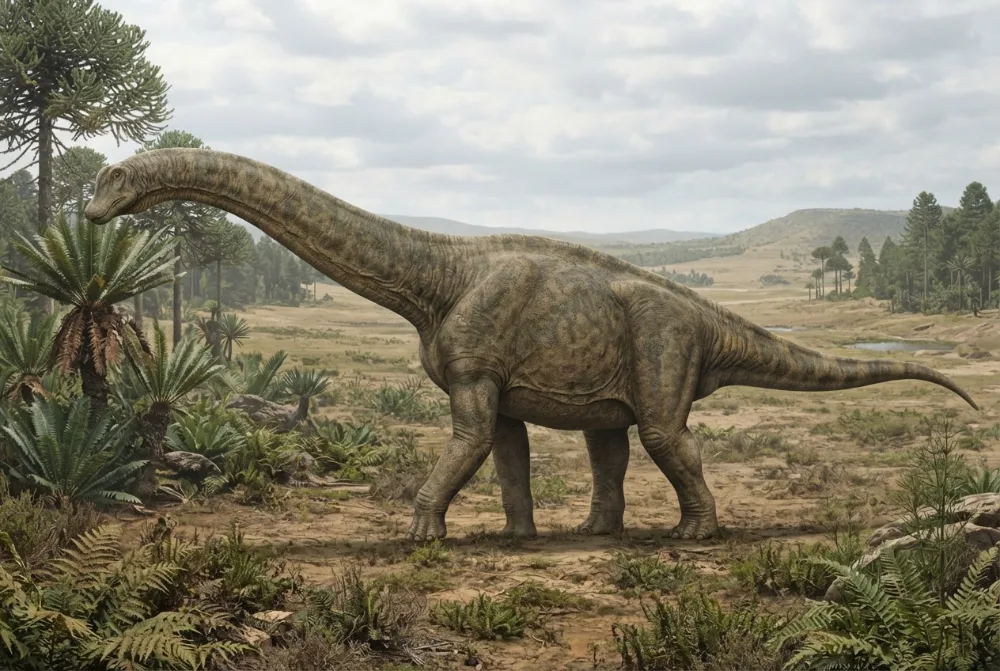
Wamweracaudia is known from a nearly complete series of thirty tail vertebrae, plus two chevrons and two neural spines.1
Its tail bones were procoelous, meaning they had a hollow at the front and a ball at the back, which made the tail flexible and strong.1
It was a close relative of Mamenchisaurus, a famous long-necked dinosaur from Asia, and scientists think it may be the first mamenchisaurid found outside Asia.1
The fossils were first dug up between 1909 and 1912 by German expeditions, but they were not given their own name until 2019.1
The name honors the Wamwera people who live near the find site, and the specific name keranjei honors Mohammadi Keranje, the foreman who led the excavation team.1
Wamweracaudia lived during the Late Jurassic, about 155 to 145 million years ago.1
Dipotso tse botswang haholo ka Wamweracaudia
?What did Wamweracaudia eat?
Wamweracaudia was a herbivore, meaning it ate plants. As a sauropod, it was a large quadrupedal herbivore.1
?When did Wamweracaudia live?
Wamweracaudia lived during the Late Jurassic, about 155 to 145 million years ago.1
?How big was Wamweracaudia?
Scientists don't know exactly, but it was a large sauropod. It is known from a nearly complete series of thirty tail vertebrae, which suggests a long tail.1
?Is Wamweracaudia related to Mamenchisaurus?
Yes, Wamweracaudia is a close relative of Mamenchisaurus. Scientists think it may be the first mamenchisaurid found outside Asia.1
Mosenyi wa ditshomo
Tshomo: Some people think Wamweracaudia was a titanosaur, a type of giant sauropod.
Nnete: Scientists now think it was a mamenchisaurid, more closely related to Mamenchisaurus, because of its tail bone features.1
Bakeng sa ditsebi tsa didinosaure
- Lebitso la saense
- Wamweracaudia
- E rehilwe ke
- Mannion et al. 20194
- Sehlopha
- Melala e melelele
- Lelapa / leloko
- Mamenchisauridae4
- Tlhophiso
- Sauropodomorpha > Sauropoda4
- Dilemo tsa mafika
- dilemo tse dimilione tse 149 ho isa ho 143 (Tithonian)4
- Dibopeho tsa mafika
- Tendaguru4
- Dinaha
- Tanzania4
- Direkoto tsa difosili
- 2 ho The Paleobiology Database4
- Ho sibollwa
- The tail was found during German expeditions to Tendaguru in Tanzania between 1909 and 1912, supervised by paleontologist Werner Janensch. It was named Wamweracaudia keranjei in 2019 by Philip Mannion and colleagues.1
- E sa ntse e phehwa kgang
- Scientists are still unsure about the exact size of Wamweracaudia because only tail bones have been found, and the PBDB gives a very broad length estimate.2
Moo dintlha di tswang teng
- Wamweracaudia (en.wikipedia.org)
- PBDB Taxon (paleobiodb.org)
- Wamweracaudia keranjei | Dinosaur Database by DinoAnimals.com (dinoanimals.com)
- Wamweracaudia in The Paleobiology Database (CC BY 4.0): dilemo, dibaka, dibopeho tsa mafika, tlhophiso.
Ntlha e nngwe le e nngwe leqepheng lena e na le nomoro e supang mohlodi wa yona. Haeba re fositse ho hong, re kopa tshwarelo, re balatedi ba didinosaure, ha re koranta ya saense. Re bolelle ho [email protected] mme re tla e lokisa.
 Rex o lapile! Dino Wiki ke projeke ya ntate bakeng sa mora wa hae ya ratang didinosaure, ke mahala, ha ho dipapatso, ha ho disebedi. Batho ba baholo ba ka fepa Rex seneke ho thusa hore e dule e le inthaneteng.Fepa Rex
 Brachiosaurus
 Diplodocus
 Brontosaurus
 Argentinosaurus
 Camarasaurus
 Morosaurus
 Allosaurus
 Compsognathus
 Camptosaurus
 Nanosaurus
 Rhamphorhynchus
 Ceratosaurus