 Kwisi: O dinosaure efe?
 Ntwa ya didinosaure
 Peiso ya didinosaure
 Dipapadi tse nyane tsa didinosaure
 Albamo ya ditikara
 Manane a TOP a didinosaure
 Nkgethele!
E phetse neng?

E ne e le kgolo hakae?
E ne e le telele hakae?
E ne e phahame hakae?
kakanyo
E ne e le boima hakae?

 telele jwaloka dintja tse 6 ho tloha nkong ho isa mohatleng🍌telele jwaloka dibanana tse 35 di behilwe ka molaboima jwaloka dintja tse 200🍉boima jwaloka mahapu a 820🎒boima jwaloka ditlelase tse feletseng tse 5 tsa bana ba sekolo🐻❄️boima jwaloka dibere tse tshweu tse 9🏃e ne e ka matha dimitara tse 100 ka metsotswana e 26 (motho ya lebelo ka ho fetisisa o hloka 9,6)
Yanbeilong e ne e le kgolo hakae ha e bapiswa le WENA?
Ke dipalo feela ho browser ya hao. Ha ho letho le bolokwang kapa le romelwang kae kapa kae.
E ne e le lebelo hakae?


Dintlha tse monate
Yanbeilong is known from a single partial skeleton that includes vertebrae and hip bones.1
It lived about 113 to 100 million years ago, during the Albian age of the Early Cretaceous.3
The name 'ultimus' means 'last' in Latin, because it was one of the last stegosaurs.1
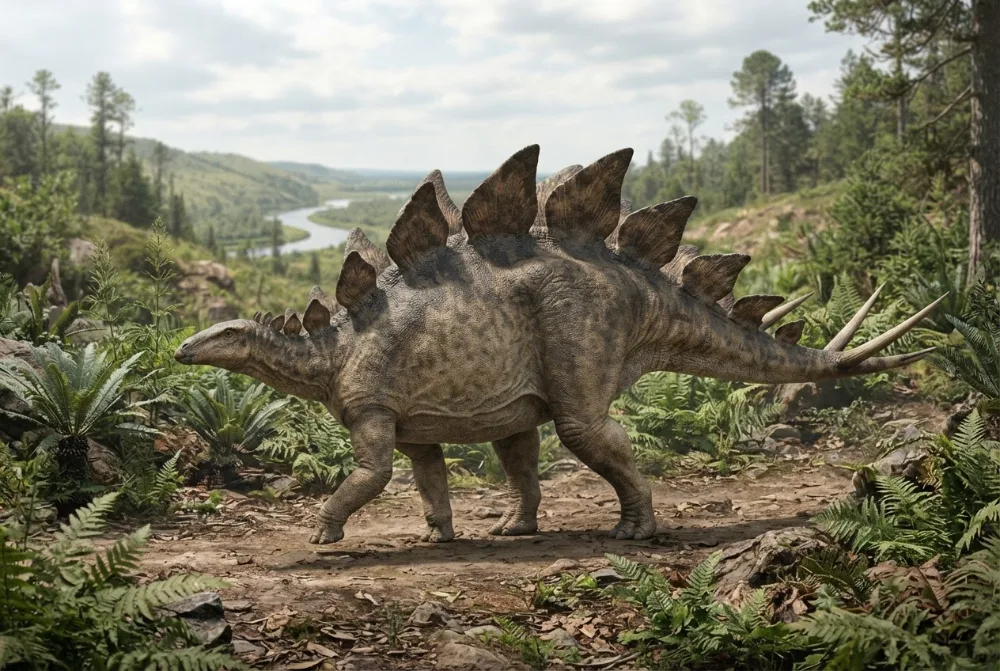
Yanbeilong was a close relative of Stegosaurus and Wuerhosaurus.1
Its fossils were discovered in 2011 in the Zuoyun Formation of China.1
Scientists think Yanbeilong was a ground-dwelling herbivore that walked on all four legs.3
Dipotso tse botswang haholo ka Yanbeilong
?How big was Yanbeilong?
Scientists do not know Yanbeilong's exact size because only a partial skeleton has been found. Estimates suggest it was a medium sized dinosaur, but a specific length is not currently known.3
?What did Yanbeilong eat?
Yanbeilong was a herbivore, meaning it ate plants. It was a ground-dwelling dinosaur that walked on all four legs.3
?When did Yanbeilong live?
Yanbeilong lived during the Albian age of the Early Cretaceous period, about 113 to 100 million years ago.13
?Where was Yanbeilong found?
Yanbeilong's fossils were discovered in 2011 in the Zuoyun Formation near Madaotou Township in Shanxi, China.1
?Is Yanbeilong a dinosaur?
Yes, Yanbeilong is a dinosaur. It is a type of ornithischian, though its classification as a stegosaur is currently debated by paleontologists.1
?Why is it called Yanbeilong ultimus?
Yanbeilong means 'north of Yanmen Pass dragon' in Chinese, and 'ultimus' means 'last' in Latin, because it was one of the last stegosaurs to exist.1
Bakeng sa ditsebi tsa didinosaure
- Lebitso la saense
- Yanbeilong
- E rehilwe ke
- Jia et al. 20243
- Sehlopha
- Didinosaure tse nang le dipoleiti
- Lelapa / leloko
- Stegosauridae3
- Tlhophiso
- Ornithischia > Stegosauria > Thyreophora3
- Dilemo tsa mafika
- dilemo tse dimilione tse 113 ho isa ho 100 (Albian)3
- Dibopeho tsa mafika
- Zuoyun3
- Dinaha
- Tjhaena3
- Direkoto tsa difosili
- 1 ho The Paleobiology Database3
- Ho sibollwa
- Yanbeilong was named in 2024 by Lei Jia and colleagues based on a partial skeleton found in 2011 in Shanxi, China.13
- E sa ntse e phehwa kgang
- Scientists are not sure exactly how many plates or spikes Yanbeilong had on its back, because only a partial skeleton has been found.1
Moo dintlha di tswang teng
- Yanbeilong (en.wikipedia.org)
- Yanbeilong ultimus | Dinosaur Database by DinoAnimals.com (dinoanimals.com)
- Yanbeilong in The Paleobiology Database (CC BY 4.0): dilemo, dibaka, dibopeho tsa mafika, tlhophiso.
Ntlha e nngwe le e nngwe leqepheng lena e na le nomoro e supang mohlodi wa yona. Haeba re fositse ho hong, re kopa tshwarelo, re balatedi ba didinosaure, ha re koranta ya saense. Re bolelle ho [email protected] mme re tla e lokisa.
 Rex o lapile! Dino Wiki ke projeke ya ntate bakeng sa mora wa hae ya ratang didinosaure, ke mahala, ha ho dipapatso, ha ho disebedi. Batho ba baholo ba ka fepa Rex seneke ho thusa hore e dule e le inthaneteng.Fepa Rex
 Stegosaurus
 Diracodon
 Hypsirophus
 Dacentrurus
 Miragaia
 Kentrosaurus
 Iguanodon
 Archaeopteryx
 Giganotosaurus
 Microraptor
 Deinonychus
 Baryonyx