 Kwisi: O dinosaure efe?
 Ntwa ya didinosaure
 Peiso ya didinosaure
 Dipapadi tse nyane tsa didinosaure
 Albamo ya ditikara
 Manane a TOP a didinosaure
 Nkgethele!
Zavacephale
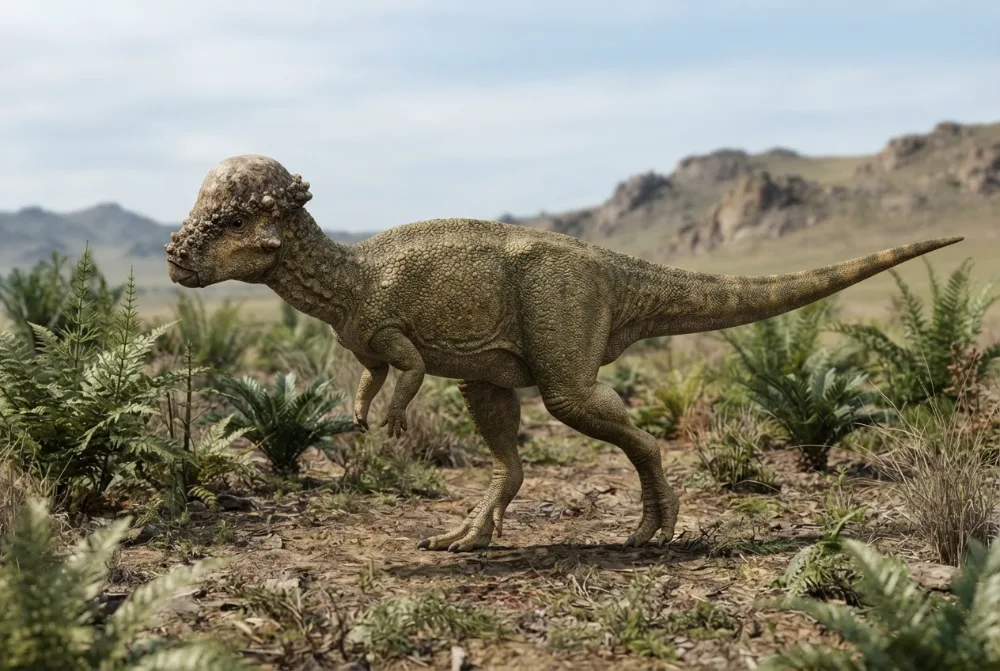
Zavacephale was a small, dome-headed dinosaur that lived in what is now Mongolia. It had a thick, rounded skull like a helmet, and it probably used it for head-butting contests. It is one of the oldest and most complete dome-headed dinosaurs ever found.12
E phetse neng?
E ne e le kgolo hakae?
E ne e le telele hakae?
E ne e le boima hakae?
 telele jwaloka dikatse tsa lapeng tse 2 ho tloha nkong ho isa mohatleng🍌telele jwaloka dibanana tse 6 di behilwe ka molae batla e le boima jwaloka katse ya lapeng🍌boima jwaloka dibanana tse 49🏃e ne e ka matha dimitara tse 100 ka metsotswana e 12 (motho ya lebelo ka ho fetisisa o hloka 9,6)
Zavacephale e ne e le kgolo hakae ha e bapiswa le WENA?
Ke dipalo feela ho browser ya hao. Ha ho letho le bolokwang kapa le romelwang kae kapa kae.
E ne e le lebelo hakae?


Dintlha tse monate
Zavacephale is the oldest known dome-headed dinosaur, living about 119 to 100 million years ago during the Early Cretaceous.12
Its skeleton is about 54% complete, making it the most complete pachycephalosaur ever found.1
It is the first pachycephalosaur to preserve hand bones and a mass of gastroliths (stomach stones).12
Unlike later dome-heads, Zavacephale's dome was made mostly of the frontal bone, with little help from the parietal bone.1
The tail of Zavacephale was covered in stiff tendons, but they did not form the 'caudal basket' seen in later pachycephalosaurs.1
The dome grew early in life, before the animal reached full size, which suggests it was important for social displays or head-butting even in young animals.2
Dipotso tse botswang haholo ka Zavacephale
?How big was Zavacephale?
About 1 metre long and weighed around 5.85 kilograms. That is about the size of a large domestic cat.13
?What did Zavacephale eat?
It was a plant-eater. It swallowed small stones called gastroliths to help grind up tough plants in its stomach.42
?Did Zavacephale have feathers?
The fossils don't show feathers, so scientists aren't sure. No feathers have been found on any pachycephalosaur.1
?Why did Zavacephale have a dome?
It probably used its thick, bony dome for head-butting contests with rivals, like rams do. The dome may also have been used for display to attract mates.4
?When did Zavacephale live?
It lived about 119 to 100 million years ago, during the Early Cretaceous Period. That makes it the oldest known dome-headed dinosaur.1
Mosenyi wa ditshomo
Tshomo: Some people think all dome-headed dinosaurs used their domes for ramming each other like bighorn sheep.
Nnete: Scientists are not sure. Zavacephale's dome was well developed even in a young animal, so it might have been for showing off or fighting, but the exact use is still debated.2
Bakeng sa ditsebi tsa didinosaure
- Lebitso la saense
- Zavacephale
- E rehilwe ke
- Chinzorig et al. 20255
- Sehlopha
- Dihlooho tse chitja
- Lelapa / leloko
- Pachycephalosauria5
- Tlhophiso
- Ornithischia > Pachycephalosauria5
- Dilemo tsa mafika
- dilemo tse dimilione tse 120 ho isa ho 100 (Aptian / Albian)5
- Dibopeho tsa mafika
- Khuren Dukh5
- Dinaha
- Mongolia5
- Direkoto tsa difosili
- 1 ho The Paleobiology Database5
- Ho sibollwa
- The fossil was found in 2019 in the Khuren Dukh Formation of Mongolia, and it was formally named by Tsogtbaatar Chinzorig and colleagues in 2025.12
- E sa ntse e phehwa kgang
- Scientists are still debating how the dome was used, whether for head-butting, display, or something else.2
Moo dintlha di tswang teng
- Zavacephale (en.wikipedia.org)
- A domed pachycephalosaur from the early Cretaceous of Mongolia | Nature (nature.com)
- Best fossil of a dome-headed dinosaur is unearthed in Mongolia | Reuters (reuters.com)
- New dome-headed dinosaur species is the most complete pachycephalosaur ever found | Natural History Museum (nhm.ac.uk)
- Zavacephale in The Paleobiology Database (CC BY 4.0): dilemo, dibaka, dibopeho tsa mafika, tlhophiso.
Ntlha e nngwe le e nngwe leqepheng lena e na le nomoro e supang mohlodi wa yona. Haeba re fositse ho hong, re kopa tshwarelo, re balatedi ba didinosaure, ha re koranta ya saense. Re bolelle ho [email protected] mme re tla e lokisa.
 Rex o lapile! Dino Wiki ke projeke ya ntate bakeng sa mora wa hae ya ratang didinosaure, ke mahala, ha ho dipapatso, ha ho disebedi. Batho ba baholo ba ka fepa Rex seneke ho thusa hore e dule e le inthaneteng.Fepa Rex
 Pachycephalosaurus
 Stegoceras
 Prenocephale
 Sphaerotholus
 Foraminacephale
 Brontotholus
 Stegosaurus
 Iguanodon
 Archaeopteryx
 Giganotosaurus
 Microraptor
 Deinonychus