 O dino efe? Kwisi
 Ntwa ya didino
 Peiso ya didino
 Metshamekwana ya didino
 Alebamo ya disetikara
 Manane a TOP a didino
 Ngakgamatsa!
Camarasaurus
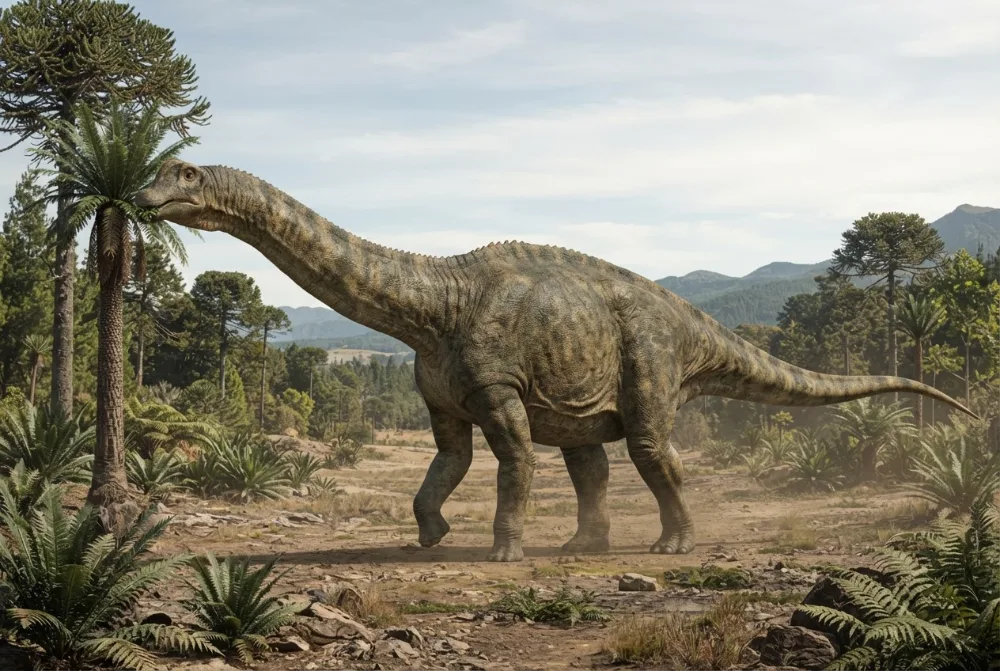
Camarasaurus was a giant, long-necked plant-eater that lived in North America during the Late Jurassic. It had a bulky body, a wide ribcage, and a surprisingly large skull for a sauropod. More than 530 fossils have been found, making it the most common dinosaur in the Morrison Formation.1
E tshetse leng?
E ne e le kgolo go le kae?
E ne e le telele go le kae?
E ne e le kwa godimo go le kae?
E ne e le bokete go le kae?

 telele jaaka dikoloi di le 5 di emisitswe mo moleng🍌telele jaaka dibanana di le 130 di latelana🍉bokete jaaka magapu a le 10000🎒bokete jaaka diphaposiborutelo tse di tletseng bana di le 62🐻❄️bokete jaaka dibere tse ditshweu di le 110🏢kwa godimo mo e ka kgalalelang mo fensetereng ya mokato wa 2🏃e ne e ka taboga dimetara di le 100 mo metsotswaneng e le 36 (motho yo o bonako go gaisa o tlhoka 9,6)
Camarasaurus e ne e le kgolo go le kae fa e bapisiwa le WENA?
Ke dipalo fela mo sebatling sa gago. Ga go sepe se se bolokwang kgotsa se se romelwang gope.
E ne e le bonako go le kae?


Dintlha tse di monate
Camarasaurus means 'chambered lizard' because its backbone had hollow chambers, which helped lighten its skeleton.1
It had a relatively short neck and tail compared to other sauropods, and its front legs were longer than its back legs, making its shoulders higher than its hips.1
More than 530 specimens have been found, including several nearly complete skeletons, so scientists know a lot about this dinosaur.1
Camarasaurus lived alongside other famous dinosaurs like Diplodocus, Stegosaurus, and Allosaurus in the Morrison Formation.1
Its teeth had microscopic pits and scratches that show adults ate tough, coarse plants, while juveniles ate softer food.1
A nearly complete skeleton of a young Camarasaurus (CM 11338) was found with its neck curved upward, but that pose may have happened after death, not when it was alive.1
Mothubi wa ditlhamane
Tlhamane: Camarasaurus could hold its neck straight up like a giraffe.
Boammaaruri: Scientists think its neck was held more horizontally or with a slight downward slope, not vertical like a swan.1
Ya baitseanape ba didino
- Leina la saense
- Camarasaurus
- Leina le neilwe ke
- Cope 18772
- Setlhopha
- Melala-meleele
- Lelapa / clade
- Camarasauridae2
- Thulaganyo
- Sauropodomorpha > Sauropoda > Macronaria2
- Bogolo jwa matlapa
- 162 go ya go 143 dimilione tsa dingwaga (Oxfordian / Tithonian)2
- Dibopego tsa matlapa
- Morrison, Kadzi, Süntel2
- Dinaga
- Amerika, Zimbabwe, Jeremane2
- Direkoto tsa difosili
- 138 mo The Paleobiology Database2
- E itsiwe gape e le
- Cathetosaurus, Caulodon, Uintasaurus (maina a bogologolo jaanong a balwa jaaka phologolo e le nngwe)2
- Go fitlhelwa
- Camarasaurus was named in 1877 by Edward Drinker Cope, based on fossils from Garden Park, Colorado. Soon after, his rival Othniel Charles Marsh named similar fossils Morosaurus, but those are now considered the same genus.1
- Go sa ntse go ganetsanwa
- Scientists still debate exactly how Camarasaurus held its neck and whether it could rear up on its hind legs to reach high plants.1
Kwa dintlha di tswang teng
- Camarasaurus (en.wikipedia.org)
- Camarasaurus in The Paleobiology Database (CC BY 4.0): dingwaga, mafelo, dibopego tsa matlapa, thulaganyo.
Ntlha nngwe le nngwe mo tsebeng eno e na le nomoro e e supang motswedi wa yona. Fa re dirile phoso, maitshwarelo, re barati ba didino, ga re lokwalodikgang lwa saense. Re bolelele kwa [email protected] mme re tla e baakanya.
 Rex o tshwerwe ke tlala! Dino Wiki ke porojeke ya rre e a e diretseng morwawe yo o ratang didino, ke mahala, ga e na dipapatso e bile ga e na dilatedi. Batho ba bagolo ba ka fepa Rex senyamo go thusa gore e nne mo inthaneteng.Fepa Rex
 Brachiosaurus
 Diplodocus
 Brontosaurus
 Argentinosaurus
 Morosaurus
 Massospondylus
 Allosaurus
 Compsognathus
 Camptosaurus
 Nanosaurus
 Rhamphorhynchus
 Ceratosaurus