 O dino efe? Kwisi
 Ntwa ya didino
 Peiso ya didino
 Metshamekwana ya didino
 Alebamo ya disetikara
 Manane a TOP a didino
 Ngakgamatsa!
Campylognathoides
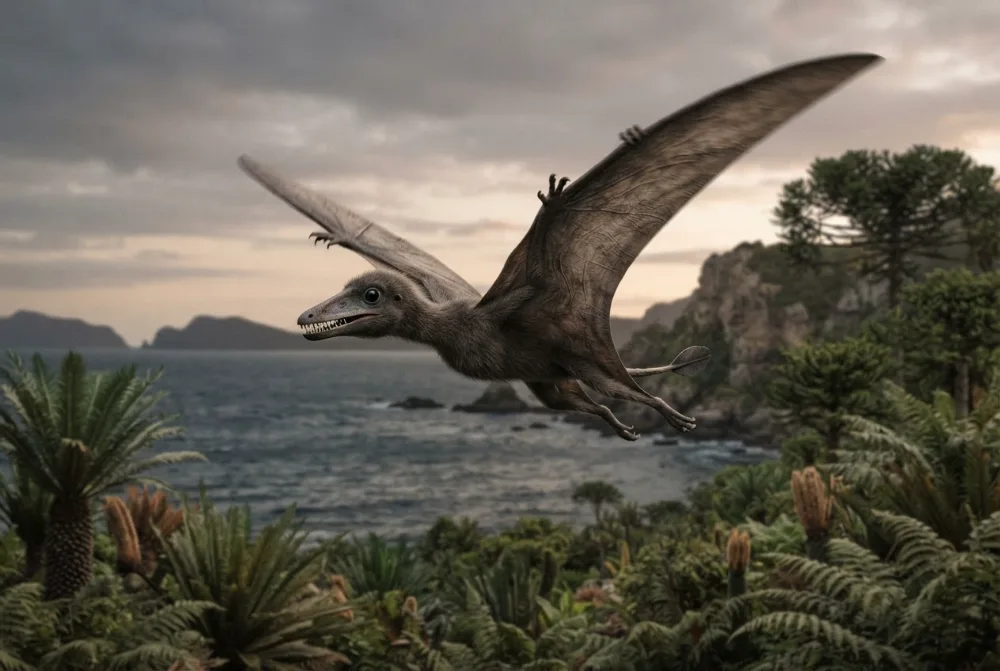
Campylognathoides was a small flying reptile that lived in the Early Jurassic, about 182 million years ago. It had long, narrow wings and a short tail, and it probably hunted at night for squid-like animals called belemnoids.12
E tshetse leng?
E ne e le kgolo go le kae?
Diphuka tsa yona di ne di namegile go le kae?
 telele jaaka dikatse tsa mo gae di le 4 go tswa kwa nkong go ya kwa mogatleng⚽e ne e ka fofa go kgabaganya lebala lotlhe la kgwele ya dinao mo metsotswaneng e le 8.4
Campylognathoides e ne e le kgolo go le kae fa e bapisiwa le WENA?
Ke dipalo fela mo sebatling sa gago. Ga go sepe se se bolokwang kgotsa se se romelwang gope.
E ne e le bonako go le kae?


Dintlha tse di monate
Campylognathoides is the only pterosaur known to have eaten belemnoids. Scientists found hooklets from these squid-like animals in its stomach.2
Because belemnoids migrated to the surface at night, Campylognathoides may have hunted in the dark, like some modern bats and falcons.2
The first fossils of Campylognathoides were just wing fragments. Later, much better skeletons were found in the Holzmaden shale.1
Its original name, Campylognathus, was already used for a bug. So in 1928, the name was changed to Campylognathoides.1
Campylognathoides lived in a shallow sea. Its fossils are found in marine rocks, but it flew over the water to catch its prey.12
Scientists think Campylognathoides had a fast, agile flight, similar to falcons and mastiff bats that catch food while flying.1
Dipotso tse di botswang thata ka ga Campylognathoides
?How big was Campylognathoides?
It was quite small. The larger species, C. zitteli, had a wingspan of about 1.75 metres (5.7 feet), and the smaller species, C. liasicus, had a wingspan of around 0.9 metres (3 feet).1
?Was Campylognathoides a dinosaur?
No, it was a pterosaur, a type of flying reptile that lived alongside dinosaurs but is not a dinosaur itself.1
?What did Campylognathoides eat?
It ate squid-like animals called belemnoids. Scientists found hooklets from a belemnoid called Clarkeiteuthis conocauda in its stomach.2
Ya baitseanape ba didino
- Leina la saense
- Campylognathoides
- Leina le neilwe ke
- Strand 19283
- Setlhopha
- Digagabi tse di fofang
- Lelapa / clade
- Campylognathoididae3
- Thulaganyo
- Pterosauria3
- Bogolo jwa matlapa
- 184 go ya go 183 dimilione tsa dingwaga (Toarcian)3
- Dibopego tsa matlapa
- Posidonia Shale3
- Dinaga
- Jeremane3
- Direkoto tsa difosili
- 12 mo The Paleobiology Database3
- Go fitlhelwa
- The first specimen was described by Felix Plieninger in 1894 as Campylognathus zitteli, based on wing fragments from Germany. In 1928, Embrik Strand renamed it Campylognathoides because the old name was already taken.1
- Go sa ntse go ganetsanwa
- Scientists are not sure if Campylognathoides hunted only at night or also during the day. The idea of nocturnal hunting is still being studied.2
Kwa dintlha di tswang teng
- Campylognathoides (en.wikipedia.org)
- Dietary tendencies of the Early Jurassic pterosaurs Campylognathoides Strand, 1928, and Dorygnathus (dinodata.de)
- Campylognathoides in The Paleobiology Database (CC BY 4.0): dingwaga, mafelo, dibopego tsa matlapa, thulaganyo.
Ntlha nngwe le nngwe mo tsebeng eno e na le nomoro e e supang motswedi wa yona. Fa re dirile phoso, maitshwarelo, re barati ba didino, ga re lokwalodikgang lwa saense. Re bolelele kwa [email protected] mme re tla e baakanya.
 Rex o tshwerwe ke tlala! Dino Wiki ke porojeke ya rre e a e diretseng morwawe yo o ratang didino, ke mahala, ga e na dipapatso e bile ga e na dilatedi. Batho ba bagolo ba ka fepa Rex senyamo go thusa gore e nne mo inthaneteng.Fepa Rex
 Pteranodon
 Quetzalcoatlus
 Dorygnathus
 Rhamphorhynchus
 Anhanguera
 Pterodactylus
 Dilophosaurus
 Stenopterygius
 Lufengosaurus
 Scutellosaurus
 Yunnanosaurus
 Sinosaurus