 O dino efe? Kwisi
 Ntwa ya didino
 Peiso ya didino
 Metshamekwana ya didino
 Alebamo ya disetikara
 Manane a TOP a didino
 Ngakgamatsa!
E tshetse leng?

E ne e le kgolo go le kae?
E ne e le telele go le kae?
E ne e le kwa godimo go le kae?
kakanyo
E ne e le bokete go le kae?
 telele jaaka dikatse tsa mo gae di le 4 go tswa kwa nkong go ya kwa mogatleng🍌telele jaaka dibanana di le 12 di latelana🍌bokete jaaka dibanana di le 110🏃e ne e ka taboga dimetara di le 100 mo metsotswaneng e le 9.2 (motho yo o bonako go gaisa o tlhoka 9,6)
Megapnosaurus e ne e le kgolo go le kae fa e bapisiwa le WENA?
Ke dipalo fela mo sebatling sa gago. Ga go sepe se se bolokwang kgotsa se se romelwang gope.
E ne e le bonako go le kae?


Dintlha tse di monate
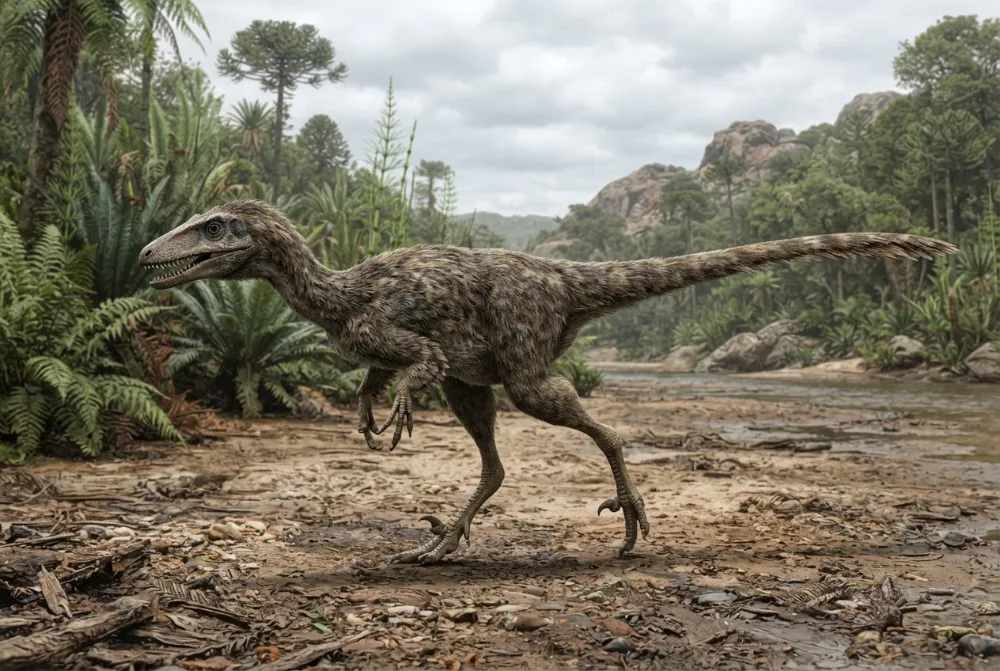
Megapnosaurus was one of the first dinosaurs ever shown with feathers in pictures, even though no one has found actual feathers with its fossils.1
At least 30 Megapnosaurus skeletons were found together in Zimbabwe, which suggests they might have lived or hunted in groups.1
Its name changed over time: first it was called Syntarsus, but that name was already used for a beetle, so scientists gave it a new name in 2001.1
Megapnosaurus had an S-shaped neck and long hind legs that looked like the legs of a secretary bird.1
Its hands had four fingers, which is more than most later meat-eating dinosaurs had.1
Some scientists think Megapnosaurus might actually belong to the genus Coelophysis, but most recent studies say it is its own genus.1
Dipotso tse di botswang thata ka ga Megapnosaurus
?How big was Megapnosaurus?
Megapnosaurus grew up to about 2.2 metres (7.2 feet) long and weighed up to 13 kilograms (29 pounds).1
?What did Megapnosaurus eat?
Megapnosaurus was a carnivore, meaning it ate meat. It may have hunted in packs and preyed on early plant-eating dinosaurs and lizards.1
?When did Megapnosaurus live?
Megapnosaurus lived during the Early Jurassic Period, about 199 to 188 million years ago.1
?Where was Megapnosaurus found?
Fossils of Megapnosaurus were found in Zimbabwe and South Africa in Africa.1
?Did Megapnosaurus have feathers?
Nobody knows for sure. It was one of the first dinosaurs shown with feathers in pictures, but no actual feathers have been found with its fossils.1
?Why is it called Megapnosaurus?
Megapnosaurus means 'big dead lizard' in Greek. It got this name after its first name, Syntarsus, was already used for a beetle.1
Ya baitseanape ba didino
- Leina la saense
- Megapnosaurus
- Leina le neilwe ke
- Ivie et al. 20012
- Setlhopha
- Didino tse di jang nama
- Lelapa / clade
- Coelophysidae2
- Thulaganyo
- Theropoda > Coelophysoidea2
- Bogolo jwa matlapa
- 201 go ya go 193 dimilione tsa dingwaga (Hettangian / Sinemurian)2
- Dibopego tsa matlapa
- Forest Sandstone, Nyamandhlovu Sandstones, Elliot2
- Dinaga
- Zimbabwe, Aforika Borwa, Tšhaena, Amerika2
- Direkoto tsa difosili
- 8 mo The Paleobiology Database2
- Go fitlhelwa
- The first fossils were found in 1963 by students in Zimbabwe. Scientist Michael Raath named it Syntarsus rhodesiensis in 1969, and later it was renamed Megapnosaurus in 2001.1
- Go sa ntse go ganetsanwa
- Scientists still debate whether Megapnosaurus should be its own genus or just a species of Coelophysis.1
Kwa dintlha di tswang teng
- Megapnosaurus (en.wikipedia.org)
- Megapnosaurus in The Paleobiology Database (CC BY 4.0): dingwaga, mafelo, dibopego tsa matlapa, thulaganyo.
Ntlha nngwe le nngwe mo tsebeng eno e na le nomoro e e supang motswedi wa yona. Fa re dirile phoso, maitshwarelo, re barati ba didino, ga re lokwalodikgang lwa saense. Re bolelele kwa [email protected] mme re tla e baakanya.
 Rex o tshwerwe ke tlala! Dino Wiki ke porojeke ya rre e a e diretseng morwawe yo o ratang didino, ke mahala, ga e na dipapatso e bile ga e na dilatedi. Batho ba bagolo ba ka fepa Rex senyamo go thusa gore e nne mo inthaneteng.Fepa Rex
 Allosaurus
 Carnotaurus
 Dilophosaurus
 Giganotosaurus
 Compsognathus
 Paronychodon
 Stenopterygius
 Dorygnathus
 Lufengosaurus
 Scutellosaurus
 Yunnanosaurus
 Temnodontosaurus