 Ban dino nga? Kiis
 Xeexu dino
 Rawante dino
 Fo yu ndaw yu dino
 Albomu sitikeer
 Limu TOP yu dino
 Bett ma!
Aeolosaurus
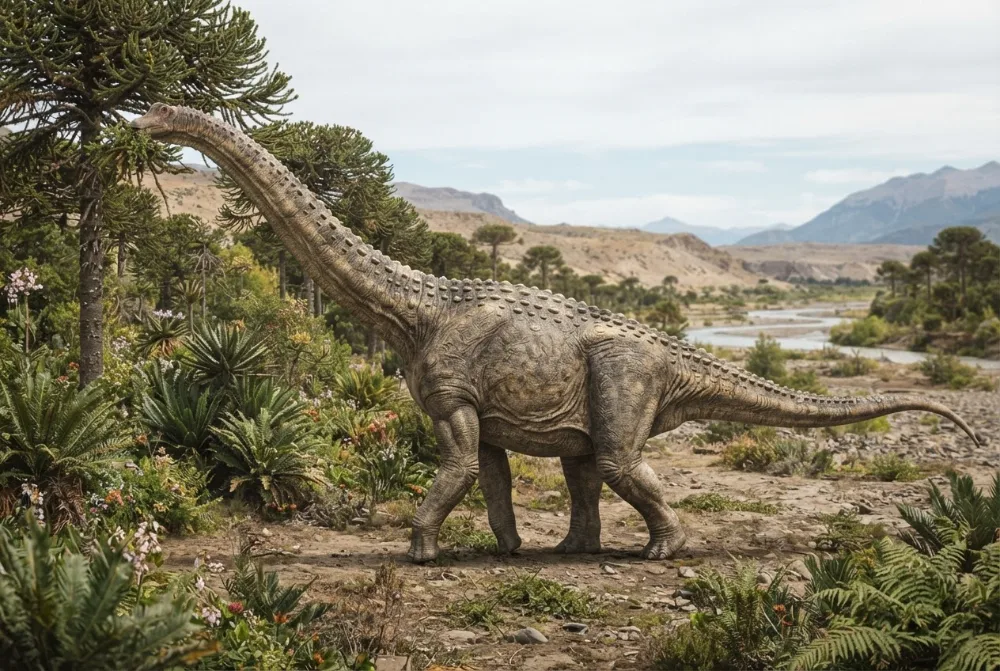
Aeolosaurus was a huge, long-necked plant eater that lived in South America near the end of the Age of Dinosaurs. It walked on four sturdy legs and probably used its long neck to reach leaves high in the trees.6
Kañ la dundoon?
Naka la réyoon?
Naka la guddoon?
Naka la kawewoon?
Naka la diisoon?

 gudd ni 22 oto yu ñu taxawal ci benn rëdd🍌gudd ni 560 banaana yu ñu topp-toppalediis ni 10 oto🍉diis ni 2900 xaal🦒kawe ni 18 njamala yu ñu teg ci kaw seen bopp🎒diis ni 18 klaas yu mat yu xale yu lekkool🐻❄️diis ni 33 uurs yu weex🏢kawe ba mën a xool ci palanteer bu nekk ci eta 34🏃mënoon na daw 100 meetar ci 24 segond (nit ki gën a gaaw dafay soxla 9,6)
Naka la Aeolosaurus réyoon, bu ñu ko méngalee ak YAW?
Ay kalkil rekk ci sa navigatëer. Dara du ñu denc, dara du ñu yónne fenn.
Naka la gaawoon?


Xibaar yu neex
Aeolosaurus lived between about 83.6 and 66 million years ago, during the Campanian and Maastrichtian ages of the Late Cretaceous.2
It belonged to a group called Aeolosaurini, which is part of the larger titanosaur family. Its closest relatives include Baurutitan, Caieiria, Gondwanatitan, and Panamericansaurus.6
Scientists have named two species: Aeolosaurus rionegrinus, the type species, and Aeolosaurus colhuehuapensis.6
Aeolosaurus fossils have been found in rocks from the Turonian to Santonian ages in central Brazil, which is older than the Campanian-Maastrichtian fossils from Argentina. This shows the genus lived over a long time and a wide area.1
The discovery of Aeolosaurus in the Marilia Formation of Brazil shows that this dinosaur survived after a marine incursion flooded parts of northern Patagonia during the Campanian-Maastrichtian.1
Aeolosaurus had special bones in its tail: the prezygapophyses (joints) curved downward on the front tail vertebrae, and the haemal arches had double articular facets set in a concave surface. This unique combination helps scientists identify it.6
Laaj yi ñu gën a laaj ci Aeolosaurus
?How big was Aeolosaurus?
Estimates vary. Gregory S. Paul said Aeolosaurus rionegrinus was about 14 metres (46 ft) long and weighed 6 tonnes (6.6 short tons). In 2020, Molina-Pérez and Larramendi gave a larger estimate of 18.1 metres (60 ft) and 14.7 tonnes (16.2 short tons).45
?What did Aeolosaurus eat?
Aeolosaurus was a herbivore, meaning it ate plants. Like other sauropods, it used its long neck to reach leaves high in trees.45
Ku tas léeb yu dul dëgg
Léeb: Some people think Aeolosaurus was a type of marine reptile because its name sounds like 'Aeolus' from the sea.
Dëgg: Aeolosaurus was a land-dwelling dinosaur, a sauropod that lived on land and ate plants. It was not a marine reptile.6
Ngir ñi xam dino lool
- Turu xam-xam
- Aeolosaurus
- Ku ko tudde
- Powell 19876
- Kurél
- Baat yu gudd
- Njaboot / klad
- Aeolosaurini6
- Klasifikasiyoŋ
- Sauropodomorpha > Sauropoda > Titanosauria > Macronaria6
- Màggaayu doj yi
- 84 ba 66 milyoŋ at (Campanian / Maastrichtian)6
- Formasiyoŋi doj
- Allen, Lago Colhué Huapi, Angostura Colorada6
- Réew yi
- Arsantin, Beresil, Uruge6
- Fosil yu ñu gis
- 6 ci The Paleobiology Database6
- Gisees
- Aeolosaurus was named by J. E. Powell in 1987. The name comes from the Late Cretaceous fauna of Los Alamitos in Patagonia, Argentina, where the first fossils were found.6
- Ñu ngi koy werante ba tey
- Scientists debate whether Gondwanatitan faustoi is a separate valid genus or a junior synonym of Aeolosaurus. One study says it is valid, but other classifications have placed it as a sister taxon.16
Fa xibaar yi jóge
- Record of the genus Aeolosaurus (Sauropoda, Titanosauria) in the Late Cretaceous of South America: paleogeographic implications (Journal Article) | ETDEWEB (osti.gov)
- PBDB Taxon (paleobiodb.org)
- Aeolosaurus (en.wikipedia.org)
- Aeolosaurus - Wikipedia (en.wikipedia.org)
- Aeolosaurus (en.m.wikipedia.org)
- Aeolosaurus in The Paleobiology Database (CC BY 4.0): at, béréb yi, formasiyoŋi doj, klasifikasiyoŋ.
Bépp xibaar ci xët wii am na lim bu wone fa mu jóge. Su nu juumee, baal nu, nun ñu bëgg dino lanu, du ab sërnaalu xam-xam. Wax nu ko ci [email protected] nu defar ko.
 Rex xiif na! Dino Wiki, mbiru ab baay la ngir doomam ju góor ju bëgg dinosoor, ci neen te amul kaamuñaate, amul tracker. Mag ñi mën nañu jox Rex tuuti ñam ngir dimbali ko mu des ci internet.Dundal Rex
 Brachiosaurus
 Diplodocus
 Brontosaurus
 Argentinosaurus
 Camarasaurus
 Morosaurus
 Tyrannosaurus
 Triceratops
 Velociraptor
 Spinosaurus
 Ankylosaurus
 Parasaurolophus