 Ban dino nga? Kiis
 Xeexu dino
 Rawante dino
 Fo yu ndaw yu dino
 Albomu sitikeer
 Limu TOP yu dino
 Bett ma!
Arrudatitan
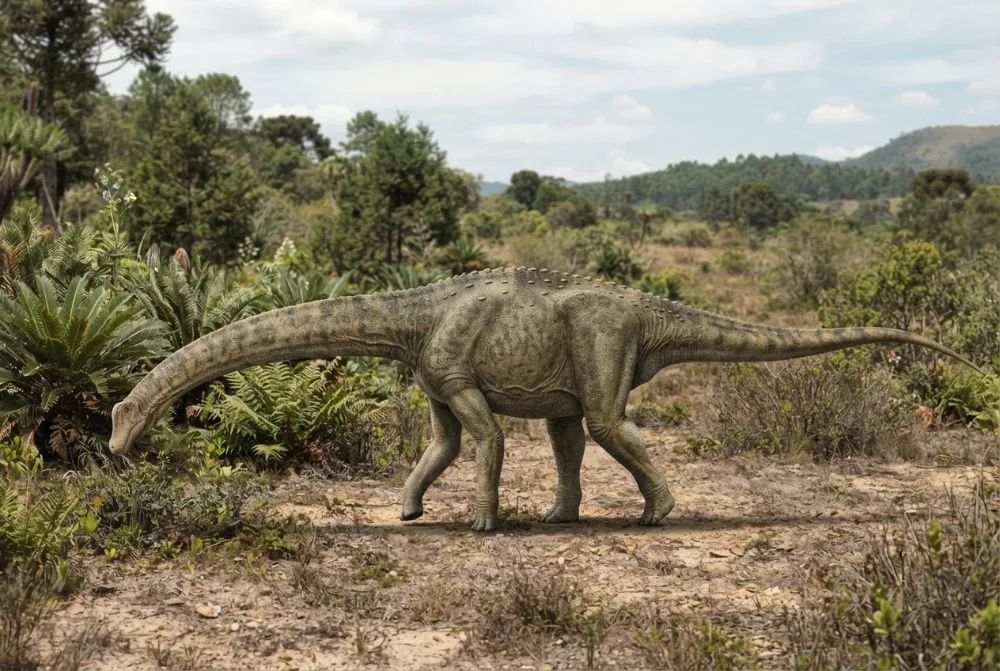
Arrudatitan was a huge, long-necked plant-eater that lived in Brazil during the Late Cretaceous. It was a titanosaur, a group of sauropods that included some of the biggest land animals ever. Even though it was giant, Arrudatitan was more slender and graceful than many of its relatives.1
Kañ la dundoon?
Naka la réyoon?
Naka la guddoon?
Naka la kawewoon?
jortu
Naka la diisoon?

 gudd ni 3 oto yu ñu taxawal ci benn rëdd🍌gudd ni 83 banaana yu ñu topp-toppalediis ni 8 oto🍉diis ni 2500 xaal🎒diis ni 15 klaas yu mat yu xale yu lekkool🐻❄️diis ni 27 uurs yu weex🏃mënoon na daw 100 meetar ci 26 segond (nit ki gën a gaaw dafay soxla 9,6)
Naka la Arrudatitan réyoon, bu ñu ko méngalee ak YAW?
Ay kalkil rekk ci sa navigatëer. Dara du ñu denc, dara du ñu yónne fenn.
Naka la gaawoon?


Xibaar yu neex
Arrudatitan was first thought to be a species of Aeolosaurus, but scientists later gave it its own genus name in 2021.12
The first fossils were found in 1997 by a farmer and his 12-year-old nephew in a field in Cândido Rodrigues, Brazil.1
Its femur (thigh bone) was 1.55 metres (5.1 feet) long, which helps scientists estimate its total length at about 15 metres (49 feet).1
Crocodylomorph and theropod teeth were found near the Arrudatitan skeleton, but there were no bite marks on the bones.1
Arrudatitan lived during the Campanian to Maastrichtian stages of the Late Cretaceous, about 72 to 68 million years ago.1
The name Arrudatitan honors Brazilian paleontologist Antônio Celso de Arruda Campos.1
Laaj yi ñu gën a laaj ci Arrudatitan
?How big was Arrudatitan?
Arrudatitan grew up to about 15 metres (49 feet) long, based on its fossils. Its thigh bone was 1.55 metres (5.1 feet) long.1
?What did Arrudatitan eat?
It was a plant-eater, or herbivore. As a titanosaur sauropod, it ate plants.4
?When did Arrudatitan live?
Arrudatitan lived during the Late Cretaceous, about 72 to 68 million years ago.1
?Where was Arrudatitan found?
Its fossils were found in the Adamantina Formation of Brazil, in a field near Cândido Rodrigues.1
Ngir ñi xam dino lool
- Turu xam-xam
- Arrudatitan
- Ku ko tudde
- Silva Junior et al. 20224
- Kurél
- Baat yu gudd
- Njaboot / klad
- Rinconsauria4
- Klasifikasiyoŋ
- Sauropodomorpha > Sauropoda > Titanosauria > Macronaria4
- Màggaayu doj yi
- 84 ba 66 milyoŋ at (Campanian / Maastrichtian)4
- Formasiyoŋi doj
- Adamantina4
- Réew yi
- Beresil4
- Fosil yu ñu gis
- 1 ci The Paleobiology Database4
- Gisees
- The first fossils were found in 1997 by Ademir Frare and his 12-year-old nephew Luiz Augusto dos Santos Frare in a field in Cândido Rodrigues, Brazil. They told paleontologist Antônio Celso de Arruda Campos, and the bones were collected by staff of the Museu de Paleontologia de Monte Alto. The species was first named Aeolosaurus maximus in 2011, but moved to its own genus Arrudatitan in 2021.1
- Ñu ngi koy werante ba tey
- Scientists are still debating exactly how Arrudatitan is related to other titanosaurs, and whether it belongs in the group Rinconsauria or is closer to other South American giants.14
Fa xibaar yi jóge
- Arrudatitan (en.wikipedia.org)
- Reassessment of Aeolosaurus maximus, a titanosaur dinosaur from the Late Cretaceous of Southeastern Brazil (exa.ai)
- Arrudatitan maximus | Dinosaur Database by DinoAnimals.com (dinoanimals.com)
- Arrudatitan in The Paleobiology Database (CC BY 4.0): at, béréb yi, formasiyoŋi doj, klasifikasiyoŋ.
Bépp xibaar ci xët wii am na lim bu wone fa mu jóge. Su nu juumee, baal nu, nun ñu bëgg dino lanu, du ab sërnaalu xam-xam. Wax nu ko ci [email protected] nu defar ko.
 Rex xiif na! Dino Wiki, mbiru ab baay la ngir doomam ju góor ju bëgg dinosoor, ci neen te amul kaamuñaate, amul tracker. Mag ñi mën nañu jox Rex tuuti ñam ngir dimbali ko mu des ci internet.Dundal Rex
 Brachiosaurus
 Diplodocus
 Brontosaurus
 Argentinosaurus
 Camarasaurus
 Morosaurus
 Tyrannosaurus
 Triceratops
 Velociraptor
 Spinosaurus
 Ankylosaurus
 Parasaurolophus