 Ban dino nga? Kiis
 Xeexu dino
 Rawante dino
 Fo yu ndaw yu dino
 Albomu sitikeer
 Limu TOP yu dino
 Bett ma!
Asiatyrannus
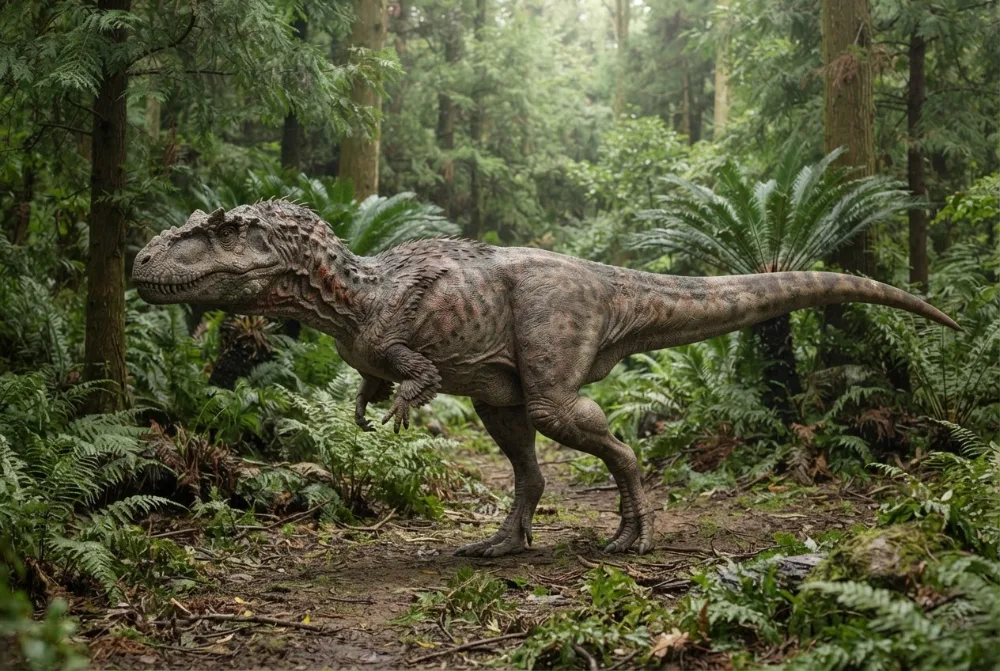
Asiatyrannus was a small to medium-sized tyrannosaur that lived in what is now China. It had a deep, strong snout and was about half the size of its long-snouted cousin Qianzhousaurus. This dinosaur was a meat-eater that hunted in the same area as other tyrannosaurs.12
Kañ la dundoon?
Naka la réyoon?
Naka la guddoon?
Naka la kawewoon?
jortu
 gudd ni 4 xaj, bakkan ba geen🍌gudd ni 22 banaana yu ñu topp-toppale🏃mënoon na daw 100 meetar ci 7,5 segond (nit ki gën a gaaw dafay soxla 9,6)
Naka la Asiatyrannus réyoon, bu ñu ko méngalee ak YAW?
Ay kalkil rekk ci sa navigatëer. Dara du ñu denc, dara du ñu yónne fenn.
Naka la gaawoon?


Xibaar yu neex
Asiatyrannus had a deep snout, unlike its long-snouted relative Qianzhousaurus that lived in the same time and place.12
The only known fossil of Asiatyrannus is a sub-adult that was at least 13 years old when it died.2
Its skull was 47.5 cm long, and its femur (thigh bone) was 44 cm long.2
Asiatyrannus is named after Asia and the Latin word for 'king' or 'tyrant'.1
The species name xui honors Dr. Xing Xu, a famous Chinese dinosaur scientist.1
Laaj yi ñu gën a laaj ci Asiatyrannus
?How big was Asiatyrannus?
About 3.5 to 4 metres (11 to 13 ft) long. Its skull was 47.5 cm (18.7 in) long.14
?What did Asiatyrannus eat?
It was a meat-eater, like other tyrannosaurs. Scientists think it hunted different prey than its long-snouted cousin Qianzhousaurus because of its deep snout and smaller size.1
?Where did Asiatyrannus live?
It lived in what is now southeastern China, in the area of Ganzhou City, Jiangxi Province. Its fossils were found in the Nanxiong Formation.14
?Is Asiatyrannus a dinosaur?
Yes, Asiatyrannus is a dinosaur. It is a tyrannosaurid theropod, which means it is a meat-eating dinosaur that walked on two legs.14
?Was Asiatyrannus bigger than T. rex?
No, it was much smaller. Asiatyrannus was only about 3.5 to 4 metres long, while Tyrannosaurus rex could be over 12 metres long.1
Ngir ñi xam dino lool
- Turu xam-xam
- Asiatyrannus
- Ku ko tudde
- Zheng et al. 20245
- Kurél
- Tiranosoor yi
- Njaboot / klad
- Tyrannosauridae5
- Klasifikasiyoŋ
- Theropoda > Tyrannosauroidea > Tyrannosauridae5
- Màggaayu doj yi
- 72 ba 66 milyoŋ at (Maastrichtian)5
- Formasiyoŋi doj
- Nanxiong5
- Réew yi
- Siin5
- Fosil yu ñu gis
- 1 ci The Paleobiology Database5
- Gisees
- The fossil was found in September 2017 at a construction site in Shahe Town, Ganzhou City, China. It was named by Zheng and colleagues in 2024.13
- Ñu ngi koy werante ba tey
- Scientists are not sure exactly how big a fully grown Asiatyrannus was, because the only known fossil is from a sub-adult.2
Fa xibaar yi jóge
- The first deep-snouted tyrannosaur from Upper Cretaceous Ganzhou City of southeastern China | Scientific Reports (nature.com)
- The first deep-snouted tyrannosaur from Upper Cretaceous Ganzhou City of southeastern China (pmc.ncbi.nlm.nih.gov)
- PBDB Taxon (paleobiodb.org)
- Asiatyrannus (en.wikipedia.org)
- Asiatyrannus in The Paleobiology Database (CC BY 4.0): at, béréb yi, formasiyoŋi doj, klasifikasiyoŋ.
Bépp xibaar ci xët wii am na lim bu wone fa mu jóge. Su nu juumee, baal nu, nun ñu bëgg dino lanu, du ab sërnaalu xam-xam. Wax nu ko ci [email protected] nu defar ko.
 Rex xiif na! Dino Wiki, mbiru ab baay la ngir doomam ju góor ju bëgg dinosoor, ci neen te amul kaamuñaate, amul tracker. Mag ñi mën nañu jox Rex tuuti ñam ngir dimbali ko mu des ci internet.Dundal Rex
 Tyrannosaurus
 Tarbosaurus
 Albertosaurus
 Daspletosaurus
 Gorgosaurus
 Alectrosaurus
 Triceratops
 Velociraptor
 Spinosaurus
 Ankylosaurus
 Parasaurolophus
 Pteranodon