 Ban dino nga? Kiis
 Xeexu dino
 Rawante dino
 Fo yu ndaw yu dino
 Albomu sitikeer
 Limu TOP yu dino
 Bett ma!
Bravoceratops
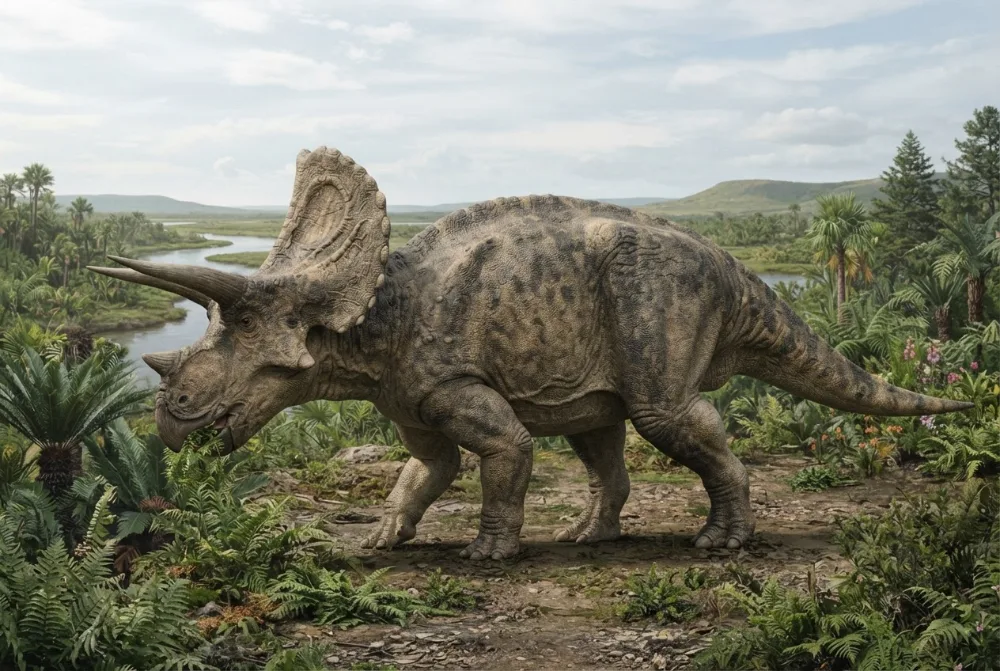
Bravoceratops was a big, plant-eating dinosaur with a huge frill on its head and a beak like a parrot. It lived in what is now Texas, USA, about 70 million years ago. This dinosaur is known from just one skull, but it helps scientists understand how horned dinosaurs changed over time.1
Kañ la dundoon?
Naka la réyoon?
Naka la guddoon?
Naka la kawewoon?
jortu
 gudd ni 2 oto yu ñu taxawal ci benn rëdd🍌gudd ni 56 banaana yu ñu topp-toppale🏃mënoon na daw 100 meetar ci 19 segond (nit ki gën a gaaw dafay soxla 9,6)
Naka la Bravoceratops réyoon, bu ñu ko méngalee ak YAW?
Ay kalkil rekk ci sa navigatëer. Dara du ñu denc, dara du ñu yónne fenn.
Naka la gaawoon?


Xibaar yu neex
Bravoceratops had a fan-shaped bone in the middle of its frill with a hollow spot that looked like a single eye, which is why it was named after the cyclops Polyphemus.1
Its name comes from the Rio Bravo del Norte, the Mexican name for the Rio Grande river.1
The only known fossil of Bravoceratops was found in Big Bend National Park in Texas.1
Bravoceratops lived during the Maastrichtian age, about 70 million years ago, near the end of the dinosaur era.1
Some scientists think Bravoceratops might be the same as another dinosaur, but others say it is a valid genus with unique features.1
Bravoceratops had two brow horns that were taller than they were wide, not round like in some other horned dinosaurs.1
Laaj yi ñu gën a laaj ci Bravoceratops
?How big was Bravoceratops?
Bravoceratops was one of the largest chasmosaurine horned dinosaurs. Its skull was about 2.1 metres long, and its brow horns were each over 0.9 metres long. It was similar in size to Triceratops, which weighed up to about 6,800 kilograms.3
?What did Bravoceratops eat?
Bravoceratops was a plant-eater. It had a beak like a parrot for snipping plants.1
?When did Bravoceratops live?
Bravoceratops lived about 70 million years ago, during the Late Cretaceous period.1
Ku tas léeb yu dul dëgg
Léeb: Bravoceratops had a single horn on its frill like a cyclops eye.
Dëgg: The hollow spot on its frill was probably the base for a small horn, but the horn itself is not preserved in the fossil.1
Ngir ñi xam dino lool
- Turu xam-xam
- Bravoceratops
- Ku ko tudde
- Wick and Lehman 20134
- Kurél
- Dino yu am béjjén
- Njaboot / klad
- Ceratopsidae4
- Klasifikasiyoŋ
- Ornithischia > Ceratopsia > Ceratopsidae4
- Màggaayu doj yi
- 72 ba 66 milyoŋ at (Maastrichtian)4
- Formasiyoŋi doj
- Javelina4
- Réew yi
- Amerig4
- Fosil yu ñu gis
- 1 ci The Paleobiology Database4
- Gisees
- Bravoceratops was named by Steven L. Wick and Thomas M. Lehman in 2013 based on a skull found in the Javelina Formation of Texas.1
- Ñu ngi koy werante ba tey
- Scientists are not sure if Bravoceratops is a valid genus or if its fossil was reconstructed upside down, making it a nomen dubium.1
Fa xibaar yi jóge
- Bravoceratops (en.wikipedia.org)
- PBDB Taxon (paleobiodb.org)
- Horned Dinosaur Discovery - Big Bend National Park (U.S. National Park Service) (nps.gov)
- Bravoceratops in The Paleobiology Database (CC BY 4.0): at, béréb yi, formasiyoŋi doj, klasifikasiyoŋ.
Bépp xibaar ci xët wii am na lim bu wone fa mu jóge. Su nu juumee, baal nu, nun ñu bëgg dino lanu, du ab sërnaalu xam-xam. Wax nu ko ci [email protected] nu defar ko.
 Rex xiif na! Dino Wiki, mbiru ab baay la ngir doomam ju góor ju bëgg dinosoor, ci neen te amul kaamuñaate, amul tracker. Mag ñi mën nañu jox Rex tuuti ñam ngir dimbali ko mu des ci internet.Dundal Rex
 Triceratops
 Protoceratops
 Ojoceratops
 Tatankaceratops
 Psittacosaurus
 Centrosaurus
 Tyrannosaurus
 Velociraptor
 Spinosaurus
 Ankylosaurus
 Parasaurolophus
 Pteranodon