 Ban dino nga? Kiis
 Xeexu dino
 Rawante dino
 Fo yu ndaw yu dino
 Albomu sitikeer
 Limu TOP yu dino
 Bett ma!
Coahuilaceratops
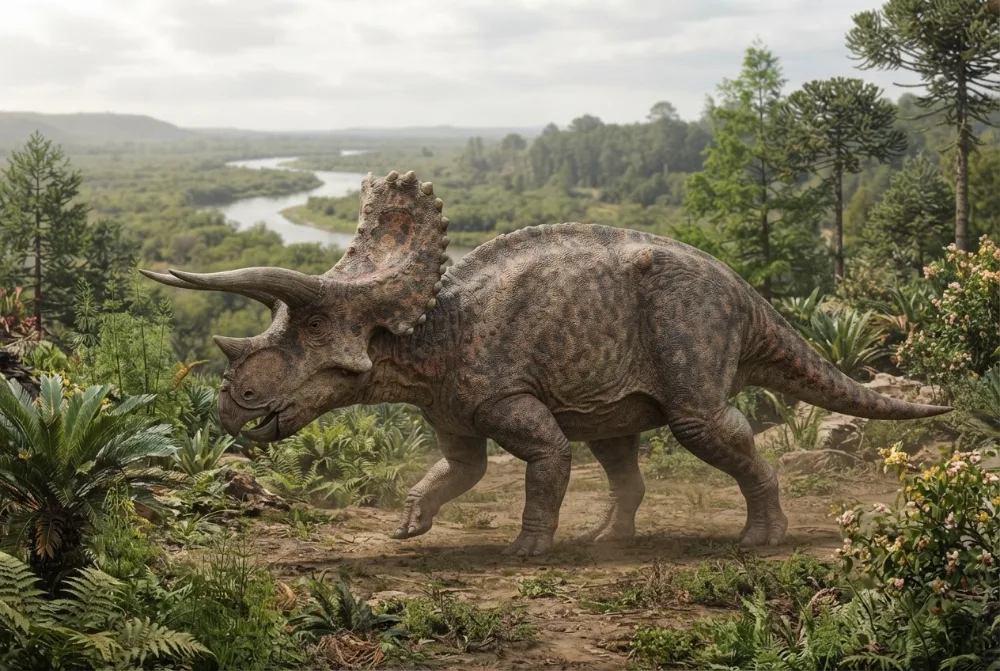
Coahuilaceratops was a horned dinosaur that lived in what is now Mexico. It had huge horns on its face, as big as those of Triceratops. This dinosaur was a plant-eater that roamed the land about 71 to 70 million years ago.12
Kañ la dundoon?
Naka la réyoon?
Naka la guddoon?
Naka la kawewoon?
Naka la diisoon?

 gudd ni 7 xaj, bakkan ba geen🍌gudd ni 37 banaana yu ñu topp-toppale
 lu tollu ci diisaayu ñey🍉diis ni 1000 xaal🎒diis ni 6 klaas yu mat yu xale yu lekkool🐻❄️diis ni 11 uurs yu weex🏃mënoon na daw 100 meetar ci 11 segond (nit ki gën a gaaw dafay soxla 9,6)
Naka la Coahuilaceratops réyoon, bu ñu ko méngalee ak YAW?
Ay kalkil rekk ci sa navigatëer. Dara du ñu denc, dara du ñu yónne fenn.
Naka la gaawoon?


Xibaar yu neex
Coahuilaceratops had horns that were about 0.91 to 1.22 meters (3 to 4 feet) long, as big as those of Triceratops.1
Its name means 'horned face from Coahuila', after the Mexican state where it was found.1
Its fossils were discovered in 2001 by Claudio de Leon near Porvenir de Jalpa, Coahuila.1
Scientists think Coahuilaceratops may be an early relative of Triceratops.3
Laaj yi ñu gën a laaj ci Coahuilaceratops
?How big was Coahuilaceratops?
An adult was about 6.7 meters (22 feet) long, 1.8 to 2.1 meters (6 to 7 feet) tall at the shoulders and hips, and probably weighed about 4 to 5 metric tons. Another estimate says it was about 4 meters (13 feet) long and weighed 1 to 1.5 metric tons.14
?What did Coahuilaceratops eat?
It was a plant-eater, like other horned dinosaurs.4
?When did Coahuilaceratops live?
It lived about 71.5 to 70.5 million years ago, during the Late Cretaceous period.1
?Where was Coahuilaceratops found?
Its fossils were found in Coahuila, Mexico, near the town of Porvenir de Jalpa.1
?Why did Coahuilaceratops have such big horns?
Scientists are not sure, but the most widely accepted idea is that the horns were used to attract mates and fight with rivals of the same species.4
Ngir ñi xam dino lool
- Turu xam-xam
- Coahuilaceratops
- Ku ko tudde
- Loewen et al. 20105
- Kurél
- Dino yu am béjjén
- Njaboot / klad
- Ceratopsidae5
- Klasifikasiyoŋ
- Ornithischia > Ceratopsia > Ceratopsidae5
- Màggaayu doj yi
- 72 ba 66 milyoŋ at (Maastrichtian)5
- Réew yi
- Meksik5
- Fosil yu ñu gis
- 1 ci The Paleobiology Database5
- Gisees
- Coahuilaceratops was named by Mark A. Loewen and colleagues in 2010. The fossils were found in 2001 and dug up in 2003 in Coahuila, Mexico.12
- Ñu ngi koy werante ba tey
- Scientists are not sure exactly how big Coahuilaceratops was, because different estimates give lengths from 4 to 6.7 meters.1
Fa xibaar yi jóge
- Coahuilaceratops (en.wikipedia.org)
- PBDB Taxon (paleobiodb.org)
- Stratigraphic Reassessment of the Mexican Chasmosaurine Coahuilaceratops magnacuerna as the First Diagnostic Dinosaur Remains from the Cerro Huerta Formation (Lower Maastrichtian) Supporting the Southern Origin of the Triceratopsini (dinosaurier-info.de)
- First horned dinosaur from Mexico (phys.org)
- Coahuilaceratops in The Paleobiology Database (CC BY 4.0): at, béréb yi, formasiyoŋi doj, klasifikasiyoŋ.
Bépp xibaar ci xët wii am na lim bu wone fa mu jóge. Su nu juumee, baal nu, nun ñu bëgg dino lanu, du ab sërnaalu xam-xam. Wax nu ko ci [email protected] nu defar ko.
 Rex xiif na! Dino Wiki, mbiru ab baay la ngir doomam ju góor ju bëgg dinosoor, ci neen te amul kaamuñaate, amul tracker. Mag ñi mën nañu jox Rex tuuti ñam ngir dimbali ko mu des ci internet.Dundal Rex
 Triceratops
 Protoceratops
 Ojoceratops
 Tatankaceratops
 Psittacosaurus
 Centrosaurus
 Tyrannosaurus
 Velociraptor
 Spinosaurus
 Ankylosaurus
 Parasaurolophus
 Pteranodon