 Ban dino nga? Kiis
 Xeexu dino
 Rawante dino
 Fo yu ndaw yu dino
 Albomu sitikeer
 Limu TOP yu dino
 Bett ma!
Labocania
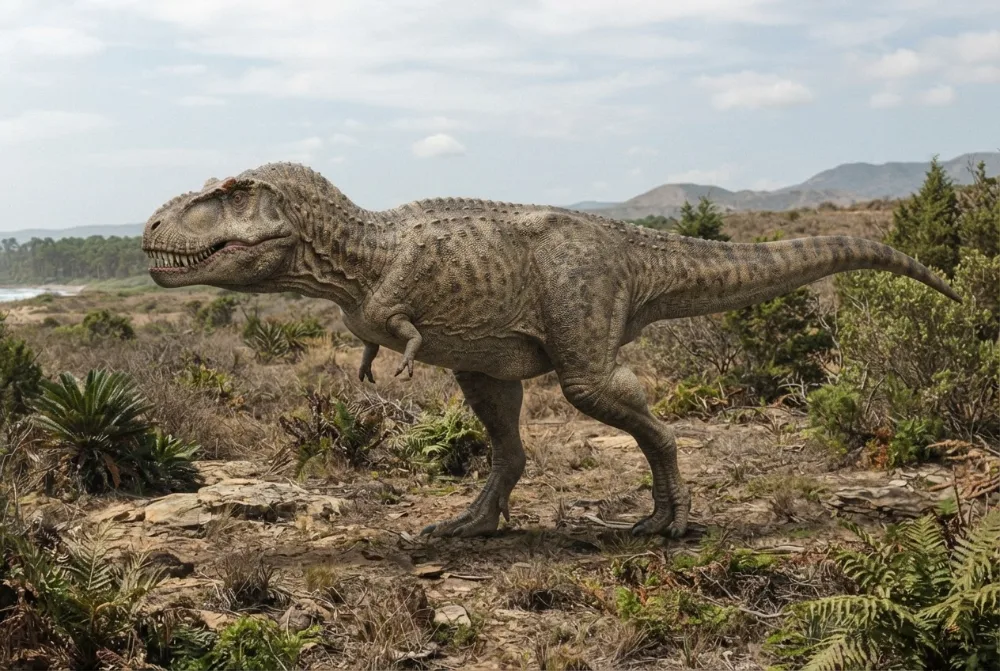
Labocania was a meat-eating dinosaur that lived in Mexico during the Late Cretaceous, about 85 to 72 million years ago. It was a medium-sized predator with strong bones and sharp teeth. Scientists are still figuring out exactly what kind of theropod it was.12
Kañ la dundoon?
Naka la réyoon?
Naka la guddoon?
Naka la kawewoon?
jortu
Naka la diisoon?

 gudd ni 8 xaj, bakkan ba geen🍌gudd ni 46 banaana yu ñu topp-toppalediis ni 140 xaj🍉diis ni 580 xaal🎒diis ni 4 klaas yu mat yu xale yu lekkool🐻❄️diis ni 6 uurs yu weex🏃mënoon na daw 100 meetar ci 12 segond (nit ki gën a gaaw dafay soxla 9,6)
Naka la Labocania réyoon, bu ñu ko méngalee ak YAW?
Ay kalkil rekk ci sa navigatëer. Dara du ñu denc, dara du ñu yónne fenn.
Naka la gaawoon?


Xibaar yu neex
Labocania's skull bones were very thick and strong, especially the bones on top of its head.1
The first Labocania fossils were found in 1970 by a volunteer named Harley J. Garbani during an expedition in Baja California, Mexico.1
Labocania's teeth were flat and curved backwards, which helped it hold onto prey.1
Scientists have debated whether Labocania was a tyrannosaur, an abelisaur, or a carcharodontosaur. In 2024, a new study placed it with tyrannosaurs.1
The second species, Labocania aguillonae, was named in 2024 after Martha C. Aguillon, a paleontologist from Coahuila, Mexico.1
Labocania lived on land and walked on two legs, like other theropods.2
Laaj yi ñu gën a laaj ci Labocania
?How big was Labocania?
Labocania was a medium sized carnivore. The species L. anomala was about 7 to 8.2 metres long and weighed around 1.5 to 2.6 tonnes. The smaller L. aguillonae was about 6.3 metres long.1
?Is Labocania a dinosaur?
Yes, Labocania is a dinosaur. It is a theropod dinosaur that lived in Mexico during the Late Cretaceous.1
?What did Labocania eat?
Labocania was a meat-eater. It had sharp, curved teeth and strong bones to help it catch and eat other animals.1
?When did Labocania live?
Labocania lived during the Late Cretaceous period, about 85 to 72 million years ago. Some estimates suggest it might have lived as early as about 93.6 million years ago.1
Ku tas léeb yu dul dëgg
Léeb: Some people think Labocania was definitely a tyrannosaur like T. rex.
Dëgg: Scientists are not sure. It might be a tyrannosaur, but some studies suggest it could be an abelisaur or a carcharodontosaur. The most recent study in 2024 supports tyrannosaur, but others disagree.1
Ngir ñi xam dino lool
- Turu xam-xam
- Labocania
- Ku ko tudde
- Molnar 19745
- Kurél
- Tiranosoor yi
- Njaboot / klad
- Tyrannosauridae5
- Klasifikasiyoŋ
- Theropoda > Tyrannosauroidea > Tyrannosauridae5
- Màggaayu doj yi
- 86 ba 72 milyoŋ at (Santonian / Campanian)5
- Formasiyoŋi doj
- La Bocana Roja, Cerro del Pueblo5
- Réew yi
- Meksik5
- Fosil yu ñu gis
- 2 ci The Paleobiology Database5
- Gisees
- The first fossils were found in 1970 by Harley J. Garbani during an expedition in Baja California, Mexico. Ralph Molnar named the dinosaur Labocania anomala in 1974.1
- Ñu ngi koy werante ba tey
- Scientists still debate what kind of theropod Labocania was. Some think it was a tyrannosaur, others think it was an abelisaur or a carcharodontosaur.1
Fa xibaar yi jóge
- Labocania (en.wikipedia.org)
- PBDB Taxon (paleobiodb.org)
- A New Tyrant Dinosaur from the Late Campanian of Mexico Reveals a Tribe of Southern Tyrannosaurs (mdpi.com)
- A Leggy Tyrannosaur Emerges From a Mexican Desert - The New York Times (nytimes.com)
- Labocania in The Paleobiology Database (CC BY 4.0): at, béréb yi, formasiyoŋi doj, klasifikasiyoŋ.
Bépp xibaar ci xët wii am na lim bu wone fa mu jóge. Su nu juumee, baal nu, nun ñu bëgg dino lanu, du ab sërnaalu xam-xam. Wax nu ko ci [email protected] nu defar ko.
 Rex xiif na! Dino Wiki, mbiru ab baay la ngir doomam ju góor ju bëgg dinosoor, ci neen te amul kaamuñaate, amul tracker. Mag ñi mën nañu jox Rex tuuti ñam ngir dimbali ko mu des ci internet.Dundal Rex
 Tyrannosaurus
 Tarbosaurus
 Albertosaurus
 Daspletosaurus
 Gorgosaurus
 Alectrosaurus
 Triceratops
 Velociraptor
 Spinosaurus
 Ankylosaurus
 Parasaurolophus
 Pteranodon