 Ban dino nga? Kiis
 Xeexu dino
 Rawante dino
 Fo yu ndaw yu dino
 Albomu sitikeer
 Limu TOP yu dino
 Bett ma!
Nasutoceratops
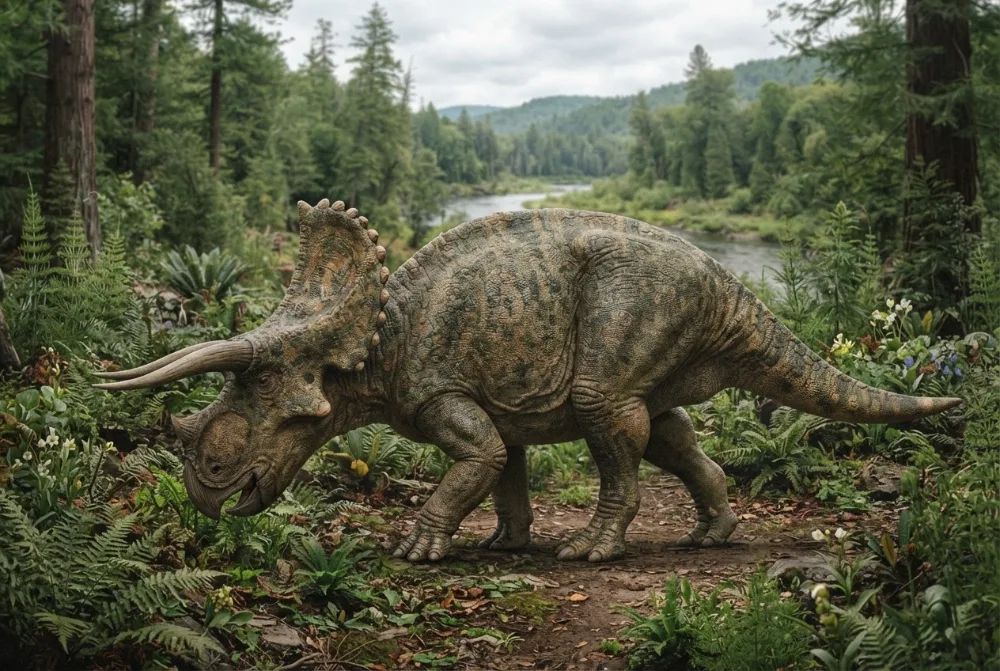
Nasutoceratops was a horned dinosaur with a huge nose and long, curved horns above its eyes. It lived in what is now Utah, USA, about 75 million years ago. This plant-eater had a short snout and a big frill at the back of its head.1
Kañ la dundoon?
Naka la réyoon?
Naka la guddoon?
Naka la kawewoon?
Naka la diisoon?

 gudd ni 5 xaj, bakkan ba geen🍌gudd ni 28 banaana yu ñu topp-toppalediis ni 100 xaj🍉diis ni 400 xaal🎒diis ni 2,5 klaas yu mat yu xale yu lekkool🐻❄️diis ni 4 uurs yu weex🏃mënoon na daw 100 meetar ci 10 segond (nit ki gën a gaaw dafay soxla 9,6)
Naka la Nasutoceratops réyoon, bu ñu ko méngalee ak YAW?
Ay kalkil rekk ci sa navigatëer. Dara du ñu denc, dara du ñu yónne fenn.
Naka la gaawoon?


Xibaar yu neex
Nasutoceratops had an enormous nose area that made up about 75% of the length of its skull in front of its eyes.1
Its horns pointed outward and forward, then curved and twisted at the tips, unlike most other horned dinosaurs.1
The frill on its head was simple and wide in the middle, without the big holes or spikes seen in many relatives.1
It lived alongside other dinosaurs like the tyrannosaur Teratophoneus and the duck-billed Gryposaurus.1
Nasutoceratops is one of the few horned dinosaurs from the southern part of the ancient continent Laramidia.1
Its name honors Alan Titus, a paleontologist who helped with fossil discoveries in the monument.1
Laaj yi ñu gën a laaj ci Nasutoceratops
?How big was Nasutoceratops?
About 4.5 metres (14.8 feet) long and weighed around 1.5 tonnes (1.7 short tons). Its skull was about 1.5 metres (4.9 feet) long.2
?What did Nasutoceratops eat?
It was a plant-eater, like all ceratopsian dinosaurs. It used its beak to bite off leaves and other plants.2
?Why did Nasutoceratops have such long horns?
Scientists think the long, forward-curving horns may have been used for fighting or showing off, like modern cattle. They could have locked with an opponent's horns.2
?Where did Nasutoceratops live?
It lived in what is now southern Utah, USA, about 75 to 76 million years ago. That area was then part of an island continent called Laramidia.2
?When did Nasutoceratops live?
It lived during the Late Cretaceous period, about 76 to 75.5 million years ago.2
?Did Nasutoceratops have feathers?
No, the sources do not mention feathers. Skin impressions were found on its arm, but they have not been described as having feathers.2
Ku tas léeb yu dul dëgg
Léeb: Nasutoceratops had a horn on its nose like Triceratops.
Dëgg: Nasutoceratops had a low, ridge-like bump on its nose, not a tall horn.1
Ngir ñi xam dino lool
- Turu xam-xam
- Nasutoceratops
- Ku ko tudde
- Sampson et al. 20133
- Kurél
- Dino yu am béjjén
- Njaboot / klad
- Ceratopsidae3
- Klasifikasiyoŋ
- Ornithischia > Ceratopsia > Ceratopsidae3
- Màggaayu doj yi
- 84 ba 72 milyoŋ at (Campanian)3
- Formasiyoŋi doj
- Kaiparowits3
- Réew yi
- Amerig3
- Fosil yu ñu gis
- 1 ci The Paleobiology Database3
- Gisees
- Nasutoceratops was named in 2013 by Scott Sampson and colleagues. The first fossil, a nearly complete skull and partial skeleton, was found in 2006 in southern Utah.1
- Ñu ngi koy werante ba tey
- Scientists are not sure why Nasutoceratops had such a big nose. It might have been for smelling, making sounds, or attracting mates.1
Fa xibaar yi jóge
- A remarkable short-snouted horned dinosaur from the Late Cretaceous (late Campanian) of southern Laramidia (pmc.ncbi.nlm.nih.gov)
- Nasutoceratops (en.wikipedia.org)
- Nasutoceratops in The Paleobiology Database (CC BY 4.0): at, béréb yi, formasiyoŋi doj, klasifikasiyoŋ.
Bépp xibaar ci xët wii am na lim bu wone fa mu jóge. Su nu juumee, baal nu, nun ñu bëgg dino lanu, du ab sërnaalu xam-xam. Wax nu ko ci [email protected] nu defar ko.
 Rex xiif na! Dino Wiki, mbiru ab baay la ngir doomam ju góor ju bëgg dinosoor, ci neen te amul kaamuñaate, amul tracker. Mag ñi mën nañu jox Rex tuuti ñam ngir dimbali ko mu des ci internet.Dundal Rex
 Triceratops
 Protoceratops
 Ojoceratops
 Tatankaceratops
 Psittacosaurus
 Centrosaurus
 Tyrannosaurus
 Velociraptor
 Spinosaurus
 Ankylosaurus
 Parasaurolophus
 Pteranodon