 Ban dino nga? Kiis
 Xeexu dino
 Rawante dino
 Fo yu ndaw yu dino
 Albomu sitikeer
 Limu TOP yu dino
 Bett ma!
Saraikimasoom
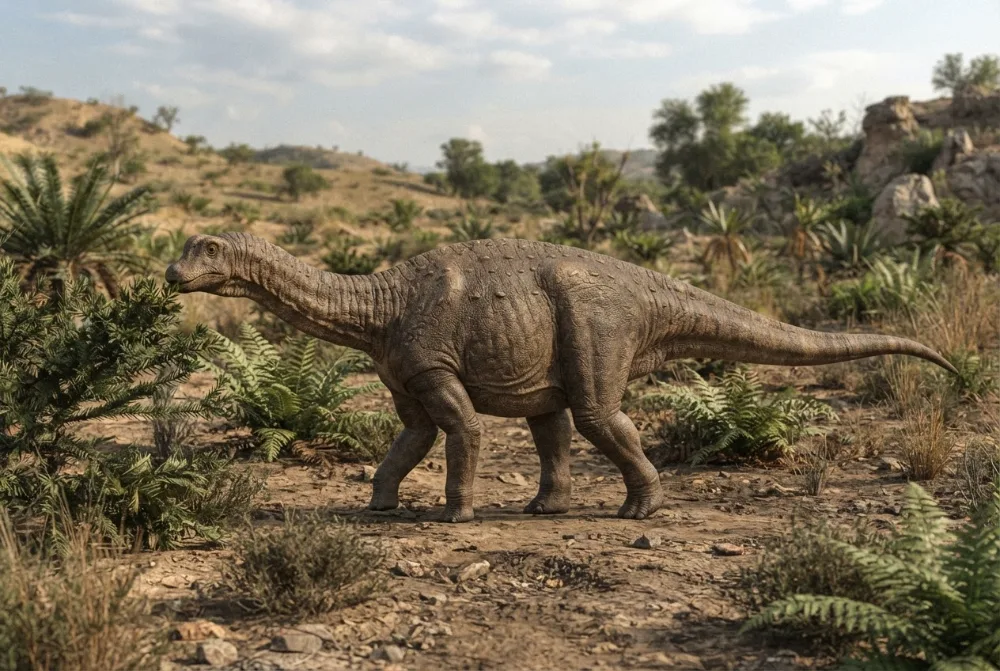
Saraikimasoom was a small, stocky long-necked dinosaur that lived about 72 to 66 million years ago in what is now Pakistan. It had a small skull, a long neck, a round body, and short legs, making it one of the smallest titanosaurs ever found in the Indo-Pakistan region.21
Kañ la dundoon?
Naka la réyoon?
Naka la guddoon?
Naka la kawewoon?
Naka la diisoon?
 gudd ni 2 oto yu ñu taxawal ci benn rëdd🍌gudd ni 56 banaana yu ñu topp-toppale
 lu tollu ci diisaayu ñey🍉diis ni 1000 xaal🎒diis ni 6 klaas yu mat yu xale yu lekkool🐻❄️diis ni 11 uurs yu weex🏃mënoon na daw 100 meetar ci 19 segond (nit ki gën a gaaw dafay soxla 9,6)
Naka la Saraikimasoom réyoon, bu ñu ko méngalee ak YAW?
Ay kalkil rekk ci sa navigatëer. Dara du ñu denc, dara du ñu yónne fenn.
Naka la gaawoon?


Xibaar yu neex
Saraikimasoom had a very small skull, only about 15 to 18 centimeters long and 7 to 9 centimeters high, which is tiny for a dinosaur of its size.1
Its teeth were small, circular, and slightly curved, and they tapered gradually from base to tip, unlike some other titanosaurs whose teeth were more uniform.1
The skull's upper and lower tooth rows were U-shaped, which is a feature shared with its close relative Gspsaurus, but unlike Gspsaurus, the lower tooth row was also U-shaped.1
It had a dental formula of 4, 13/9 to 13, meaning it had 4 premaxillary teeth, 13 maxillary teeth, and 9 to 13 dentary teeth on each side.1
Saraikimasoom is the smallest titanosaur known from the Indo-Pakistan subcontinent, and it was a stocky animal with a round body and short legs.1
Its tail vertebrae were procoelous (hollow in front), except for the first one which was biconvex, a feature that helps scientists classify it as a titanosaur.1
The name Saraikimasoom comes from the Saraiki language, where 'masoom' means innocent, and the species name 'vitakri' honors the Vitakri Formation where it was found.1
Laaj yi ñu gën a laaj ci Saraikimasoom
?How big was Saraikimasoom?
About 8 to 10 metres long, 2 metres tall at the hip, and weighed around 5 tonnes. That is roughly the length of a school bus.1
?Was Saraikimasoom a dinosaur?
Yes, it was a small, stocky sauropod dinosaur from the Late Cretaceous.13
?What did Saraikimasoom eat?
It was a plant-eater. Its small, conical teeth were good for stripping leaves and soft plants.1
?When did Saraikimasoom live?
It lived about 72 to 66 million years ago, during the very end of the Cretaceous Period.3
?Where was Saraikimasoom found?
Its fossils were discovered in the Vitakri Formation of Balochistan, Pakistan.13
?Is Saraikimasoom the smallest titanosaur?
It is the smallest titanosaur known from the Indo-Pakistan subcontinent, but scientists are not sure if it is the smallest of all titanosaurs.1
?Why is it called Saraikimasoom?
The name comes from the Saraiki language of Pakistan, where 'masoom' means innocent. The species name 'vitakri' honors the Vitakri Formation where it was found.1
?Did Saraikimasoom have feathers?
No, it did not have feathers. It was a sauropod dinosaur, and sauropods are not known to have had feathers.1
Ku tas léeb yu dul dëgg
Léeb: Some people think all titanosaurs were giant, but Saraikimasoom was actually quite small for a titanosaur.
Dëgg: Saraikimasoom was about 8 to 10 meters long and weighed about 5 tons, which is small compared to giants like Argentinosaurus, but still big compared to a car.1
Ngir ñi xam dino lool
- Turu xam-xam
- Saraikimasoom
- Ku ko tudde
- Malkani 20143
- Kurél
- Baat yu gudd
- Njaboot / klad
- Gspsauridae3
- Klasifikasiyoŋ
- Sauropodomorpha > Sauropoda > Titanosauria > Macronaria3
- Màggaayu doj yi
- 72 ba 66 milyoŋ at (Maastrichtian)3
- Formasiyoŋi doj
- Vitakri3
- Réew yi
- Pakistaan3
- Fosil yu ñu gis
- 12 ci The Paleobiology Database3
- Gisees
- Saraikimasoom was first described by M. S. Malkani in 2014, based on a partial skull and other bones found in the Vitakri Formation of Balochistan, Pakistan. The type specimen is stored in the museum of the Geological Survey of Pakistan in Quetta.21
- Ñu ngi koy werante ba tey
- Scientists still debate whether Saraikimasoom belongs in its own family, Gspsauridae, or if it is a more primitive titanosaur, and some details of its skull and teeth are still being studied.21
Fa xibaar yi jóge
- Smallest Titanosaur from Indo-Pakistan Landmass (scirp.org)
- PBDB Taxon (paleobiodb.org)
- Saraikimasoom in The Paleobiology Database (CC BY 4.0): at, béréb yi, formasiyoŋi doj, klasifikasiyoŋ.
Bépp xibaar ci xët wii am na lim bu wone fa mu jóge. Su nu juumee, baal nu, nun ñu bëgg dino lanu, du ab sërnaalu xam-xam. Wax nu ko ci [email protected] nu defar ko.
 Rex xiif na! Dino Wiki, mbiru ab baay la ngir doomam ju góor ju bëgg dinosoor, ci neen te amul kaamuñaate, amul tracker. Mag ñi mën nañu jox Rex tuuti ñam ngir dimbali ko mu des ci internet.Dundal Rex
 Brachiosaurus
 Diplodocus
 Brontosaurus
 Argentinosaurus
 Camarasaurus
 Morosaurus
 Tyrannosaurus
 Triceratops
 Velociraptor
 Spinosaurus
 Ankylosaurus
 Parasaurolophus