 Ban dino nga? Kiis
 Xeexu dino
 Rawante dino
 Fo yu ndaw yu dino
 Albomu sitikeer
 Limu TOP yu dino
 Bett ma!
Tylocephale
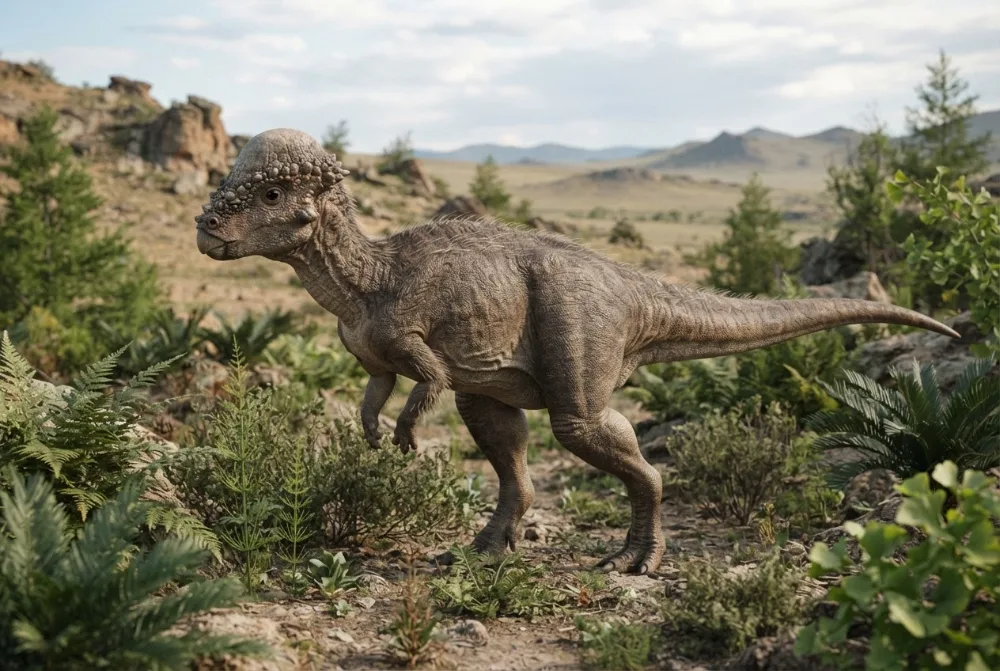
Tylocephale was a small, dome-headed dinosaur that lived in what is now Mongolia. It walked on two legs and used its thick, bony skull for head-butting fights. This plant-eater had a strange, swollen head that made it look like a tiny, feathered battering ram.12
Kañ la dundoon?
Naka la réyoon?
Naka la guddoon?
Naka la diisoon?

 gudd ni 4 muusu kër, bakkan ba geen🍌gudd ni 11 banaana yu ñu topp-toppalediis ni 10 muusu kër🍉diis ni 8 xaal🧸diis ni 2 xale yu maternel🎒diis ni 1 xale yu lekkool🏃mënoon na daw 100 meetar ci 8,2 segond (nit ki gën a gaaw dafay soxla 9,6)
Naka la Tylocephale réyoon, bu ñu ko méngalee ak YAW?
Ay kalkil rekk ci sa navigatëer. Dara du ñu denc, dara du ñu yónne fenn.
Naka la gaawoon?


Xibaar yu neex
Tylocephale's skull dome was highest at the very back, near the neck, which is different from other dome-headed dinosaurs.2
Its name means 'swollen head' because of the thick, bony bump on top of its skull.1
Tylocephale lived about 72 to 71 million years ago, during the Late Cretaceous period.1
The only known fossil of Tylocephale is a partial skull and jaw, found in 1971 by a Polish-Mongolian expedition.1
Tylocephale shared its home with other dinosaurs like the armored ankylosaurs Tarchia and Saichania, and the horned ceratopsid Breviceratops.1
Scientists think Tylocephale may have used its dome for head-butting fights, like modern bighorn sheep, but this is still debated.2
Laaj yi ñu gën a laaj ci Tylocephale
?How big was Tylocephale?
It was about 2 metres (6.6 feet) long and weighed around 40 kilograms (88 pounds). That is about as long as a bicycle but much lighter.3
?What did Tylocephale eat?
It was a plant-eater. It had small, ridged teeth for chewing fibrous plants, and may have also eaten leaves, nuts, seeds, and even insects.3
?Did Tylocephale have the tallest dome?
Yes, Tylocephale's dome is the tallest known from any pachycephalosaur. The dome was thick, rough on the outside, and highest near the back of the skull.3
?When did Tylocephale live?
It lived about 72 to 71 million years ago, during the Late Cretaceous period. That was near the very end of the age of dinosaurs.3
Ngir ñi xam dino lool
- Turu xam-xam
- Tylocephale
- Ku ko tudde
- Maryańska and Osmólska 19744
- Kurél
- Bopp yu wërngel
- Njaboot / klad
- Pachycephalosauridae4
- Klasifikasiyoŋ
- Ornithischia > Pachycephalosauria4
- Màggaayu doj yi
- 84 ba 72 milyoŋ at (Campanian)4
- Formasiyoŋi doj
- Baruungoyot4
- Réew yi
- Mongoli4
- Fosil yu ñu gis
- 1 ci The Paleobiology Database4
- Gisees
- Tylocephale was named in 1974 by Polish paleontologists Teresa Maryańska and Halszka Osmólska, based on a skull and jaw found in 1971 in the Gobi Desert of Mongolia.1
- Ñu ngi koy werante ba tey
- Scientists still debate whether Tylocephale's dome was used for fighting between males or just for display.2
Fa xibaar yi jóge
- Tylocephale (en.wikipedia.org)
- PACHYCEPHALOSAURlA, A NEW SUBORDER OF ORNITHISCHIAN DINOSAURS (palaeontologia.pan.pl)
- Tylocephale (en.wikipedia.org)
- Tylocephale in The Paleobiology Database (CC BY 4.0): at, béréb yi, formasiyoŋi doj, klasifikasiyoŋ.
Bépp xibaar ci xët wii am na lim bu wone fa mu jóge. Su nu juumee, baal nu, nun ñu bëgg dino lanu, du ab sërnaalu xam-xam. Wax nu ko ci [email protected] nu defar ko.
 Rex xiif na! Dino Wiki, mbiru ab baay la ngir doomam ju góor ju bëgg dinosoor, ci neen te amul kaamuñaate, amul tracker. Mag ñi mën nañu jox Rex tuuti ñam ngir dimbali ko mu des ci internet.Dundal Rex
 Pachycephalosaurus
 Stegoceras
 Prenocephale
 Sphaerotholus
 Foraminacephale
 Brontotholus
 Tyrannosaurus
 Triceratops
 Velociraptor
 Spinosaurus
 Ankylosaurus
 Parasaurolophus