 Ban dino nga? Kiis
 Xeexu dino
 Rawante dino
 Fo yu ndaw yu dino
 Albomu sitikeer
 Limu TOP yu dino
 Bett ma!
Uriash
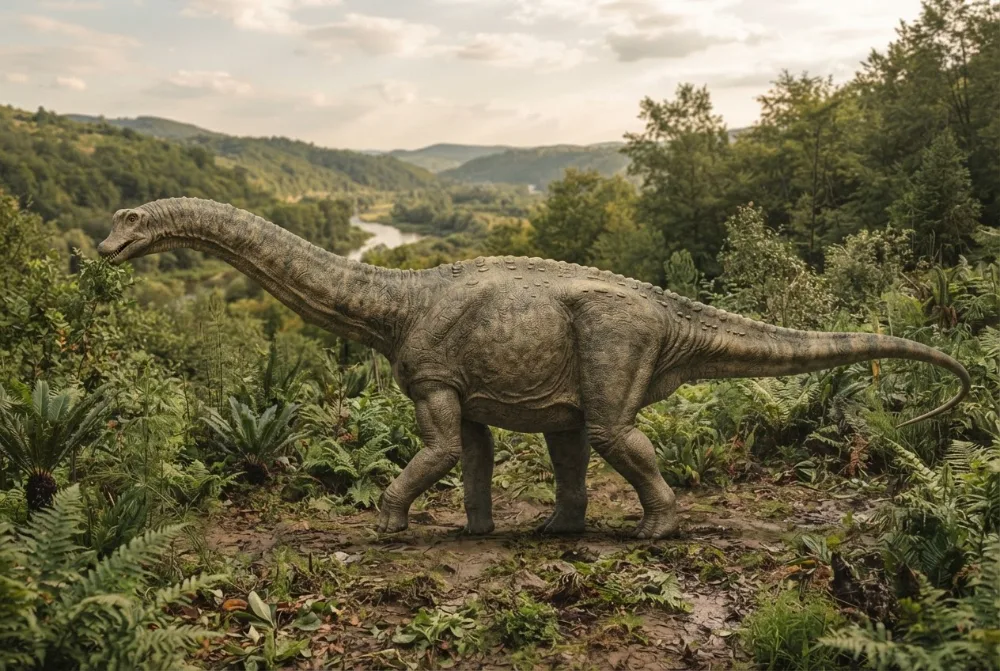
Uriash was a huge, long-necked plant-eater that lived on an ancient island in what is now Romania. It was one of the biggest dinosaurs ever found in Europe from the very end of the Age of Dinosaurs.12
Kañ la dundoon?
Naka la réyoon?
Naka la guddoon?
Naka la kawewoon?
jortu
Naka la diisoon?
 gudd ni 2,5 oto yu ñu taxawal ci benn rëdd🍌gudd ni 66 banaana yu ñu topp-toppale
 diis ni 1,5 ñey🍉diis ni 1600 xaal🎒diis ni 10 klaas yu mat yu xale yu lekkool🐻❄️diis ni 18 uurs yu weex🏃mënoon na daw 100 meetar ci 21 segond (nit ki gën a gaaw dafay soxla 9,6)
Naka la Uriash réyoon, bu ñu ko méngalee ak YAW?
Ay kalkil rekk ci sa navigatëer. Dara du ñu denc, dara du ñu yónne fenn.
Naka la gaawoon?


Xibaar yu neex
Uriash was named in 2025, making it one of the newest dinosaur discoveries.1
Its fossils were first found in 1914 by geologist Ottokár Kadić, but it took over 100 years for scientists to realize it was a new species.1
Uriash lived on Hațeg Island, a large island in the ancient European archipelago during the Late Cretaceous.2
It was the second largest titanosaur known from the Late Cretaceous of Europe, only smaller than Abditosaurus.1
The name Uriash comes from the Romanian word 'uriaș', meaning giant, and honors Ottokár Kadić.1
Its bones include tail vertebrae, a right humerus, thighbones, and a foot bone, all from one individual.1
Laaj yi ñu gën a laaj ci Uriash
?How big was Uriash?
Uriash was about 8.83 to 11.87 metres (29.0 to 38.9 feet) long and weighed up to 5 to 8 tonnes (5.5 to 8.8 short tons).1
?What did Uriash eat?
Uriash was a plant-eater, like all sauropods. It ate plants on the ancient island where it lived.1
?When did Uriash live?
Uriash lived during the Maastrichtian age of the Late Cretaceous, about 71 to 66 million years ago.1
?Where was Uriash found?
Uriash fossils were found in the Hațeg Basin in western Romania, near the village of Vălioara.12
?Was Uriash a dinosaur?
Yes, Uriash was a dinosaur. It was a titanosaurian sauropod, a long-necked plant-eater.1
?Was Uriash bigger than T. rex?
Uriash was similar in length to T. rex, which reached about 12 metres, but T. rex was heavier. Uriash was one of the biggest European dinosaurs.1
Ngir ñi xam dino lool
- Turu xam-xam
- Uriash
- Ku ko tudde
- Díez Díaz et al. 20253
- Kurél
- Baat yu gudd
- Njaboot / klad
- Lithostrotia3
- Klasifikasiyoŋ
- Sauropodomorpha > Sauropoda > Titanosauria > Macronaria3
- Màggaayu doj yi
- 72 ba 66 milyoŋ at (Maastrichtian)3
- Formasiyoŋi doj
- Densuș-Ciula3
- Réew yi
- Rumani3
- Fosil yu ñu gis
- 1 ci The Paleobiology Database3
- Gisees
- The first bones were found in 1914 by Hungarian geologist Ottokár Kadić near Vălioara, Romania. They were later studied and named Uriash kadici in 2025 by a team of scientists.1
- Ñu ngi koy werante ba tey
- Scientists are still debating exactly how Uriash is related to other titanosaurs, especially those from South America.2
Fa xibaar yi jóge
- Uriash (en.wikipedia.org)
- Full article: Revision of Romanian sauropod dinosaurs reveals high titanosaur diversity and body-size disparity on the latest Cretaceous Haţeg Island, with implications for titanosaurian biogeography (tandfonline.com)
- Uriash in The Paleobiology Database (CC BY 4.0): at, béréb yi, formasiyoŋi doj, klasifikasiyoŋ.
Bépp xibaar ci xët wii am na lim bu wone fa mu jóge. Su nu juumee, baal nu, nun ñu bëgg dino lanu, du ab sërnaalu xam-xam. Wax nu ko ci [email protected] nu defar ko.
 Rex xiif na! Dino Wiki, mbiru ab baay la ngir doomam ju góor ju bëgg dinosoor, ci neen te amul kaamuñaate, amul tracker. Mag ñi mën nañu jox Rex tuuti ñam ngir dimbali ko mu des ci internet.Dundal Rex
 Brachiosaurus
 Diplodocus
 Brontosaurus
 Argentinosaurus
 Camarasaurus
 Morosaurus
 Tyrannosaurus
 Triceratops
 Velociraptor
 Spinosaurus
 Ankylosaurus
 Parasaurolophus