 Uyiyiphi idayinaso? Ikwizi
 Idabi leedayinaso
 Ugqatso lweedayinaso
 Imidlalo emincinci yeedayinaso
 I-albhamu yezitikha
 Iilisti ze-TOP zeedayinaso
 Ndothuse!
Agujaceratops
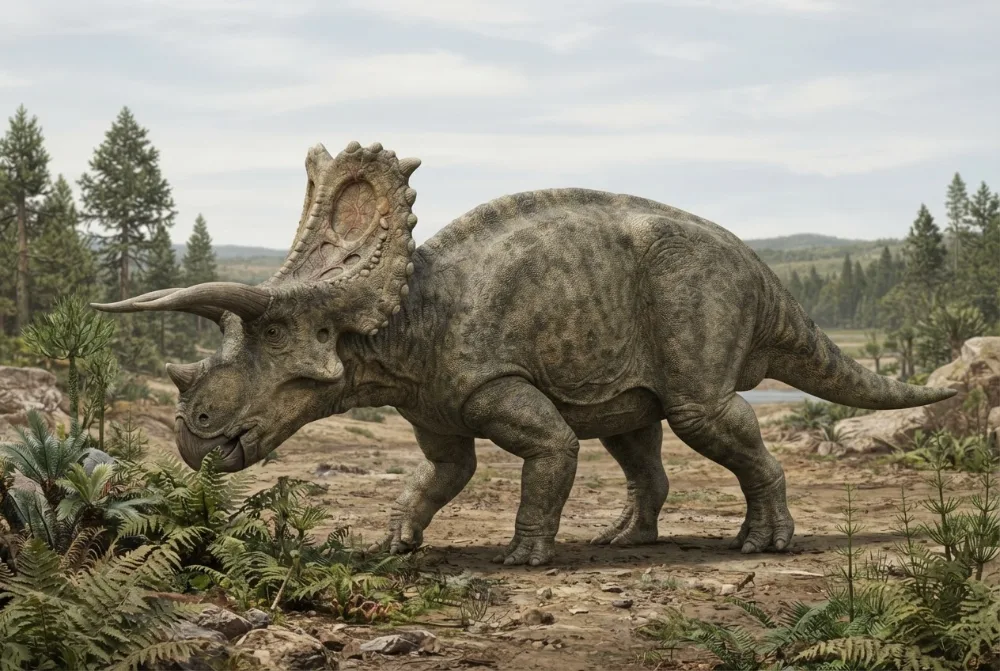
Agujaceratops was a big, four-legged plant eater with a huge frill and long horns on its face. It lived in what is now Texas and Mexico, about 77 million years ago. It looked a bit like a Triceratops, but with a longer frill and different horns.13
Yaphila nini?
Yayinkulu kangakanani?
Yayinde kangakanani?
Yayiphakame kangakanani?
uqikelelo
Yayinzima kangakanani?

 inde njengezinja ezingama-4, impumlo ukuya emsileni🍌inde njengeebhanana ezingama-24 zilandelelanainzima njengezinja ezingama-75🍉inzima njengamavatala angama-300🧸inzima njengabantwana basenkulisa abangama-79🎒inzima njengabantwana besikolo abangama-47🐻❄️inzima njengeebhere ezimhlophe ezingama-3🏃ibinokubaleka iimitha ezili-100 ngemizuzwana engama-10 (oyena mntu ukhawulezayo udinga i-9,6)
Agujaceratops wayemkhulu kangakanani xa ethelekiswa NAWE?
Yimathematika nje kwibhrawuza yakho. Akukho nto igcinwayo okanye ithunyelwe naphi na.
Yayikhawuleza kangakanani?


Iinyani ezimnandi
Agujaceratops had a heart-shaped frill with a deep notch at the back, and the edges were covered with small, blunt hornlets that made it look scalloped.1
Its brow horns pointed up and out, then curved backwards, which is different from many other horned dinosaurs.1
There are two known species: Agujaceratops mariscalensis and Agujaceratops mavericus. The second one has longer brow horns and a longer frill.1
Many Agujaceratops fossils have been found together in one quarry, which might mean they lived in herds or were gathered by a flood.1
It lived alongside the feathered dinosaur Leptorhynchos and the small pachycephalosaur Texacephale, and was hunted by tyrannosaurs and the giant crocodilian Deinosuchus.1
The first fossils were found in 1938 in Big Bend National Park, Texas, but they were not studied until many years later.1
Eyona mibuzo ibuzwa kakhulu: Agujaceratops
?How big was Agujaceratops?
Agujaceratops was about 4.3 metres (14 feet) long and weighed around 1.5 metric tons (1.7 short tons). That is roughly the size of a small car.1
?What did Agujaceratops eat?
It was a four-legged plant eater, like other ceratopsids. It probably ate low-growing plants with its beak and teeth.13
?When did Agujaceratops live?
It lived about 77 million years ago, during the Late Cretaceous period. Its fossils are found in Texas and Mexico.13
?Why did Agujaceratops have a frill?
The frill and horns were probably used for showing off to other members of its species, and maybe for fighting over territory or mates.1
Inyaniso ngeentsomi
Intsomi: Some people think Agujaceratops is the same as Chasmosaurus.
Inyaniso: It was first named Chasmosaurus mariscalensis, but scientists later decided it was different enough to be its own genus, Agujaceratops.1
Kwiingcali zeedayinaso
- Igama lenzululwazi
- Agujaceratops
- Inikwe igama ngu:
- Lucas et al. 20063
- Iqela
- Iidayinaso ezineempondo
- Usapho / iclade
- Ceratopsidae3
- Ukuhlelwa
- Ornithischia > Ceratopsia > Ceratopsidae3
- Ubudala bamatye
- 84 ukuya ku-72 izigidi zeminyaka (Campanian)3
- Izakhiwo zamatye
- Aguja3
- Amazwe
- iUSA, iMexico3
- Iirekhodi zeefosili
- 16 kwi-Paleobiology Database3
- Ukufunyanwa
- The first fossils were collected in 1938 from Big Bend National Park, Texas. In 1989, Lehman named them Chasmosaurus mariscalensis, and in 2006 Lucas, Sullivan, and Hunt gave them the new name Agujaceratops.1
- Kusaxoxwa ngayo
- Scientists are not sure if the many Agujaceratops fossils found together represent a herd or just animals that died together in a drought or flood.1
Apho iinyani zivela khona
- Agujaceratops (en.wikipedia.org)
- PBDB Taxon (paleobiodb.org)
- Agujaceratops in The Paleobiology Database (CC BY 4.0): ubudala, iindawo, izakhiwo zamatye, ukuhlelwa.
Yonke inyani ekweli phepha inenombolo ebonisa umthombo wayo. Ukuba siphosisile, uxolo, sithanda iidayinaso, asiyojenali yenzululwazi. Sixelele apha: [email protected], siya kuyilungisa.
 URex ulambile! I-Dino Wiki yiprojekthi katata ukwenzela unyana wakhe othanda iidayinaso, isimahla, ayinazintengiso, ayinazilandeli. Abantu abadala banokuphakela uRex isidlwana ukuze incede ihlale kwi-intanethi.Phakela uRex
 Triceratops
 Protoceratops
 Ojoceratops
 Tatankaceratops
 Psittacosaurus
 Centrosaurus
 Tyrannosaurus
 Velociraptor
 Spinosaurus
 Ankylosaurus
 Parasaurolophus
 Pteranodon