 Uyiyiphi idayinaso? Ikwizi
 Idabi leedayinaso
 Ugqatso lweedayinaso
 Imidlalo emincinci yeedayinaso
 I-albhamu yezitikha
 Iilisti ze-TOP zeedayinaso
 Ndothuse!
Asiaceratops
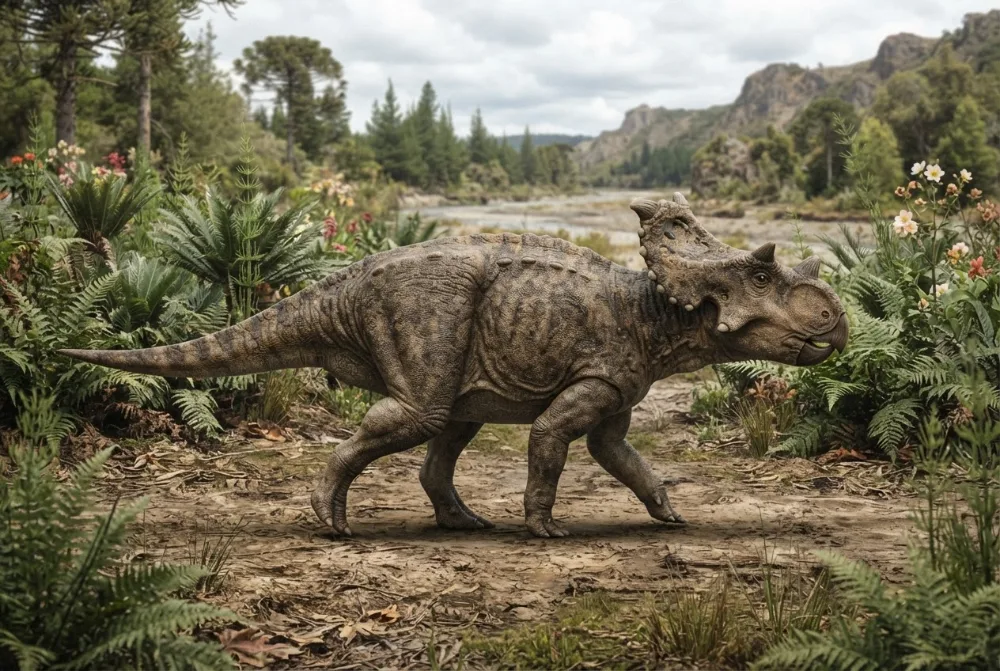
Asiaceratops ukwiqela: Iidayinaso ezineempondo. Iifosili zakhe zivela ematyeni aneminyaka eyizigidi ezimalunga ne-100 ukuya ku-94.4
Yaphila nini?
Yayinkulu kangakanani?
Yayinde kangakanani?
 inde njengeekati zasekhaya ezingama-4, impumlo ukuya emsileni🍌inde njengeebhanana ezingama-11 zilandelelana🏃ibinokubaleka iimitha ezili-100 ngemizuzwana engama-10 (oyena mntu ukhawulezayo udinga i-9,6)
Asiaceratops wayemkhulu kangakanani xa ethelekiswa NAWE?
Yimathematika nje kwibhrawuza yakho. Akukho nto igcinwayo okanye ithunyelwe naphi na.
Yayikhawuleza kangakanani?


Iinyani ezimnandi
Asiaceratops is one of the few ceratopsians known from Central Asia, not from North America or China.1
Its name means 'Asian horned face', because it lived in Asia and had a horned face like other ceratopsians.2
The type specimen is a partial skeleton, which is rare for ceratopsians, as many are known only from skulls.1
Scientists think it lived in groups, because the PBDB record lists 'gregarious' behavior.1
It lived during the Cenomanian age, about 100 to 94 million years ago, when dinosaurs like T. rex's ancestors were around.1
The species name 'salsopaludalis' means 'salt marsh', hinting that it lived near salty wetlands.1
Eyona mibuzo ibuzwa kakhulu: Asiaceratops
?What did Asiaceratops eat?
Asiaceratops was a herbivore, meaning it ate plants. It likely fed on ferns, cycads, and conifers, using its sharp beak to bite off leaves or needles.3
?When did Asiaceratops live?
Asiaceratops lived during the Early to Late Cretaceous, about 100 to 94 million years ago. The type species is known from the early Cenomanian, about 99 million years old.34
?Where was Asiaceratops found?
Asiaceratops fossils were found in Asia. The type species, A. salsopaludalis, comes from Uzbekistan, while A. sulcidens is known from China and Mongolia.3
?Was Asiaceratops a dinosaur?
Yes, Asiaceratops was a dinosaur. It was a ceratopsian, a group of herbivorous dinosaurs with parrot-like beaks.3
Kwiingcali zeedayinaso
- Igama lenzululwazi
- Asiaceratops
- Inikwe igama ngu:
- Nessov et al. 19894
- Iqela
- Iidayinaso ezineempondo
- Usapho / iclade
- Neoceratopsia4
- Ukuhlelwa
- Ornithischia > Ceratopsia4
- Ubudala bamatye
- 100 ukuya ku-94 izigidi zeminyaka (Cenomanian)4
- Izakhiwo zamatye
- Khodzhakul4
- Amazwe
- iUzbekistan4
- Iirekhodi zeefosili
- 8 kwi-Paleobiology Database4
- Ukufunyanwa
- It was named by Nessov and colleagues in 1989, based on a partial skeleton found in Uzbekistan.11
- Kusaxoxwa ngayo
- Scientists debate whether Asiaceratops is a valid species or a 'nomen dubium', because the fossils are fragmentary.11
Apho iinyani zivela khona
- PBDB Taxon (paleobiodb.org)
- Asiaceratops Nesov & Kaznyshkina, 1989 (gbif.org)
- Asiaceratops (en.wikipedia.org)
- Asiaceratops in The Paleobiology Database (CC BY 4.0): ubudala, iindawo, izakhiwo zamatye, ukuhlelwa.
Yonke inyani ekweli phepha inenombolo ebonisa umthombo wayo. Ukuba siphosisile, uxolo, sithanda iidayinaso, asiyojenali yenzululwazi. Sixelele apha: [email protected], siya kuyilungisa.
 URex ulambile! I-Dino Wiki yiprojekthi katata ukwenzela unyana wakhe othanda iidayinaso, isimahla, ayinazintengiso, ayinazilandeli. Abantu abadala banokuphakela uRex isidlwana ukuze incede ihlale kwi-intanethi.Phakela uRex
 Triceratops
 Protoceratops
 Ojoceratops
 Tatankaceratops
 Psittacosaurus
 Centrosaurus
 Tyrannosaurus
 Velociraptor
 Spinosaurus
 Ankylosaurus
 Parasaurolophus
 Pteranodon