 Uyiyiphi idayinaso? Ikwizi
 Idabi leedayinaso
 Ugqatso lweedayinaso
 Imidlalo emincinci yeedayinaso
 I-albhamu yezitikha
 Iilisti ze-TOP zeedayinaso
 Ndothuse!
Avimimus
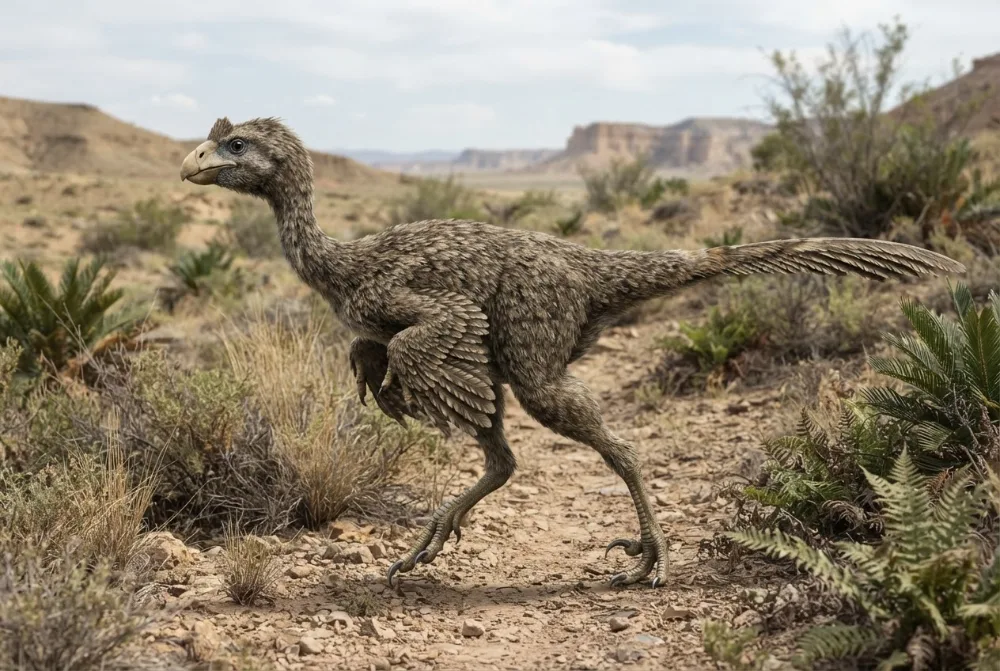
Avimimus was a small, fast-running dinosaur that looked a lot like a bird. It had a beak like a parrot and may have had feathers on its arms. Scientists think it lived in what is now Mongolia during the Late Cretaceous period.21
Yaphila nini?
Yayinkulu kangakanani?
Yayinde kangakanani?
Yayiphakame kangakanani?
uqikelelo
Yayinzima kangakanani?
 inde njengeekati zasekhaya ezingama-3, impumlo ukuya emsileni🍌inde njengeebhanana ezingama-8 zilandelelana🍌inzima njengeebhanana ezingama-120🏃ibinokubaleka iimitha ezili-100 ngemizuzwana engama-9.5 (oyena mntu ukhawulezayo udinga i-9,6)
Avimimus wayemkhulu kangakanani xa ethelekiswa NAWE?
Yimathematika nje kwibhrawuza yakho. Akukho nto igcinwayo okanye ithunyelwe naphi na.
Yayikhawuleza kangakanani?


Iinyani ezimnandi
Avimimus had a large brain and big eyes, which helped it see well and think fast.2
Its legs were very long and slender, making it a fast runner. Its shins were longer than its thighs, just like in many speedy animals today.2
The bones in its hand were fused together, just like in modern birds. This is one reason scientists think it was very bird-like.2
A fossil bonebed in Mongolia contained at least ten Avimimus individuals together. This suggests they lived in groups, maybe for safety or to find mates.2
Avimimus had a beak with no teeth, but some later fossils show tiny teeth in the front of the upper jaw. Scientists are still studying this.2
When Avimimus was first discovered, scientists thought it had no tail. Later finds proved it did have a tail, just like other dinosaurs.2
Eyona mibuzo ibuzwa kakhulu: Avimimus
?Did Avimimus have feathers?
Yes, most scientists now agree Avimimus had feathers. Quill knobs on its arm bones suggest feathers were attached there.24
?What did Avimimus eat?
It probably ate both plants and small animals, making it an omnivore. Its beak had no teeth, though some fossils show tiny front teeth.21
?How fast could Avimimus run?
It was a very fast runner, with long legs and shins longer than its thighs. One source compares its speed to an ostrich, which can reach 70 km/h.24
?When did Avimimus live?
It lived during the Late Cretaceous period, about 80 to 75 million years ago.14
?Is Avimimus a bird?
No, Avimimus is a dinosaur, not a bird. It belonged to a group of bird-like dinosaurs called oviraptorosaurs.2
Inyaniso ngeentsomi
Intsomi: Avimimus could fly.
Inyaniso: Some scientists once thought Avimimus could fly because it had bumps on its arm bones that might have held feathers. But most now agree it could not fly and was a fast runner instead.2
Kwiingcali zeedayinaso
- Igama lenzululwazi
- Avimimus
- Inikwe igama ngu:
- Kurzanov 19815
- Iqela
- Iidayinaso ezingaqhelekanga ezineentsiba
- Usapho / iclade
- Oviraptorosauria5
- Ukuhlelwa
- Theropoda > Oviraptorosauria5
- Ubudala bamatye
- 84 ukuya ku-66 izigidi zeminyaka (Campanian / Maastrichtian)5
- Izakhiwo zamatye
- Nemegt, Baruungoyot, Dinosaur Park5
- Amazwe
- iMongolia, iKhanada5
- Iirekhodi zeefosili
- 8 kwi-Paleobiology Database5
- Ukufunyanwa
- Avimimus was named by Russian paleontologist Sergei Kurzanov in 1981. He found the fossils in Mongolia and thought they came from the Djadokhta Formation, but later scientists think they actually came from the Nemegt Formation.25
- Kusaxoxwa ngayo
- Scientists are not sure what Avimimus ate. It might have been an herbivore, an insectivore, or an omnivore. The beak and possible tiny teeth give clues, but no one knows for sure.2
Apho iinyani zivela khona
- Avimimus | Natural History Museum (nhm.ac.uk)
- Avimimus (en.wikipedia.org)
- Avimimus Kurzanov 1981 - Encyclopedia of Life (eol.org)
- Avimimus - ZoomDinosaurs.com (enchantedlearning.com)
- Avimimus in The Paleobiology Database (CC BY 4.0): ubudala, iindawo, izakhiwo zamatye, ukuhlelwa.
Yonke inyani ekweli phepha inenombolo ebonisa umthombo wayo. Ukuba siphosisile, uxolo, sithanda iidayinaso, asiyojenali yenzululwazi. Sixelele apha: [email protected], siya kuyilungisa.
 URex ulambile! I-Dino Wiki yiprojekthi katata ukwenzela unyana wakhe othanda iidayinaso, isimahla, ayinazintengiso, ayinazilandeli. Abantu abadala banokuphakela uRex isidlwana ukuze incede ihlale kwi-intanethi.Phakela uRex
Ezinye ezivela kwiqela elinye: Iidayinaso ezingaqhelekanga ezineentsiba
 TherizinosaurusIidayinaso ezingaqhelekanga ezineentsiba
 OviraptorIidayinaso ezingaqhelekanga ezineentsiba
 ChirostenotesIidayinaso ezingaqhelekanga ezineentsiba
 CitipesIidayinaso ezingaqhelekanga ezineentsiba
 LeptorhynchosIidayinaso ezingaqhelekanga ezineentsiba
 CaenagnathusIidayinaso ezingaqhelekanga ezineentsiba
 Tyrannosaurus
 Triceratops
 Velociraptor
 Spinosaurus
 Ankylosaurus
 Parasaurolophus