 Uyiyiphi idayinaso? Ikwizi
 Idabi leedayinaso
 Ugqatso lweedayinaso
 Imidlalo emincinci yeedayinaso
 I-albhamu yezitikha
 Iilisti ze-TOP zeedayinaso
 Ndothuse!
Chimaera
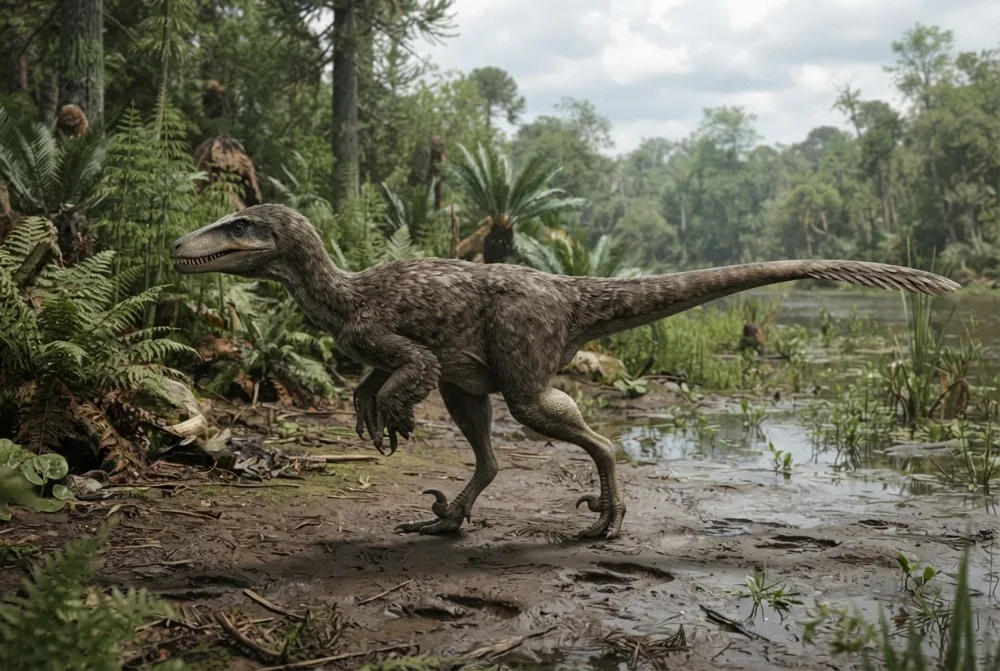
Chimaera was a meat-eating dinosaur that left its footprints in the mud over 200 million years ago. It lived during the late Triassic period, when the first dinosaurs were spreading across the land. Its name comes from a scary monster in old stories.3
Yaphila nini?
Yayinkulu kangakanani?
Yayinde kangakanani?
Yayiphakame kangakanani?
uqikelelo
 inde njengeekati zasekhaya ezingama-3, impumlo ukuya emsileni🍌inde njengeebhanana ezingama-8 zilandelelana🏃ibinokubaleka iimitha ezili-100 ngemizuzwana engama-10 (oyena mntu ukhawulezayo udinga i-9,6)
Chimaera wayemkhulu kangakanani xa ethelekiswa NAWE?
Yimathematika nje kwibhrawuza yakho. Akukho nto igcinwayo okanye ithunyelwe naphi na.
Yayikhawuleza kangakanani?


Iinyani ezimnandi
Chimaera is known only from fossil footprints, not from bones. Scientists call these trace fossils because they show the animal's actions, not its body.33
The footprints were first named by Edward Hitchcock in 1858. He was a geologist who studied many dinosaur tracks in New England.3
Chimaera lived during the Norian stage of the Triassic, about 227 to 205 million years ago. That is before the first birds or flying reptiles evolved.3
The footprints of Chimaera belong to a group called Sauropodidae. That does not mean it was a sauropod (long-necked plant-eater). The name is confusing, but it is a group for certain kinds of footprints.3
Only a few footprints of Chimaera have been found. That makes it hard for scientists to know exactly what the dinosaur looked like.3
Eyona mibuzo ibuzwa kakhulu: Chimaera
?What is Chimaera?
Chimaera is a meat-eating dinosaur known only from fossil footprints, not bones. It lived during the late Triassic period, about 227 to 205 million years ago.2
?How big was Chimaera?
Nobody knows for sure because only footprints have been found. The tracks suggest a medium-sized dinosaur, but no body fossils exist to give an exact size.2
?What did Chimaera eat?
Chimaera was a meat-eater, based on its name and classification as a theropod dinosaur. It likely hunted small animals, but no direct evidence of its diet exists.2
?Could Chimaera swim?
No, Chimaera was a land dinosaur and could not swim. Its footprints show it walked on mud, not in water.2
?Was Chimaera bigger than T. rex?
No, Chimaera was much smaller than T. rex. T. rex was a huge predator, while Chimaera is known only from small footprints, so it was likely much smaller.2
?Did Chimaera have feathers?
Nobody knows for sure. No body fossils have been found, so scientists cannot tell if Chimaera had feathers or scales.2
?Is Chimaera a dinosaur?
Yes, Chimaera is a dinosaur, specifically a meat-eating theropod. It is known from its footprints, which are trace fossils.2
?When did Chimaera live?
Chimaera lived during the Norian stage of the Triassic, about 227 to 205 million years ago. That was before the first birds or flying reptiles evolved.2
?Why is it called Chimaera?
Its name comes from a scary monster in old stories, the Chimaera. This name was given because the footprints looked strange and mysterious.2
?What would happen if Chimaera was alive today?
If Chimaera were alive today, it would be a small to medium meat-eating dinosaur. It might hunt small animals, but it would likely be prey for larger predators.2
Kwiingcali zeedayinaso
- Igama lenzululwazi
- Chimaera
- Inikwe igama ngu:
- Hitchcock 18583
- Iqela
- Iidayinaso ezitya inyama
- Usapho / iclade
- Sauropodidae3
- Ukuhlelwa
- Theropoda3
- Ubudala bamatye
- 227 ukuya ku-206 izigidi zeminyaka (Norian)3
- Iirekhodi zeefosili
- 8 kwi-Paleobiology Database3
- Ukufunyanwa
- Edward Hitchcock, an American geologist, named Chimaera in 1858 based on fossil footprints he studied. He was one of the first scientists to study dinosaur tracks in the United States.3
- Kusaxoxwa ngayo
- Scientists are not sure what dinosaur made the Chimaera footprints. Since only the tracks were found, nobody knows the exact body shape or size of this animal.3
Apho iinyani zivela khona
- ITIS - Report: Chimaera (itis.gov)
- Chimaera (en.wikipedia.org)
- Chimaera in The Paleobiology Database (CC BY 4.0): ubudala, iindawo, izakhiwo zamatye, ukuhlelwa.
Yonke inyani ekweli phepha inenombolo ebonisa umthombo wayo. Ukuba siphosisile, uxolo, sithanda iidayinaso, asiyojenali yenzululwazi. Sixelele apha: [email protected], siya kuyilungisa.
 URex ulambile! I-Dino Wiki yiprojekthi katata ukwenzela unyana wakhe othanda iidayinaso, isimahla, ayinazintengiso, ayinazilandeli. Abantu abadala banokuphakela uRex isidlwana ukuze incede ihlale kwi-intanethi.Phakela uRex
 Allosaurus
 Carnotaurus
 Dilophosaurus
 Giganotosaurus
 Compsognathus
 Paronychodon
 Nothosaurus
 Massospondylus
 Plateosaurus
 Simosaurus
 Thecodontosaurus
 Eudimorphodon