 Uyiyiphi idayinaso? Ikwizi
 Idabi leedayinaso
 Ugqatso lweedayinaso
 Imidlalo emincinci yeedayinaso
 I-albhamu yezitikha
 Iilisti ze-TOP zeedayinaso
 Ndothuse!
Yaphila nini?

Yayinkulu kangakanani?
Yayinde kangakanani?
Yayiphakame kangakanani?
Yayinzima kangakanani?
 inde njengezinja ezingama-7, impumlo ukuya emsileni🍌inde njengeebhanana ezingama-39 zilandelelana🍉inzima njengamavatala angama-240🧸inzima njengabantwana basenkulisa abangama-63🎒inzima njengabantwana besikolo abangama-38🐻❄️inzima njengeebhere ezimhlophe ezingama-2.5🏃ibinokubaleka iimitha ezili-100 ngemizuzwana engama-10 (oyena mntu ukhawulezayo udinga i-9,6)
Indosuchus wayemkhulu kangakanani xa ethelekiswa NAWE?
Yimathematika nje kwibhrawuza yakho. Akukho nto igcinwayo okanye ithunyelwe naphi na.
Yayikhawuleza kangakanani?


Iinyani ezimnandi
Indosuchus is known only from a few skull bones, so scientists are still learning about it.1
Its name means 'Indian crocodile', even though it was a dinosaur, not a crocodile.1
At first, scientists thought Indosuchus was related to Allosaurus or Tyrannosaurus, but now they know it was an abelisaurid.1
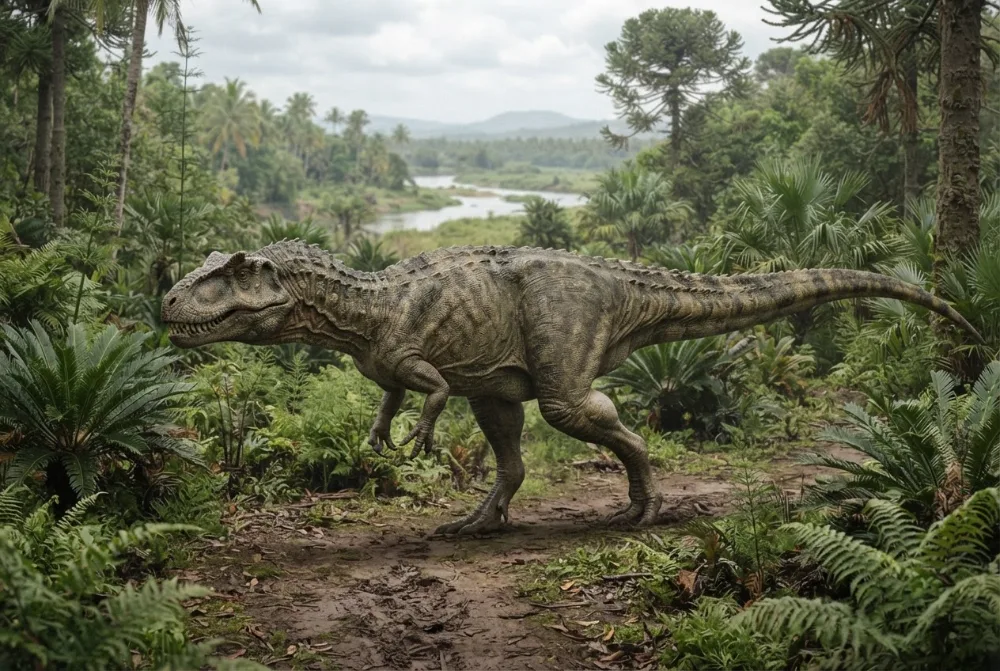
Indosuchus had a crested skull that was flattened on top, which helped tell it apart from other dinosaurs.1
Eyona mibuzo ibuzwa kakhulu: Indosuchus
?How big was Indosuchus?
Indosuchus was about 7 metres (23 feet) long and weighed about 1.2 tonnes (1.3 short tons). That is about as long as a large car.42
?What did Indosuchus eat?
Indosuchus was a carnivore, so it ate meat. It probably hunted other dinosaurs or scavenged for food.42
?When did Indosuchus live?
Indosuchus lived during the Late Cretaceous Period, about 70 to 66 million years ago, right before the dinosaurs went extinct.42
?Where was Indosuchus found?
Indosuchus fossils were found in India, near Jabalpur in Madhya Pradesh, in rocks of the Lameta Formation.42
?Why is it called Indosuchus?
Its name means 'Indian crocodile' in Greek, because it was found in India and its skull reminded scientists of a crocodile. But it was a dinosaur, not a crocodile.42
?Did Indosuchus have feathers?
Nobody knows for sure. No feathers have been found with Indosuchus fossils, and since it was an abelisaurid, it might have had scales like other abelisaurids.4
Inyaniso ngeentsomi
Intsomi: Indosuchus was a crocodile because its name means 'Indian crocodile'.
Inyaniso: Indosuchus was a dinosaur, not a crocodile. The name just refers to its crocodile-like snout.1
Kwiingcali zeedayinaso
- Igama lenzululwazi
- Indosuchus
- Inikwe igama ngu:
- Huene 19335
- Iqela
- Iidayinaso ezitya inyama
- Usapho / iclade
- Abelisauridae5
- Ukuhlelwa
- Theropoda > Ceratosauria > Abelisauridae5
- Ubudala bamatye
- 72 ukuya ku-66 izigidi zeminyaka (Maastrichtian)5
- Izakhiwo zamatye
- Lameta5
- Amazwe
- i-Indiya5
- Iirekhodi zeefosili
- 1 kwi-Paleobiology Database5
- Ukufunyanwa
- Indosuchus was named by German paleontologist Friedrich von Huene in 1932, and described by Huene and Charles Alfred Matley in 1933 from three partial skulls found near Jabalpur, India.1
- Kusaxoxwa ngayo
- Scientists still debate exactly how Indosuchus is related to other abelisaurids, because only a few skull bones have been found.1
Apho iinyani zivela khona
- Indosuchus (en.wikipedia.org)
- Indosuchus (nhm.ac.uk)
- Indosuchus| The Late Cretaceous Predator of Ancient India (thedinosaurs.org)
- Indosuchus - Wikipedia (en.m.wikipedia.org)
- Indosuchus in The Paleobiology Database (CC BY 4.0): ubudala, iindawo, izakhiwo zamatye, ukuhlelwa.
Yonke inyani ekweli phepha inenombolo ebonisa umthombo wayo. Ukuba siphosisile, uxolo, sithanda iidayinaso, asiyojenali yenzululwazi. Sixelele apha: [email protected], siya kuyilungisa.
 URex ulambile! I-Dino Wiki yiprojekthi katata ukwenzela unyana wakhe othanda iidayinaso, isimahla, ayinazintengiso, ayinazilandeli. Abantu abadala banokuphakela uRex isidlwana ukuze incede ihlale kwi-intanethi.Phakela uRex
 Allosaurus
 Carnotaurus
 Dilophosaurus
 Giganotosaurus
 Compsognathus
 Paronychodon
 Tyrannosaurus
 Triceratops
 Velociraptor
 Spinosaurus
 Ankylosaurus
 Parasaurolophus