 Uyiyiphi idayinaso? Ikwizi
 Idabi leedayinaso
 Ugqatso lweedayinaso
 Imidlalo emincinci yeedayinaso
 I-albhamu yezitikha
 Iilisti ze-TOP zeedayinaso
 Ndothuse!
Ischioceratops
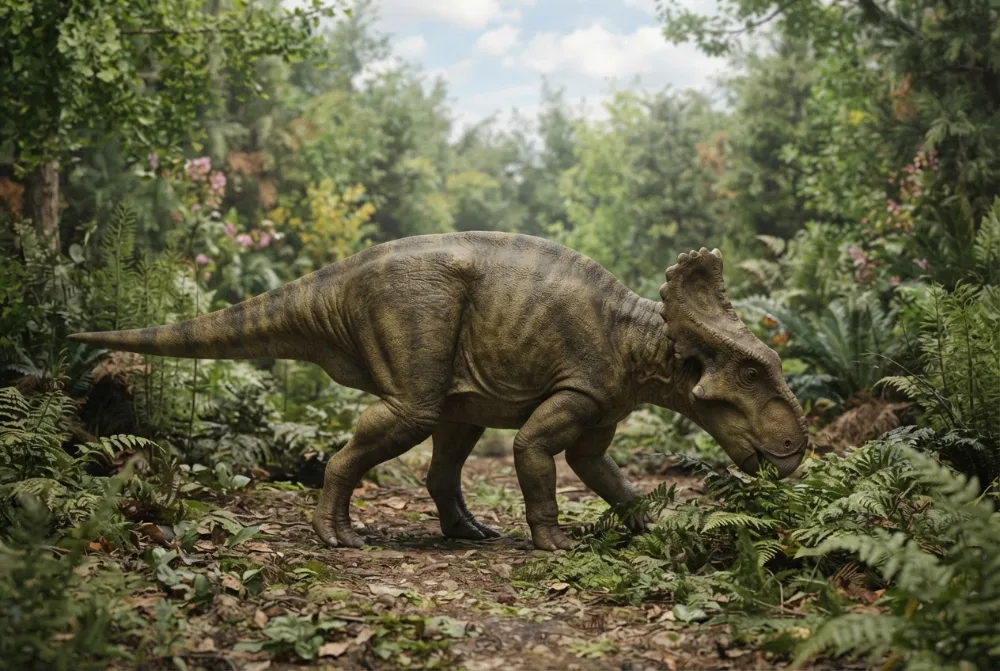
Ischioceratops was a small, plant-eating dinosaur that lived in what is now China. It had a short frill on its head and no horns, unlike its bigger cousin Triceratops. Its most unusual feature was a hip bone shaped like a bow and arrow.1
Yaphila nini?
Yayinkulu kangakanani?
Yayinde kangakanani?
Yayiphakame kangakanani?
uqikelelo
 inde njengeekati zasekhaya ezingama-4, impumlo ukuya emsileni🍌inde njengeebhanana ezingama-11 zilandelelana🏃ibinokubaleka iimitha ezili-100 ngemizuzwana engama-9.7 (oyena mntu ukhawulezayo udinga i-9,6)
Ischioceratops wayemkhulu kangakanani xa ethelekiswa NAWE?
Yimathematika nje kwibhrawuza yakho. Akukho nto igcinwayo okanye ithunyelwe naphi na.
Yayikhawuleza kangakanani?


Iinyani ezimnandi
Ischioceratops is known only from a partial skeleton that includes the pelvis, tail bones, and parts of the legs. No skull has been found yet.1
Its ischium (a hip bone) is unlike any other dinosaur's. It flares out in the middle like a recurve bow and has a hole called a fenestra, ending in an axehead-shaped tip.1
Ischioceratops lived during the Campanian stage of the Late Cretaceous, about 83 to 72 million years ago.2
It was a leptoceratopsid, a group of small, hornless, frilled dinosaurs that walked on four legs. Leptoceratopsids are close relatives of the larger horned dinosaurs like Triceratops.1
The fossil was found in the same bonebed as many hadrosaur (duck-billed dinosaur) bones and a tyrannosaur, suggesting a rich ecosystem.1
Ischioceratops had nine sacral vertebrae (hip vertebrae), more than any other known leptoceratopsid.1
Kwiingcali zeedayinaso
- Igama lenzululwazi
- Ischioceratops
- Inikwe igama ngu:
- He et al. 20154
- Iqela
- Iidayinaso ezineempondo
- Usapho / iclade
- Leptoceratopsidae4
- Ukuhlelwa
- Ornithischia > Ceratopsia4
- Ubudala bamatye
- 84 ukuya ku-72 izigidi zeminyaka (Campanian)4
- Izakhiwo zamatye
- Hongtuya4
- Amazwe
- iTshayina4
- Iirekhodi zeefosili
- 1 kwi-Paleobiology Database4
- Ukufunyanwa
- Ischioceratops was named in 2015 by a team of scientists including He Y., Makovicky P.J., and others. The only specimen was dug up from the Kugou locality in Zhucheng, China, and is stored at the Zhucheng Dinosaur Museum.12
- Kusaxoxwa ngayo
- Scientists are not sure what the strange shape of its ischium was used for. It might have been for muscle attachment or display, but no one knows for certain.1
Apho iinyani zivela khona
- A New Leptoceratopsid (Ornithischia, Ceratopsia) with a Unique Ischium from the Upper Cretaceous of Shandong Province, China | PLOS One (journals.plos.org)
- PBDB Taxon (paleobiodb.org)
- Ischioceratops (en.wikipedia.org)
- Ischioceratops in The Paleobiology Database (CC BY 4.0): ubudala, iindawo, izakhiwo zamatye, ukuhlelwa.
Yonke inyani ekweli phepha inenombolo ebonisa umthombo wayo. Ukuba siphosisile, uxolo, sithanda iidayinaso, asiyojenali yenzululwazi. Sixelele apha: [email protected], siya kuyilungisa.
 URex ulambile! I-Dino Wiki yiprojekthi katata ukwenzela unyana wakhe othanda iidayinaso, isimahla, ayinazintengiso, ayinazilandeli. Abantu abadala banokuphakela uRex isidlwana ukuze incede ihlale kwi-intanethi.Phakela uRex
 Triceratops
 Protoceratops
 Ojoceratops
 Tatankaceratops
 Psittacosaurus
 Centrosaurus
 Tyrannosaurus
 Velociraptor
 Spinosaurus
 Ankylosaurus
 Parasaurolophus
 Pteranodon