 Uyiyiphi idayinaso? Ikwizi
 Idabi leedayinaso
 Ugqatso lweedayinaso
 Imidlalo emincinci yeedayinaso
 I-albhamu yezitikha
 Iilisti ze-TOP zeedayinaso
 Ndothuse!
Medusaceratops
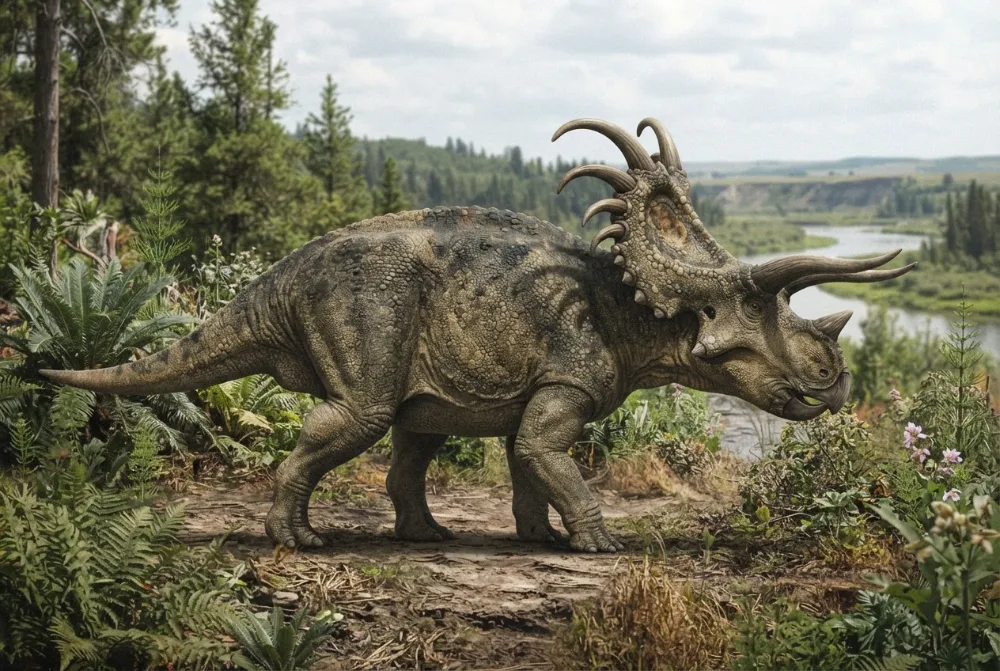
Medusaceratops was a horned dinosaur that lived about 80 million years ago. It had a big frill on its head with curved spikes that looked like the snakes of Medusa from Greek myths. This plant-eater roamed what is now Montana, USA.12
Yaphila nini?
Yayinkulu kangakanani?
Yayinde kangakanani?
Yayiphakame kangakanani?
uqikelelo
Yayinzima kangakanani?

 inde njengezinja ezingama-7, impumlo ukuya emsileni🍌inde njengeebhanana ezingama-39 zilandelelanainzima njengezinja ezingama-91🍉inzima njengamavatala angama-360🧸inzima njengabantwana basenkulisa abangama-95🎒inzima njengabantwana besikolo abangama-57🐻❄️inzima njengeebhere ezimhlophe ezingama-4🏃ibinokubaleka iimitha ezili-100 ngemizuzwana engama-11 (oyena mntu ukhawulezayo udinga i-9,6)
Medusaceratops wayemkhulu kangakanani xa ethelekiswa NAWE?
Yimathematika nje kwibhrawuza yakho. Akukho nto igcinwayo okanye ithunyelwe naphi na.
Yayikhawuleza kangakanani?


Iinyani ezimnandi
Medusaceratops was first thought to be a different dinosaur called Albertaceratops, but later scientists realized it was a new species.2
Its frill had at least five pairs of bony bumps called epiparietals, including a large hooked spike on each side.2
The Mansfield bonebed where Medusaceratops was found contains many skeletons of this dinosaur, suggesting they lived in herds.2
Medusaceratops is one of the oldest known centrosaurine ceratopsids, a group of horned dinosaurs with big nose horns.2
Eyona mibuzo ibuzwa kakhulu: Medusaceratops
?How big was Medusaceratops?
About 6 metres (20 feet) long, based on a 2010 estimate.4
?What did Medusaceratops eat?
It was a plant-eater, so it ate plants like ferns and leaves.4
?When did Medusaceratops live?
It lived about 77.5 million years ago, during the Late Cretaceous period.4
?Why is it called Medusaceratops?
Its name means 'Medusa's horned face' because its frill spikes looked like the snake hair of Medusa from Greek myths.4
?Was Medusaceratops a dinosaur?
Yes, it was a horned dinosaur, a type of ceratopsian.4
?Where was Medusaceratops found?
Its fossils were found in Montana, USA, in the Judith River Formation.4
Kwiingcali zeedayinaso
- Igama lenzululwazi
- Medusaceratops
- Inikwe igama ngu:
- Ryan et al. 20105
- Iqela
- Iidayinaso ezineempondo
- Usapho / iclade
- Ceratopsidae5
- Ukuhlelwa
- Ornithischia > Ceratopsia > Ceratopsidae5
- Ubudala bamatye
- 84 ukuya ku-72 izigidi zeminyaka (Campanian)5
- Izakhiwo zamatye
- Judith River5
- Amazwe
- iUSA5
- Iirekhodi zeefosili
- 1 kwi-Paleobiology Database5
- Ukufunyanwa
- Medusaceratops was named by Michael Ryan, Anthony Russell, and Scott Hartman in 2010 based on fossils from the Judith River Formation in Montana.15
- Kusaxoxwa ngayo
- Scientists are not sure whether Medusaceratops was a chasmosaurine or a centrosaurine ceratopsid, because its frill has features of both groups.2
Apho iinyani zivela khona
- PBDB Taxon (paleobiodb.org)
- New material and systematic re-evaluation of Medusaceratops lokii (Dinosauria, Ceratopsidae) from the Judith River Formation (Campanian, Montana) (cambridge.org)
- New horned dinosaur: Two-ton plant-eater lived 78 million years ago in Montana | ScienceDaily (sciencedaily.com)
- Medusaceratops - Wikipedia (en.wikipedia.org)
- Medusaceratops in The Paleobiology Database (CC BY 4.0): ubudala, iindawo, izakhiwo zamatye, ukuhlelwa.
Yonke inyani ekweli phepha inenombolo ebonisa umthombo wayo. Ukuba siphosisile, uxolo, sithanda iidayinaso, asiyojenali yenzululwazi. Sixelele apha: [email protected], siya kuyilungisa.
 URex ulambile! I-Dino Wiki yiprojekthi katata ukwenzela unyana wakhe othanda iidayinaso, isimahla, ayinazintengiso, ayinazilandeli. Abantu abadala banokuphakela uRex isidlwana ukuze incede ihlale kwi-intanethi.Phakela uRex
 Triceratops
 Protoceratops
 Ojoceratops
 Tatankaceratops
 Psittacosaurus
 Centrosaurus
 Tyrannosaurus
 Velociraptor
 Spinosaurus
 Ankylosaurus
 Parasaurolophus
 Pteranodon