 Uyiyiphi idayinaso? Ikwizi
 Idabi leedayinaso
 Ugqatso lweedayinaso
 Imidlalo emincinci yeedayinaso
 I-albhamu yezitikha
 Iilisti ze-TOP zeedayinaso
 Ndothuse!
Montanoceratops
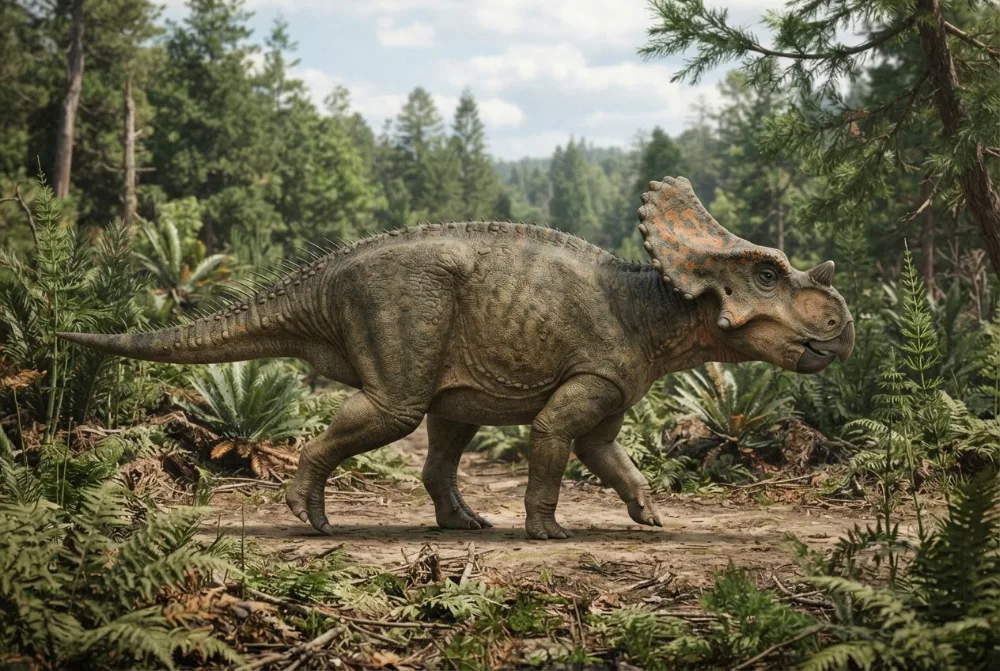
Montanoceratops was a small, plant-eating dinosaur with a beak and a bony frill on its head. It lived in North America during the Late Cretaceous, about 72 million years ago. This dinosaur is part of a group called leptoceratopsids, which were like smaller cousins of the famous Triceratops.1
Yaphila nini?
Yayinkulu kangakanani?
Yayinde kangakanani?
Yayiphakame kangakanani?
uqikelelo
Yayinzima kangakanani?
 inde njengezinja ezingama-3, impumlo ukuya emsileni🍌inde njengeebhanana ezingama-17 zilandelelana🍉inzima njengamavatala angama-34🧸inzima njengabantwana basenkulisa abangama-9🎒inzima njengabantwana besikolo abangama-5🏃ibinokubaleka iimitha ezili-100 ngemizuzwana engama-9.7 (oyena mntu ukhawulezayo udinga i-9,6)
Montanoceratops wayemkhulu kangakanani xa ethelekiswa NAWE?
Yimathematika nje kwibhrawuza yakho. Akukho nto igcinwayo okanye ithunyelwe naphi na.
Yayikhawuleza kangakanani?


Iinyani ezimnandi
Montanoceratops was first thought to be a species of Leptoceratops, but in 1951 it got its own genus name.1
The nose horn of Montanoceratops was actually a misidentified cheekbone, which fooled paleontologists for years.1
Montanoceratops lived alongside bigger horned dinosaurs, but it was smaller and had a deeper tail.1
Fossils of Montanoceratops have been found in rocks that are between 83.6 and 66 million years old.3
Montanoceratops is part of a group called leptoceratopsids, which were diverse and lived in the same habitats as the bigger ceratopsids.1
Eyona mibuzo ibuzwa kakhulu: Montanoceratops
?How big was Montanoceratops?
Montanoceratops was a small dinosaur, about 2.5 metres (8.2 feet) long and weighed around 170 kilograms (370 pounds).2
?What did Montanoceratops eat?
Montanoceratops was a herbivore, meaning it ate plants. It used its sharp beak to bite off leaves or needles.2
?Did Montanoceratops have a horn?
It was once thought to have a horn on its nose, but that bone was later identified as a misplaced cheek horn. So it did not have a nose horn.21
?Where did Montanoceratops live?
Montanoceratops lived in what is now Montana, USA, and Alberta, Canada, about 70 million years ago.2
Inyaniso ngeentsomi
Intsomi: Montanoceratops had a prominent nose horn like some other horned dinosaurs.
Inyaniso: The supposed nose horn was actually a misidentified cheekbone, so Montanoceratops likely did not have a nose horn.1
Kwiingcali zeedayinaso
- Igama lenzululwazi
- Montanoceratops
- Inikwe igama ngu:
- Sternberg 19513
- Iqela
- Iidayinaso ezineempondo
- Usapho / iclade
- Leptoceratopsidae3
- Ukuhlelwa
- Ornithischia > Ceratopsia3
- Ubudala bamatye
- 84 ukuya ku-66 izigidi zeminyaka (Campanian / Maastrichtian)3
- Izakhiwo zamatye
- St. Mary River, Horseshoe Canyon3
- Amazwe
- iUSA, iKhanada3
- Iirekhodi zeefosili
- 3 kwi-Paleobiology Database3
- Ukufunyanwa
- Barnum Brown and Erich Schlaikjer described the first fossil in 1942, but they called it Leptoceratops cerorhynchos. In 1951, Charles M. Sternberg realized it was different and named it Montanoceratops.1
- Kusaxoxwa ngayo
- Scientists still debate exactly how Montanoceratops is related to other horned dinosaurs, especially because some fossils were misidentified.1
Apho iinyani zivela khona
- M is for Montanoceratops | National Geographic (nationalgeographic.com)
- Montanoceratops (en.wikipedia.org)
- Montanoceratops in The Paleobiology Database (CC BY 4.0): ubudala, iindawo, izakhiwo zamatye, ukuhlelwa.
Yonke inyani ekweli phepha inenombolo ebonisa umthombo wayo. Ukuba siphosisile, uxolo, sithanda iidayinaso, asiyojenali yenzululwazi. Sixelele apha: [email protected], siya kuyilungisa.
 URex ulambile! I-Dino Wiki yiprojekthi katata ukwenzela unyana wakhe othanda iidayinaso, isimahla, ayinazintengiso, ayinazilandeli. Abantu abadala banokuphakela uRex isidlwana ukuze incede ihlale kwi-intanethi.Phakela uRex
 Triceratops
 Protoceratops
 Ojoceratops
 Tatankaceratops
 Psittacosaurus
 Centrosaurus
 Tyrannosaurus
 Velociraptor
 Spinosaurus
 Ankylosaurus
 Parasaurolophus
 Pteranodon