 Uyiyiphi idayinaso? Ikwizi
 Idabi leedayinaso
 Ugqatso lweedayinaso
 Imidlalo emincinci yeedayinaso
 I-albhamu yezitikha
 Iilisti ze-TOP zeedayinaso
 Ndothuse!
Yaphila nini?

Yayinkulu kangakanani?
Yayinde kangakanani?
Yayiphakame kangakanani?
Yayinzima kangakanani?
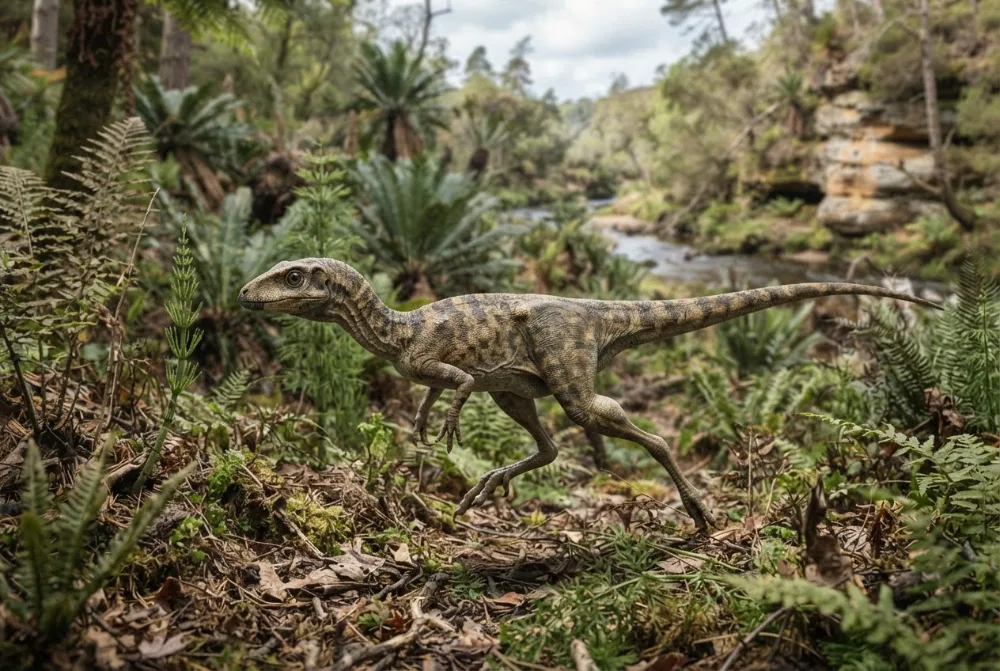
 inde njengeekati zasekhaya ezingama-2, impumlo ukuya emsileni🍌inde njengeebhanana ezingama-6 zilandelelana🪶ilula kunekati yasekhaya🍌inzima njengeebhanana ezingama-8🪑incinci ngokwaneleyo ukuba ihambe phantsi kwesitulo🏃ibinokubaleka iimitha ezili-100 ngemizuzwana engama-24 (oyena mntu ukhawulezayo udinga i-9,6)
Saltopus wayemkhulu kangakanani xa ethelekiswa NAWE?
Yimathematika nje kwibhrawuza yakho. Akukho nto igcinwayo okanye ithunyelwe naphi na.
Yayikhawuleza kangakanani?


Iinyani ezimnandi
Saltopus had hollow bones, just like birds and many other dinosaurs, which made it light and fast.1
The only known fossil of Saltopus was discovered in 1867 by William Taylor, but it was not named until 1910 by Friedrich von Huene.1
Saltopus had five fingers on each hand, but the fourth and fifth fingers were smaller than the others.1
Scientists are not sure if Saltopus was a true dinosaur or a very close relative. Some think it might be the closest relative of all dinosaurs.1
The fossil of Saltopus is mostly impressions and natural casts in sandstone, with very little actual bone preserved.1
Saltopus lived between 237 and 205 million years ago, during the Carnian to Norian stages of the Late Triassic.3
Eyona mibuzo ibuzwa kakhulu: Saltopus
?How big was Saltopus?
About 80 to 100 centimetres (31 to 39 inches) long, about the size of a domestic cat. It may have weighed around 1 kilogram (2.2 pounds).1
?Was Saltopus a dinosaur?
Scientists are not sure. It is a dinosauriform, a close relative of dinosaurs, and some studies think it might be the closest relative of true dinosaurs, while others think it was an early archosaur.1
?What did Saltopus eat?
It was a carnivore, or meat-eater, and it may have eaten mostly insects and other small prey.2
?When did Saltopus live?
It lived during the Late Triassic period, about 237 to 205 million years ago.1
?Where was Saltopus found?
Its only fossil was found in Scotland, in the Lossiemouth Sandstone Formation.1
?Why is it called Saltopus?
The name means 'hopping foot', from Latin and Greek words, because it probably hopped or jumped around.1
Kwiingcali zeedayinaso
- Igama lenzululwazi
- Saltopus
- Inikwe igama ngu:
- Huene 19103
- Iqela
- Iidayinaso zokuqala
- Usapho / iclade
- Saurischia3
- Ubudala bamatye
- 237 ukuya ku-206 izigidi zeminyaka (Carnian / Norian)3
- Izakhiwo zamatye
- Lossiemouth Sandstone3
- Amazwe
- iUnited Kingdom3
- Iirekhodi zeefosili
- 1 kwi-Paleobiology Database3
- Ukufunyanwa
- The only fossil of Saltopus was found in 1867 by William Taylor in Scotland. It was first thought to be another animal, but in 1910 Friedrich von Huene named it Saltopus elginensis.1
- Kusaxoxwa ngayo
- Scientists still debate whether Saltopus was a true dinosaur or a dinosauriform (a close relative). Some recent studies suggest it might be one of the earliest ornithischian dinosaurs.1
Apho iinyani zivela khona
- Saltopus (en.wikipedia.org)
- Saltopus Fact Sheet (enchantedlearning.com)
- Saltopus in The Paleobiology Database (CC BY 4.0): ubudala, iindawo, izakhiwo zamatye, ukuhlelwa.
Yonke inyani ekweli phepha inenombolo ebonisa umthombo wayo. Ukuba siphosisile, uxolo, sithanda iidayinaso, asiyojenali yenzululwazi. Sixelele apha: [email protected], siya kuyilungisa.
 URex ulambile! I-Dino Wiki yiprojekthi katata ukwenzela unyana wakhe othanda iidayinaso, isimahla, ayinazintengiso, ayinazilandeli. Abantu abadala banokuphakela uRex isidlwana ukuze incede ihlale kwi-intanethi.Phakela uRex
 Herrerasaurus
 Tawa
Tawa Chindesaurus
 Nyasasaurus
 Staurikosaurus
 Alwalkeria
 Nothosaurus
 Massospondylus
 Plateosaurus
 Coelophysis
 Podokesaurus
 Simosaurus