 Uyiyiphi idayinaso? Ikwizi
 Idabi leedayinaso
 Ugqatso lweedayinaso
 Imidlalo emincinci yeedayinaso
 I-albhamu yezitikha
 Iilisti ze-TOP zeedayinaso
 Ndothuse!
Turanoceratops
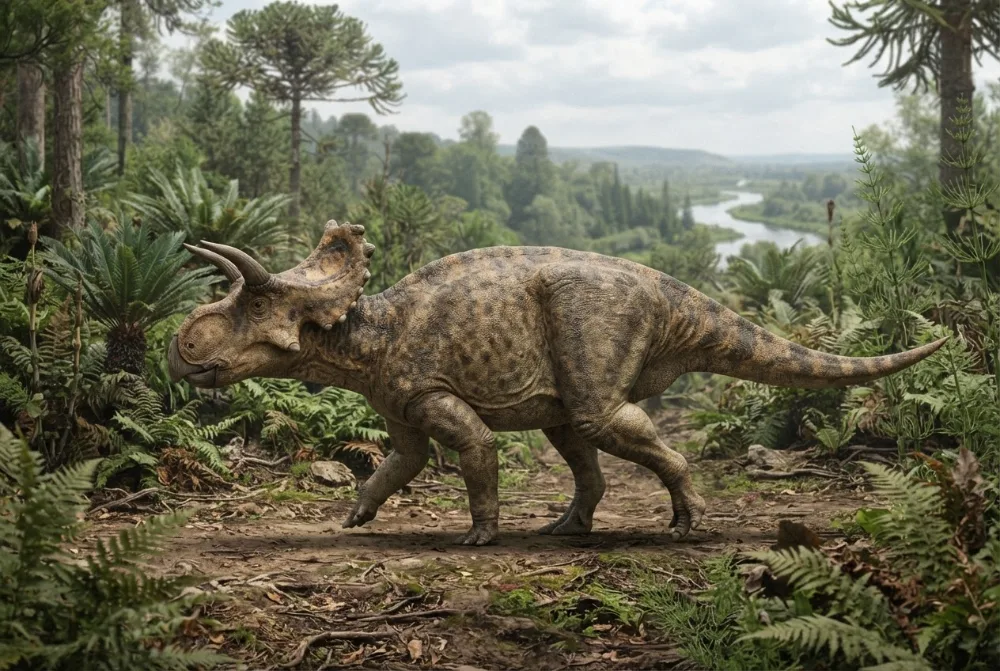
Turanoceratops was a small, plant-eating dinosaur with a parrot-like beak and two long horns above its eyes. It lived in what is now Uzbekistan about 90 million years ago. Scientists think it was a close cousin of the famous horned dinosaurs like Triceratops.12
Yaphila nini?
Yayinkulu kangakanani?
Yayinde kangakanani?
Yayiphakame kangakanani?
uqikelelo
Yayinzima kangakanani?

 inde njengeekati zasekhaya ezingama-4, impumlo ukuya emsileni🍌inde njengeebhanana ezingama-11 zilandelelana🍉inzima njengamavatala angama-35🧸inzima njengabantwana basenkulisa abangama-9🎒inzima njengabantwana besikolo abangama-5🏃ibinokubaleka iimitha ezili-100 ngemizuzwana engama-9.7 (oyena mntu ukhawulezayo udinga i-9,6)
Turanoceratops wayemkhulu kangakanani xa ethelekiswa NAWE?
Yimathematika nje kwibhrawuza yakho. Akukho nto igcinwayo okanye ithunyelwe naphi na.
Yayikhawuleza kangakanani?


Iinyani ezimnandi
Turanoceratops had two long horns above its eyes, like the later ceratopsids, but it lacked a nose horn.2
Its teeth had two roots each, which is a more advanced feature than in earlier horned dinosaurs like Zuniceratops.2
Turanoceratops lived during the Turonian stage, about 90 million years ago, making it one of the oldest known ceratopsids or their close relatives.13
The first fossils of Turanoceratops were found in the 1920s by Soviet scientists, but it was not officially named until 1989.1
Some scientists think Turanoceratops was a true ceratopsid, which would make it the only one known from Asia. Others disagree and place it just outside the group.12
The name Turanoceratops means 'Turan horned face', after the ancient Persian name for the region where it was found.1
Eyona mibuzo ibuzwa kakhulu: Turanoceratops
?How big was Turanoceratops?
Turanoceratops was a relatively small dinosaur. In 2010, Gregory S. Paul estimated its length at about 2 metres (6.6 ft) and its weight at 175 kilograms (386 lb).1
?What did Turanoceratops eat?
Turanoceratops was a herbivore, meaning it ate plants. It likely fed on ferns and conifers, using its sharp beak to bite off leaves or needles.1
Kwiingcali zeedayinaso
- Igama lenzululwazi
- Turanoceratops
- Inikwe igama ngu:
- Nessov et al. 19894
- Iqela
- Iidayinaso ezineempondo
- Usapho / iclade
- Ceratopsoidea4
- Ukuhlelwa
- Ornithischia > Ceratopsia4
- Ubudala bamatye
- 94 ukuya ku-90 izigidi zeminyaka (Turonian)4
- Izakhiwo zamatye
- Bissekty4
- Amazwe
- iUzbekistan4
- Iirekhodi zeefosili
- 6 kwi-Paleobiology Database4
- Ukufunyanwa
- Turanoceratops was named in 1989 by Lev Nesov and colleagues based on a damaged upper jaw bone found near Dzharakuduk, Uzbekistan. The species name 'tardabilis' means 'retarding' in Latin, referring to the slow research process.1
- Kusaxoxwa ngayo
- Scientists still debate whether Turanoceratops was a true member of the Ceratopsidae family or just a close relative.12
Apho iinyani zivela khona
- Turanoceratops (en.wikipedia.org)
- Turanoceratops tardabilis--the first ceratopsid dinosaur from Asia (pubmed.ncbi.nlm.nih.gov)
- PBDB Taxon (paleobiodb.org)
- Turanoceratops in The Paleobiology Database (CC BY 4.0): ubudala, iindawo, izakhiwo zamatye, ukuhlelwa.
Yonke inyani ekweli phepha inenombolo ebonisa umthombo wayo. Ukuba siphosisile, uxolo, sithanda iidayinaso, asiyojenali yenzululwazi. Sixelele apha: [email protected], siya kuyilungisa.
 URex ulambile! I-Dino Wiki yiprojekthi katata ukwenzela unyana wakhe othanda iidayinaso, isimahla, ayinazintengiso, ayinazilandeli. Abantu abadala banokuphakela uRex isidlwana ukuze incede ihlale kwi-intanethi.Phakela uRex
 Triceratops
 Protoceratops
 Ojoceratops
 Tatankaceratops
 Psittacosaurus
 Centrosaurus
 Tyrannosaurus
 Velociraptor
 Spinosaurus
 Ankylosaurus
 Parasaurolophus
 Pteranodon