 你是哪種恐龍?測驗
 恐龍對決
恐龍對決 恐龍賽跑
恐龍賽跑 恐龍小遊戲
恐龍小遊戲 貼紙簿
貼紙簿 恐龍 TOP 排行榜
 給我驚喜!
給我驚喜!
Gonkoken
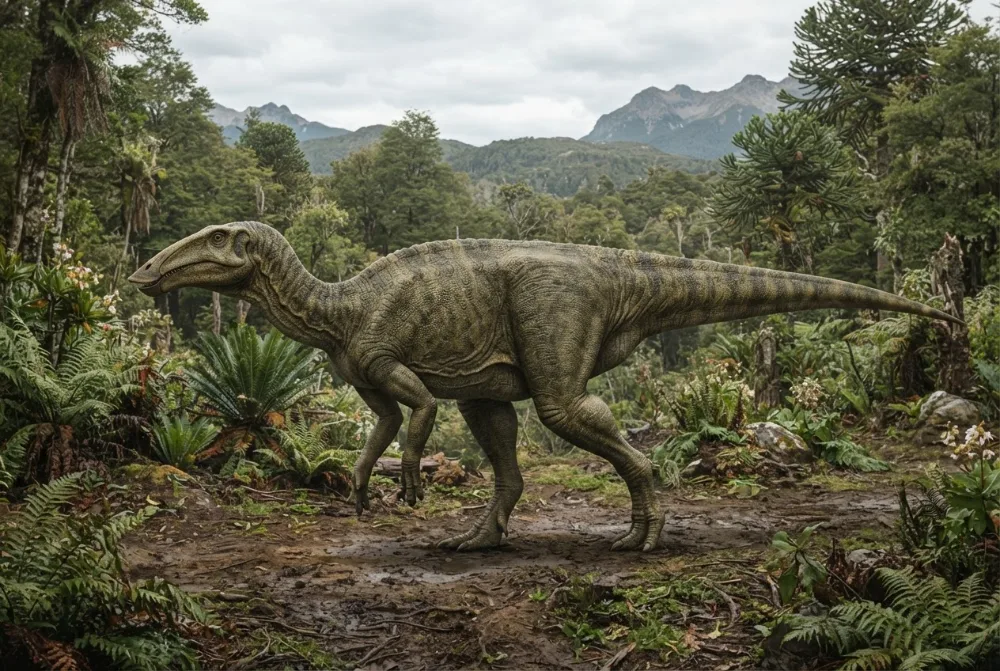
Gonkoken was a small duck-billed dinosaur that lived in what is now southern Chile, near Antarctica. It was about as long as a car and used its hundreds of teeth to chew tough plants. This dinosaur is special because it is not a true hadrosaurid, but a more ancient cousin that survived until the very end of the dinosaur age.24
牠生活在什麼時候?
牠有多大?
牠有多長?
牠有多高?
估計值
牠有多重?
 跟 4 隻狗從鼻子接到尾巴一樣長🍌跟 22 根香蕉頭尾相接一樣長🍉跟 200 顆西瓜一樣重🧸跟 53 個幼兒園小朋友一樣重🎒跟 31 個小學生一樣重🐻❄️跟 2 隻北極熊一樣重🏃能在 11 秒內跑完 100 公尺(最快的人類要 9.6 秒)
Gonkoken 跟「你」比起來有多大?
只是在你的瀏覽器裡算算數學。什麼都不會被儲存或傳送出去。
牠有多快?


趣味知識
Gonkoken is a 'transitional' duckbill, meaning it is closely related to true hadrosaurids but not one itself. Its ancestors came from North America and arrived in South America earlier than the more advanced duckbills.2
The name Gonkoken comes from the Aónik’enk language, spoken by the indigenous people of the region. 'Gon' means 'similar to' and 'koken' means 'wild duck or swan'.21
Fossils of Gonkoken were found in a bonebed containing at least three individuals. The site is still being excavated and may hold many more bones.2
Gonkoken lived about 71.7 to 70.5 million years ago, during the early Maastrichtian stage of the Late Cretaceous. This was just a few million years before the asteroid impact that ended the age of dinosaurs.2
Unlike true hadrosaurids, Gonkoken had fewer than 30 tooth positions in its lower jaw, and its tooth rows did not extend beyond the coronoid process.2
Gonkoken is the first duck-billed dinosaur described from a subantarctic region. Its discovery suggests that some alleged hadrosaurid fossils from Antarctica might actually belong to non-hadrosaurid duckbills like Gonkoken.2
關於 Gonkoken 最常被問的問題
?How big was Gonkoken?
Gonkoken was a small duck-billed dinosaur, about 4 metres (13 feet) long. That is roughly the length of a small car.12
?When did Gonkoken live?
Gonkoken lived about 71.7 to 70.5 million years ago, during the early Maastrichtian stage of the Late Cretaceous. That was just a few million years before the asteroid hit.12
迷思破解王
迷思: All duck-billed dinosaurs are hadrosaurids (true duckbills).
真相: Gonkoken is a duck-billed dinosaur but not a hadrosaurid. It belongs to a more ancient lineage that survived alongside true duckbills in the far south.2
給恐龍專家
- 學名
- Gonkoken
- 命名者
- Alarcón-Muñoz et al. 20234
- 類群
- 有喙的草食恐龍
- 科 / 演化支
- Hadrosauroidea4
- 分類
- Ornithischia > Ornithopoda > Iguanodontia4
- 岩石的年代
- 72 到 66 百萬年 (Maastrichtian)4
- 岩層
- Dorotea4
- 國家
- 智利4
- 化石紀錄
- The Paleobiology Database 收錄 1 筆4
- 發現
- Gonkoken was named in 2023 by Alarcón-Muñoz and colleagues. The first bones were found by Mario 'Nano' Ulloa in the Río de las Chinas Valley, and excavations began in 2013, uncovering many disarticulated remains.24
- 仍有爭議
- Scientists debate whether all alleged hadrosaurid fossils from Antarctica and subantarctic regions actually belong to non-hadrosaurid duckbills like Gonkoken, rather than true hadrosaurids.2
知識從哪裡來
- Gonkoken (en.wikipedia.org)
- Relict duck-billed dinosaurs survived into the last age of the dinosaurs in subantarctic Chile (science.org)
- Scientists discover duck-billed dinosaur roamed Chile 72 million years ago | Reuters (reuters.com)
- Gonkoken in The Paleobiology Database (CC BY 4.0): 年代、地點、岩層、分類。
這一頁的每個知識都有一個編號,指向它的出處。如果我們有哪裡寫錯了,很抱歉,我們是恐龍迷,不是科學期刊。寫信到 [email protected] 告訴我們,我們會修正。
 Rex 肚子餓了! Dino Wiki 是一位爸爸為了熱愛恐龍的兒子做的網站,免費、沒有廣告也沒有追蹤器。大人可以請 Rex 吃點心,幫忙讓網站繼續上線。餵 Rex
 Iguanodon
 Tenontosaurus
 Thescelosaurus
 Zalmoxes
 Camptosaurus
 Rhabdodon
 Tyrannosaurus
 Triceratops
 Velociraptor
 Spinosaurus
 Ankylosaurus
 Parasaurolophus