 你是哪種恐龍?測驗
 恐龍對決
恐龍對決 恐龍賽跑
恐龍賽跑 恐龍小遊戲
恐龍小遊戲 貼紙簿
貼紙簿 恐龍 TOP 排行榜
 給我驚喜!
給我驚喜!牠生活在什麼時候?

牠有多大?
牠有多長?
牠有多高?
估計值
牠有多重?

 跟 4 隻家貓從鼻子接到尾巴一樣長🍌跟 11 根香蕉頭尾相接一樣長跟 10 隻家貓一樣重🍉跟 8 顆西瓜一樣重🧸跟 2 個幼兒園小朋友一樣重🎒跟 1 個小學生一樣重🏃能在 8.2 秒內跑完 100 公尺(最快的人類要 9.6 秒)
Oviraptor 跟「你」比起來有多大?
只是在你的瀏覽器裡算算數學。什麼都不會被儲存或傳送出去。
牠有多快?


趣味知識
Oviraptor had no teeth. Instead it used a horny beak to crush its food.2
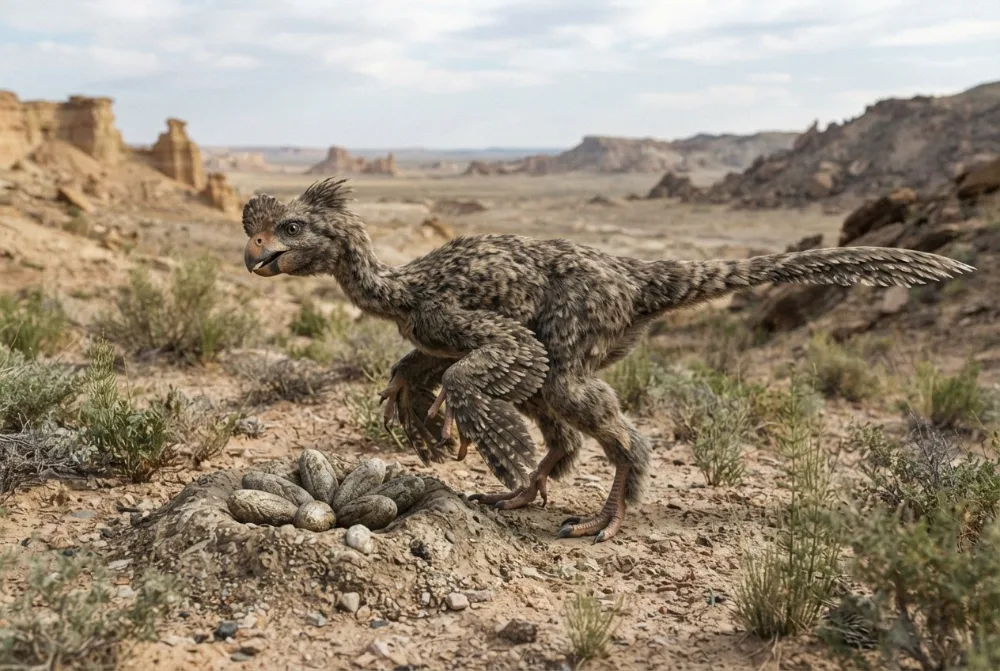
The first Oviraptor fossil was found lying on top of a nest of eggs. Scientists thought it was stealing them, but later they realized it was probably protecting its own eggs.1
Oviraptor was covered in feathers. Its tail ended in a pygostyle, a bone that supported a fan of feathers.1
Oviraptor lived about 75 to 71 million years ago, during the Late Cretaceous period.1
Its arms were long and ended in three fingers with curved claws.1
The name Oviraptor means 'egg thief' because the first fossil was found with eggs. But scientists now think it was a good parent, not a thief.1
關於 Oviraptor 最常被問的問題
?How big was Oviraptor?
Oviraptor was about 1.6 to 2 metres (5.2 to 6.6 feet) long and weighed between 33 and 40 kilograms (73 to 88 pounds).1
?Did Oviraptor have teeth?
No, Oviraptor had no teeth. It had a horny beak like a parrot that could crush hard food.12
?What did Oviraptor eat?
Oviraptor was an omnivore. It ate hard fruits, eggs, and possibly shellfish, using its strong beak to crush them.2
?Did Oviraptor steal eggs?
No, that was a mistake. Scientists once thought Oviraptor stole eggs, but now we know it was actually a caring parent that brooded its own eggs.1
?Did Oviraptor have feathers?
Yes, Oviraptor was covered in feathers. Its tail ended in a pygostyle that supported a fan of feathers.1
?When did Oviraptor live?
Oviraptor lived during the Late Cretaceous period, about 85 to 75 million years ago.2
?Where was Oviraptor found?
Oviraptor fossils were found in the Gobi Desert of Mongolia, at a place called the Flaming Cliffs.1
?What does the name Oviraptor mean?
Oviraptor means 'egg thief' in Latin, because the first fossil was found lying on a nest of eggs. But we now know it was a good parent, not a thief.1
迷思破解王
迷思: Oviraptor stole and ate the eggs of other dinosaurs.
真相: The Oviraptor fossil was found on a nest, but it was probably sitting on its own eggs to keep them warm, like a bird. It likely ate plants, fruits, and small animals, not eggs.1
給恐龍專家
- 學名
- Oviraptor
- 命名者
- Osborn 19243
- 類群
- 奇特的羽毛恐龍
- 科 / 演化支
- Oviraptoridae3
- 分類
- Theropoda > Oviraptorosauria3
- 岩石的年代
- 90 到 72 百萬年 (Coniacian / Campanian)3
- 岩層
- Djadokhta, Dabrazhin3
- 國家
- 蒙古, 哈薩克3
- 化石紀錄
- The Paleobiology Database 收錄 3 筆3
- 發現
- Oviraptor was discovered in 1923 in the Gobi Desert of Mongolia during an expedition led by Roy Chapman Andrews. It was named by Henry Fairfield Osborn in 1924.1
- 仍有爭議
- Scientists are not sure exactly what Oviraptor ate. Its strong beak could crush hard objects, but whether it mainly ate plants, eggs, or shellfish is still debated.21
知識從哪裡來
- Oviraptor (en.wikipedia.org)
- Oviraptor | Natural History Museum (nhm.ac.uk)
- Oviraptor in The Paleobiology Database (CC BY 4.0): 年代、地點、岩層、分類。
這一頁的每個知識都有一個編號,指向它的出處。如果我們有哪裡寫錯了,很抱歉,我們是恐龍迷,不是科學期刊。寫信到 [email protected] 告訴我們,我們會修正。
 Rex 肚子餓了! Dino Wiki 是一位爸爸為了熱愛恐龍的兒子做的網站,免費、沒有廣告也沒有追蹤器。大人可以請 Rex 吃點心,幫忙讓網站繼續上線。餵 Rex
 Therizinosaurus
 Chirostenotes
 Citipes
 Leptorhynchos
 Avimimus
 Caenagnathus
 Tyrannosaurus
 Triceratops
 Velociraptor
 Spinosaurus
 Ankylosaurus
 Parasaurolophus