 Watter dino is jy? Kwis
 Dinogeveg
 Dinoresies
 Dino-minispeletjies
 Plakkeralbum
 Dino TOP-lyste
 Verras my!
Wanneer het dit geleef?

Hoe vinnig was dit?


Prettige feite
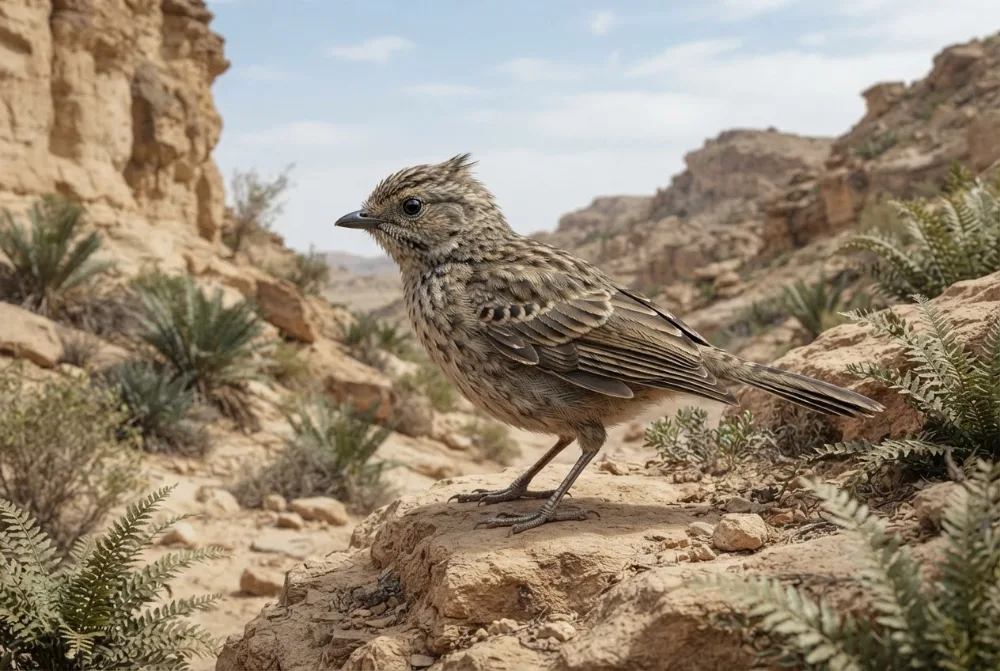
Gobipteryx had a toothless beak, which is rare for a bird from the time of dinosaurs.1
Scientists think Gobipteryx could fly right after hatching, because its wing and shoulder bones were already strong in the egg.1
Gobipteryx was about the size of a partridge, with a skull only 45 millimeters long.1
The first Gobipteryx fossils were two damaged skulls found by a Polish-Mongolian expedition in 1971.12
Gobipteryx belongs to a group of ancient birds called Enantiornithes, which all went extinct at the end of the Cretaceous.1
Its bones grew quickly, like those of modern birds, but its growth slowed down right after hatching.1
Mees gevraagde vrae oor Gobipteryx
?How big was Gobipteryx?
About the size of a partridge, with a skull only 45 millimeters long.1
?Did Gobipteryx have teeth?
No, Gobipteryx had a toothless beak, which is rare for a bird from the time of dinosaurs.1
?Could Gobipteryx fly?
Yes, scientists believe Gobipteryx could fly. Its long scapula and forelimbs were well suited for flight, and it could probably fly right after hatching.1
?When did Gobipteryx live?
Gobipteryx lived during the Late Cretaceous Period, about 75 to 71 million years ago.1
Vir dino-kenners
- Wetenskaplike naam
- Gobipteryx
- Benoem deur
- Elzanowski 19743
- Groep
- Vroeë voëls
- Familie / klade
- Enantiornithes3
- Klassifikasie
- Theropoda > Avialae3
- Ouderdom van die rotse
- 84 tot 66 miljoen jaar (Campanian / Maastrichtian)3
- Rotsformasies
- Baruungoyot, Djadokhta, Nemegt3
- Lande
- Mongolië3
- Fossielrekords
- 8 in The Paleobiology Database3
- Ontdekking
- Gobipteryx was named by Andrzej Elzanowski in 1974, based on a skull found in the Gobi Desert by Dr. Teresa Maryańska during a 1971 expedition.12
- Steeds omstrede
- Scientists are still debating exactly how Gobipteryx is related to other ancient birds, because its skull is unusual.1
Waar die feite vandaan kom
- Gobipteryx (en.wikipedia.org)
- PRELIMINARY NOTE ON THE PALAEOGNATHOUS BIRD FROM THE UPPER CRETACEOUS OF MONGOLIA (palaeontologia.pan.pl)
- Gobipteryx in The Paleobiology Database (CC BY 4.0): ouderdom, plekke, rotsformasies, klassifikasie.
Elke feit op hierdie bladsy het 'n nommer wat na sy bron wys. As ons iets verkeerd het, jammer, ons is dino-aanhangers, nie 'n wetenskapjoernaal nie. Laat weet ons by [email protected] en ons maak dit reg.
 Rex is honger! Dino Wiki is 'n pa se projek vir sy seun wat mal is oor dino's, gratis met geen advertensies en geen spoorsnyers nie. Grootmense kan vir Rex 'n peuselhappie gee om te help om dit aanlyn te hou.Voer Rex
 Archaeopteryx
 Hesperornis
 Ichthyornis
 Baptornis
 Jurapteryx
 Martinavis
 Tyrannosaurus
 Triceratops
 Velociraptor
 Spinosaurus
 Ankylosaurus
 Parasaurolophus