 Woyɛ dino bɛn? Nsɛmmisa agoro
 Dino ko
 Dino mmirikatuo
 Dino agodie nketewa
 Stika nwoma
 Dino TOP nhyehyɛeɛ
 Ma me nwanwa!
Berɛ bɛn na ɛtenaa ase?

Na ne kɛseɛ yɛ sɛn?
Na ne tenten yɛ sɛn?
Na ne mu yɛ duru sɛn?

 ne tenten te sɛ fie agyinamoa 4 firi hwene kɔsi dua🍌ne tenten te sɛ kwadu 10 a wɔde abɔ toatoa sone mu duru te sɛ fie agyinamoa 10🍉ne mu duru te sɛ watamɛlɔn 8🧸ne mu duru te sɛ nkɔkɔaa sukuu mmofra 2🎒ne mu duru te sɛ sukuu mmofra 1🏃anka ɔbɛtumi atu mmirika mita 100 wɔ sikɛn 8.2 mu (onipa a ɔyɛ ntɛm sen biara hia 9.6)
Acrotholus kɛseɛ yɛ sɛn sɛ wode toto WO ho a?
Akontaa nko ara wɔ wo browser mu. Yɛnkora biribiara so, na yɛmmfa biribiara nkɔ baabiara.
Na ɛyɛ ntɛm sɛn?


Nsɛm a ɛyɛ anigye
Acrotholus is the oldest known pachycephalosaur from North America, and possibly the world.2
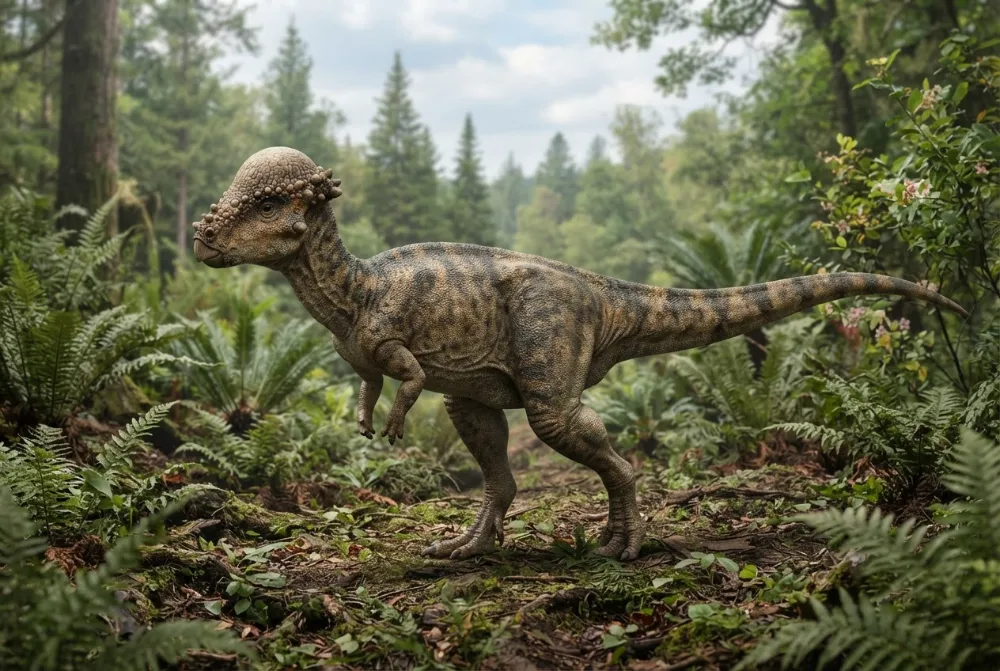
Its dome was very thick, up to 55 millimetres (about 2 inches) above the brain, which is almost half the total length of the dome.2
The dome was fully developed even though Acrotholus lived earlier than other pachycephalosaurs, showing that this feature evolved earlier than scientists thought.2
The name Acrotholus means 'highest dome' in Greek, referring to its thick skull roof.1
The species name audeti honors Roy Audet, a rancher who allowed scientists to dig on his land where the first skull was found.12
Acrotholus had a smooth dome without the bumps or grooves seen in some other pachycephalosaurs, which suggests the known fossils are from adults.2
Nsɛm a wɔbisa bebree fa Acrotholus ho
?How big was Acrotholus?
Acrotholus was a small dinosaur, weighing 40 kg (88 lb) or less. Its skull dome was about 55 mm (2.2 in) thick.12
?What did Acrotholus eat?
Acrotholus was a plant-eating dinosaur, like other pachycephalosaurs.1
?Why did Acrotholus have a dome on its head?
The dome was probably used for head-butting contests between rivals, though scientists debate exactly how they used it.1
?When did Acrotholus live?
Acrotholus lived about 84 to 83.5 million years ago, during the Late Cretaceous period.1
Atosɛm sɛefoɔ
Atosɛm: Some people think Acrotholus used its dome to butt heads like bighorn sheep.
Nokorɛ: Scientists are not sure. The dome might have been for display or for fighting, but there is no direct evidence of head-butting in Acrotholus.1
Ma dino ho animdefoɔ
- Nyansahu din
- Acrotholus
- Obi a ɔtoo din
- Evans et al. 20134
- Kuo
- Ti kurukuruwa dino
- Abusua / kuo kɛseɛ
- Pachycephalosauridae4
- Nkyekyɛmu
- Ornithischia > Pachycephalosauria4
- Abotan no mfeɛ
- mfeɛ ɔpepem 86 kɔsi 84 (Santonian)4
- Abotan nhyehyɛeɛ
- Milk River4
- Aman
- Kanada4
- Fɔsil nkyerɛwee
- 1 wɔ The Paleobiology Database mu4
- Nhunumu
- The first fossil, a nearly complete skull dome, was found on Roy Audet's ranch in Alberta, Canada, and was named by David Evans and colleagues in 2013.12
- Wɔda so gye ho akyinnye
- Scientists still debate whether the dome was used for fighting between males or for showing off to mates, since no complete skeleton has been found.1
Baabi a nsɛm no firi
- Acrotholus (en.wikipedia.org)
- The oldest North American pachycephalosaurid and the hidden diversity of small-bodied ornithischian dinosaurs | Nature Communications (nature.com)
- Study of new 'bone-head' hints at higher diversity of small dinosaurs | EurekAlert! (eurekalert.org)
- Acrotholus in The Paleobiology Database (CC BY 4.0): mfeɛ, mmeaeɛ, abotan nhyehyɛeɛ, nkyekyɛmu.
Asɛm biara a ɛwɔ krataafa yi so wɔ nɔma a ɛkyerɛ baabi a ɛfiri. Sɛ yɛfom biribi a, kafra, yɛyɛ dino dɔfoɔ, yɛnyɛ nyansahu nsɛmma krataa. Ka kyerɛ yɛn wɔ [email protected] na yɛbɛsiesie.
 Ɔkɔm de Rex! Dino Wiki yɛ agya bi adwuma a ɔyɛɛ maa ne babarima a ɔdɔ dino. Ɛyɛ kwa, dawurubɔ biara nni mu, akyidifoɔ biara nni mu. Mpanimfoɔ bɛtumi ama Rex aduane kakra, na aboa ama Dino Wiki atena intanɛt so.Ma Rex aduane
 Pachycephalosaurus
 Stegoceras
 Prenocephale
 Sphaerotholus
 Foraminacephale
 Brontotholus
 Tyrannosaurus
 Triceratops
 Velociraptor
 Spinosaurus
 Ankylosaurus
 Parasaurolophus