 Woyɛ dino bɛn? Nsɛmmisa agoro
 Dino ko
 Dino mmirikatuo
 Dino agodie nketewa
 Stika nwoma
 Dino TOP nhyehyɛeɛ
 Ma me nwanwa!
Berɛ bɛn na ɛtenaa ase?

Na ne kɛseɛ yɛ sɛn?
Na ne tenten yɛ sɛn?
Na ne korɔn yɛ sɛn?
nsusuiɛ
 ne tenten te sɛ fie agyinamoa 4 firi hwene kɔsi dua🍌ne tenten te sɛ kwadu 11 a wɔde abɔ toatoa so🏃anka ɔbɛtumi atu mmirika mita 100 wɔ sikɛn 8.8 mu (onipa a ɔyɛ ntɛm sen biara hia 9.6)
Almas kɛseɛ yɛ sɛn sɛ wode toto WO ho a?
Akontaa nko ara wɔ wo browser mu. Yɛnkora biribiara so, na yɛmmfa biribiara nkɔ baabiara.
Na ɛyɛ ntɛm sɛn?


Nsɛm a ɛyɛ anigye
Almas had a very short snout, like a puppy, which is unusual for a troodontid dinosaur.1
Its skull was only about 8 centimeters long, much smaller than other adult troodontids from the same time and place.1
Almas had a unique spike-like process on its ischium (a hip bone) that no other troodontid had.1
The third chevron (a bone under the tail) of Almas was more than three times as long as the tail vertebra above it.1
Almas lived about 75 to 71 million years ago in the Late Cretaceous, in a sandy desert.1
Its name comes from Mongolian folklore, where 'Almas' is a wild man or snowman.1
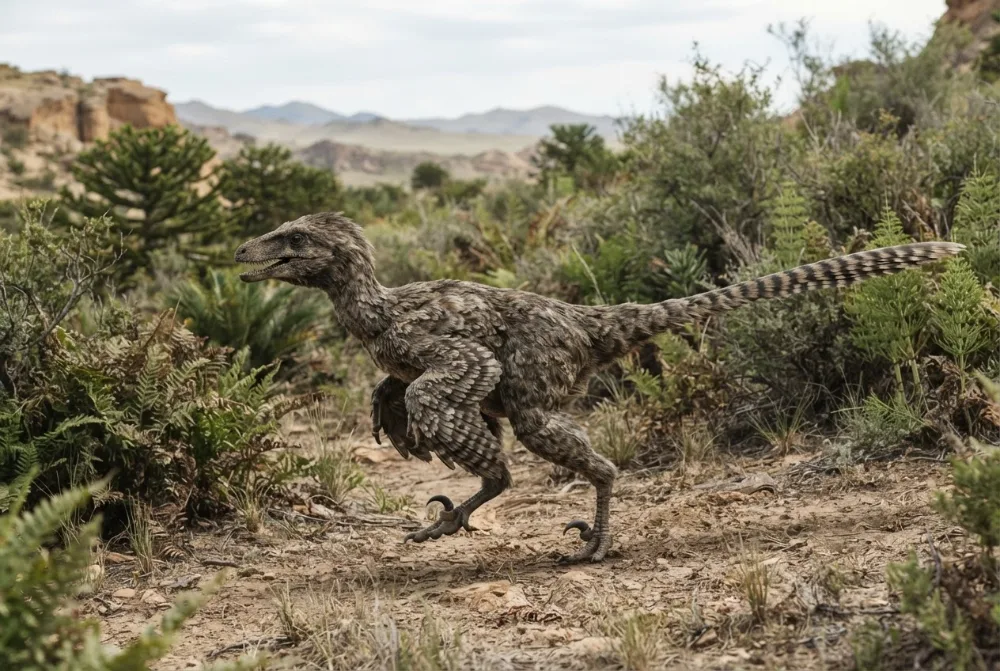
Ma dino ho animdefoɔ
- Nyansahu din
- Almas
- Obi a ɔtoo din
- Pei et al. 20172
- Kuo
- Raptɔ
- Abusua / kuo kɛseɛ
- Troodontidae2
- Nkyekyɛmu
- Theropoda > Troodontidae2
- Abotan no mfeɛ
- mfeɛ ɔpepem 84 kɔsi 72 (Campanian)2
- Abotan nhyehyɛeɛ
- Djadokhta2
- Aman
- Mongolia2
- Fɔsil nkyerɛwee
- 1 wɔ The Paleobiology Database mu2
- Nhunumu
- Almas was discovered in 1993 by a joint expedition of the American Museum of Natural History and the Mongolian Academy of Sciences at Ukhaa Tolgod, Mongolia. It was named and described by Rui Pei and colleagues in 2017.1
- Wɔda so gye ho akyinnye
- Scientists are not sure whether Almas was fully grown or a juvenile, because its bones show some adult features but it is very small.1
Baabi a nsɛm no firi
- digitallibrary.amnh.org (digitallibrary.amnh.org)
- Almas in The Paleobiology Database (CC BY 4.0): mfeɛ, mmeaeɛ, abotan nhyehyɛeɛ, nkyekyɛmu.
Asɛm biara a ɛwɔ krataafa yi so wɔ nɔma a ɛkyerɛ baabi a ɛfiri. Sɛ yɛfom biribi a, kafra, yɛyɛ dino dɔfoɔ, yɛnyɛ nyansahu nsɛmma krataa. Ka kyerɛ yɛn wɔ [email protected] na yɛbɛsiesie.
 Ɔkɔm de Rex! Dino Wiki yɛ agya bi adwuma a ɔyɛɛ maa ne babarima a ɔdɔ dino. Ɛyɛ kwa, dawurubɔ biara nni mu, akyidifoɔ biara nni mu. Mpanimfoɔ bɛtumi ama Rex aduane kakra, na aboa ama Dino Wiki atena intanɛt so.Ma Rex aduane
 Velociraptor
 Microraptor
 Deinonychus
 Asiamericana
 Richardoestesia
 Saurornitholestes
 Tyrannosaurus
 Triceratops
 Spinosaurus
 Ankylosaurus
 Parasaurolophus
 Pteranodon