 Woyɛ dino bɛn? Nsɛmmisa agoro
 Dino ko
 Dino mmirikatuo
 Dino agodie nketewa
 Stika nwoma
 Dino TOP nhyehyɛeɛ
 Ma me nwanwa!
Berɛ bɛn na ɛtenaa ase?

Na ne kɛseɛ yɛ sɛn?
Na ne tenten yɛ sɛn?
Na ne korɔn yɛ sɛn?
nsusuiɛ
Na ne mu yɛ duru sɛn?
 ne tenten te sɛ nkraman 6 firi hwene kɔsi dua🍌ne tenten te sɛ kwadu 33 a wɔde abɔ toatoa so🍉ne mu duru te sɛ watamɛlɔn 240🧸ne mu duru te sɛ nkɔkɔaa sukuu mmofra 63🎒ne mu duru te sɛ sukuu mmofra 38🐻❄️ne mu duru te sɛ polar bea 2.5🏃anka ɔbɛtumi atu mmirika mita 100 wɔ sikɛn 9.5 mu (onipa a ɔyɛ ntɛm sen biara hia 9.6)
Anchiceratops kɛseɛ yɛ sɛn sɛ wode toto WO ho a?
Akontaa nko ara wɔ wo browser mu. Yɛnkora biribiara so, na yɛmmfa biribiara nkɔ baabiara.
Na ɛyɛ ntɛm sɛn?


Nsɛm a ɛyɛ anigye
Anchiceratops is rare compared to other horned dinosaurs in the same area, and its fossils are often found near ancient marine sediments.1
The name Anchiceratops means 'near horned face' because Barnum Brown thought it was a close relative of Triceratops.1
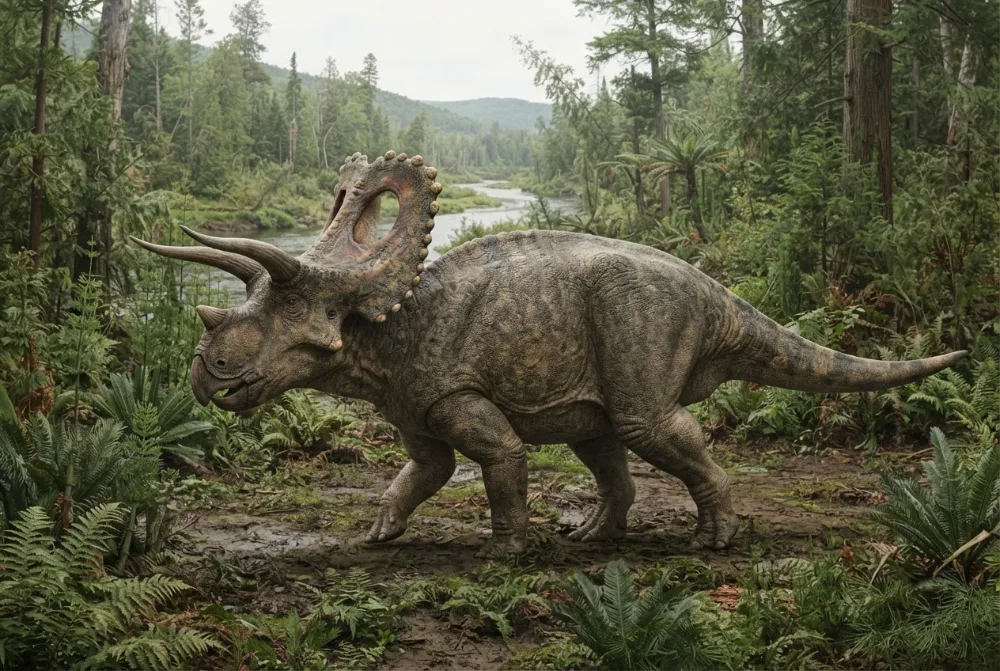
Its frill had coarse triangular projections along the edge, which is why the species name ornatus means 'ornate'.1
Anchiceratops lived in estuaries and coastal areas, where other ceratopsids did not live.1
The first fossils were found along the Red Deer River in Alberta, Canada, in 1912 by an expedition led by Barnum Brown.1
Anchiceratops shared its environment with dinosaurs like Albertosaurus, Edmontosaurus, and Pachyrhinosaurus.1
Nsɛm a wɔbisa bebree fa Anchiceratops ho
?How big was Anchiceratops?
About 4.3 metres long and weighed around 1.2 tonnes.1
?What did Anchiceratops eat?
It was a herbivore, eating plants like conifers, cycads, and ferns.1
?Could Anchiceratops swim?
Some scientists think it may have lived in swamps and estuaries like a hippopotamus, but others disagree.1
?Why did Anchiceratops have a frill?
Probably for display and to recognize other members of its species, not for defense.1
?How many horns did Anchiceratops have?
Three: two long horns above its eyes and a short horn on its nose.1
Ma dino ho animdefoɔ
- Nyansahu din
- Anchiceratops
- Obi a ɔtoo din
- Brown 19143
- Kuo
- Dino a wɔwɔ mmɛn
- Abusua / kuo kɛseɛ
- Ceratopsidae3
- Nkyekyɛmu
- Ornithischia > Ceratopsia > Ceratopsidae3
- Abotan no mfeɛ
- mfeɛ ɔpepem 84 kɔsi 66 (Campanian / Maastrichtian)3
- Abotan nhyehyɛeɛ
- Horseshoe Canyon, St. Mary River3
- Aman
- Kanada3
- Fɔsil nkyerɛwee
- 7 wɔ The Paleobiology Database mu3
- Nhunumu
- Anchiceratops was named by American paleontologist Barnum Brown in 1914. He found the first fossils in 1912 along the Red Deer River in Alberta, Canada.1
- Wɔda so gye ho akyinnye
- Scientists still debate whether some frill fragments from older rock formations belong to Anchiceratops or to a different, related species.1
Baabi a nsɛm no firi
- Anchiceratops (en.wikipedia.org)
- Anchiceratops | Natural History Museum (nhm.ac.uk)
- Anchiceratops in The Paleobiology Database (CC BY 4.0): mfeɛ, mmeaeɛ, abotan nhyehyɛeɛ, nkyekyɛmu.
Asɛm biara a ɛwɔ krataafa yi so wɔ nɔma a ɛkyerɛ baabi a ɛfiri. Sɛ yɛfom biribi a, kafra, yɛyɛ dino dɔfoɔ, yɛnyɛ nyansahu nsɛmma krataa. Ka kyerɛ yɛn wɔ [email protected] na yɛbɛsiesie.
 Ɔkɔm de Rex! Dino Wiki yɛ agya bi adwuma a ɔyɛɛ maa ne babarima a ɔdɔ dino. Ɛyɛ kwa, dawurubɔ biara nni mu, akyidifoɔ biara nni mu. Mpanimfoɔ bɛtumi ama Rex aduane kakra, na aboa ama Dino Wiki atena intanɛt so.Ma Rex aduane
 Triceratops
 Protoceratops
 Ojoceratops
 Tatankaceratops
 Psittacosaurus
 Centrosaurus
 Tyrannosaurus
 Velociraptor
 Spinosaurus
 Ankylosaurus
 Parasaurolophus
 Pteranodon