 Woyɛ dino bɛn? Nsɛmmisa agoro
 Dino ko
 Dino mmirikatuo
 Dino agodie nketewa
 Stika nwoma
 Dino TOP nhyehyɛeɛ
 Ma me nwanwa!
Antarctopelta
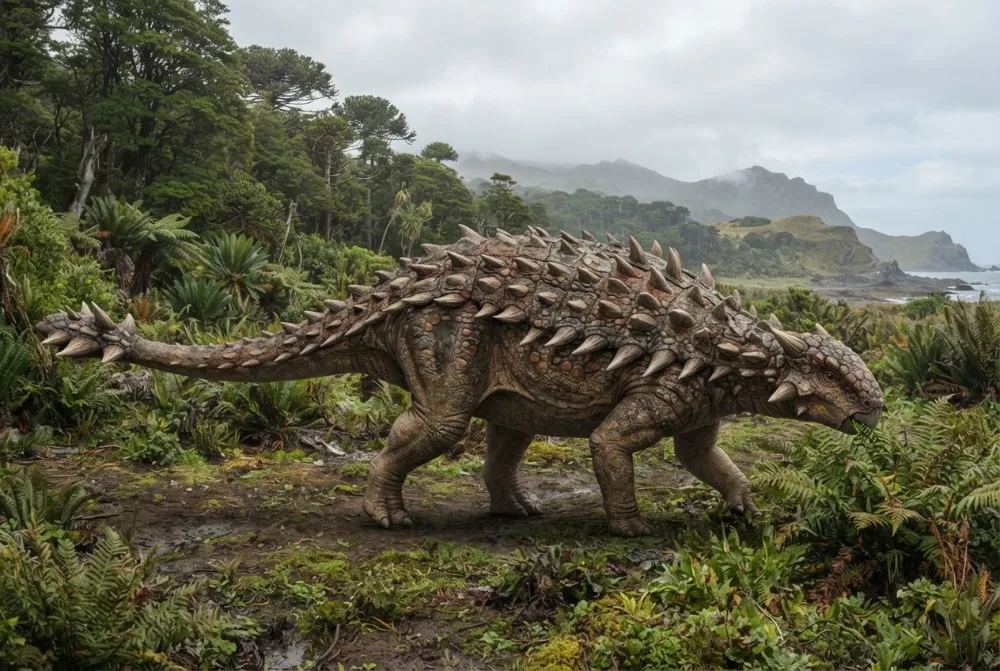
Antarctopelta was an armoured dinosaur that lived in Antarctica during the Late Cretaceous. It was covered in bony plates and spikes, and its tail ended in a weapon made of fused spikes that looked like an Aztec club. It was a slow-moving plant-eater that used its armour for protection.1
Berɛ bɛn na ɛtenaa ase?
Na ne kɛseɛ yɛ sɛn?
Na ne tenten yɛ sɛn?
Na ne korɔn yɛ sɛn?
nsusuiɛ
Na ne mu yɛ duru sɛn?
 ne tenten te sɛ nkraman 6 firi hwene kɔsi dua🍌ne tenten te sɛ kwadu 33 a wɔde abɔ toatoa so🍉ne mu duru te sɛ watamɛlɔn 70🧸ne mu duru te sɛ nkɔkɔaa sukuu mmofra 18🎒ne mu duru te sɛ sukuu mmofra 11🏃anka ɔbɛtumi atu mmirika mita 100 wɔ sikɛn 16 mu (onipa a ɔyɛ ntɛm sen biara hia 9.6)
Antarctopelta kɛseɛ yɛ sɛn sɛ wode toto WO ho a?
Akontaa nko ara wɔ wo browser mu. Yɛnkora biribiara so, na yɛmmfa biribiara nkɔ baabiara.
Na ɛyɛ ntɛm sɛn?


Nsɛm a ɛyɛ anigye
Antarctopelta was the first dinosaur fossil ever named from Antarctica, even though it was discovered before another Antarctic dinosaur called Cryolophosaurus.1
Its tail had a special weapon called a macuahuitl, made of flat, spiky bones fused together. It looked like an Aztec club and was used for defence.1
Scientists found six different types of armour plates on Antarctopelta, including large flat ones and tall keeled spikes.1
Antarctopelta lived in a warm, ice-free Antarctica with dense forests of conifers, cycads, and ginkgos. It still had to survive long dark winters.1
The only known skeleton was discovered in 1986 by Argentine geologists Eduardo Olivero and Robert Scasso, but it took ten years to dig out because of frozen ground and bad weather.1
Antarctopelta shared its home with the small plant-eater Trinisaura, as well as marine reptiles like mosasaurs and plesiosaurs.1
Nsɛm a wɔbisa bebree fa Antarctopelta ho
?How big was Antarctopelta?
About 4 meters (13 feet) long from snout to tail tip. One scientist estimated it could have been up to 6 meters (20 feet) long and weighed 350 kilograms (770 pounds).1
?What did Antarctopelta eat?
It was a plant-eater. Its jaws had small, leaf-shaped teeth for chewing plants.1
?Did Antarctopelta have feathers?
No. It was an armoured dinosaur covered in bony plates and spikes, not feathers.1
?When did Antarctopelta live?
It lived during the late Campanian stage of the Late Cretaceous period, about 73.4 million years ago.1
?Was Antarctopelta a dinosaur?
Yes, it was a type of armoured dinosaur called an ankylosaur.1
?Could Antarctopelta swim?
Scientists are not sure, but its body was stocky and built for walking on land, not swimming. Its fossils were found with a shark tooth, suggesting it may have floated out to sea after death.1
Atosɛm sɛefoɔ
Atosɛm: Some people think Antarctopelta had a tail club like a typical ankylosaur.
Nokorɛ: Antarctopelta actually had a macuahuitl, a flat fan of spikes at the end of its tail, not a round club.1
Ma dino ho animdefoɔ
- Nyansahu din
- Antarctopelta
- Obi a ɔtoo din
- Salgado and Gasparini 20062
- Kuo
- Dino a wɔwɔ akyɛm
- Abusua / kuo kɛseɛ
- Parankylosauria2
- Nkyekyɛmu
- Ornithischia > Ankylosauria > Thyreophora2
- Abotan no mfeɛ
- mfeɛ ɔpepem 84 kɔsi 72 (Campanian)2
- Abotan nhyehyɛeɛ
- Snow Hill Island2
- Aman
- Antaatika2
- Fɔsil nkyerɛwee
- 1 wɔ The Paleobiology Database mu2
- Nhunumu
- Antarctopelta was discovered in January 1986 by Argentine geologists Eduardo Olivero and Robert Scasso on James Ross Island, Antarctica. It was named in 2006 by paleontologists Leonardo Salgado and Zulma Gasparini, who called it Antarctopelta oliveroi after Olivero.1
- Wɔda so gye ho akyinnye
- Scientists are still debating whether Antarctopelta was more closely related to nodosaurids or ankylosaurids, because it has features of both groups.1
Baabi a nsɛm no firi
- Antarctopelta (en.wikipedia.org)
- Antarctopelta in The Paleobiology Database (CC BY 4.0): mfeɛ, mmeaeɛ, abotan nhyehyɛeɛ, nkyekyɛmu.
Asɛm biara a ɛwɔ krataafa yi so wɔ nɔma a ɛkyerɛ baabi a ɛfiri. Sɛ yɛfom biribi a, kafra, yɛyɛ dino dɔfoɔ, yɛnyɛ nyansahu nsɛmma krataa. Ka kyerɛ yɛn wɔ [email protected] na yɛbɛsiesie.
 Ɔkɔm de Rex! Dino Wiki yɛ agya bi adwuma a ɔyɛɛ maa ne babarima a ɔdɔ dino. Ɛyɛ kwa, dawurubɔ biara nni mu, akyidifoɔ biara nni mu. Mpanimfoɔ bɛtumi ama Rex aduane kakra, na aboa ama Dino Wiki atena intanɛt so.Ma Rex aduane
 Ankylosaurus
 Sauropelta
 Pinacosaurus
 Scutellosaurus
 Struthiosaurus
 Euoplocephalus
 Tyrannosaurus
 Triceratops
 Velociraptor
 Spinosaurus
 Parasaurolophus
 Pteranodon