 Woyɛ dino bɛn? Nsɛmmisa agoro
 Dino ko
 Dino mmirikatuo
 Dino agodie nketewa
 Stika nwoma
 Dino TOP nhyehyɛeɛ
 Ma me nwanwa!
Berɛ bɛn na ɛtenaa ase?

Na ne kɛseɛ yɛ sɛn?
Na ne tenten yɛ sɛn?
Na ne korɔn yɛ sɛn?
Na ne mu yɛ duru sɛn?
 ne tenten te sɛ nkraman 6 firi hwene kɔsi dua🍌ne tenten te sɛ kwadu 33 a wɔde abɔ toatoa so🍉ne mu duru te sɛ watamɛlɔn 260🧸ne mu duru te sɛ nkɔkɔaa sukuu mmofra 68🎒ne mu duru te sɛ sukuu mmofra 41🐻❄️ne mu duru te sɛ polar bea 3🏃anka ɔbɛtumi atu mmirika mita 100 wɔ sikɛn 9.7 mu (onipa a ɔyɛ ntɛm sen biara hia 9.6)
Arrhinoceratops kɛseɛ yɛ sɛn sɛ wode toto WO ho a?
Akontaa nko ara wɔ wo browser mu. Yɛnkora biribiara so, na yɛmmfa biribiara nkɔ baabiara.
Na ɛyɛ ntɛm sɛn?


Nsɛm a ɛyɛ anigye
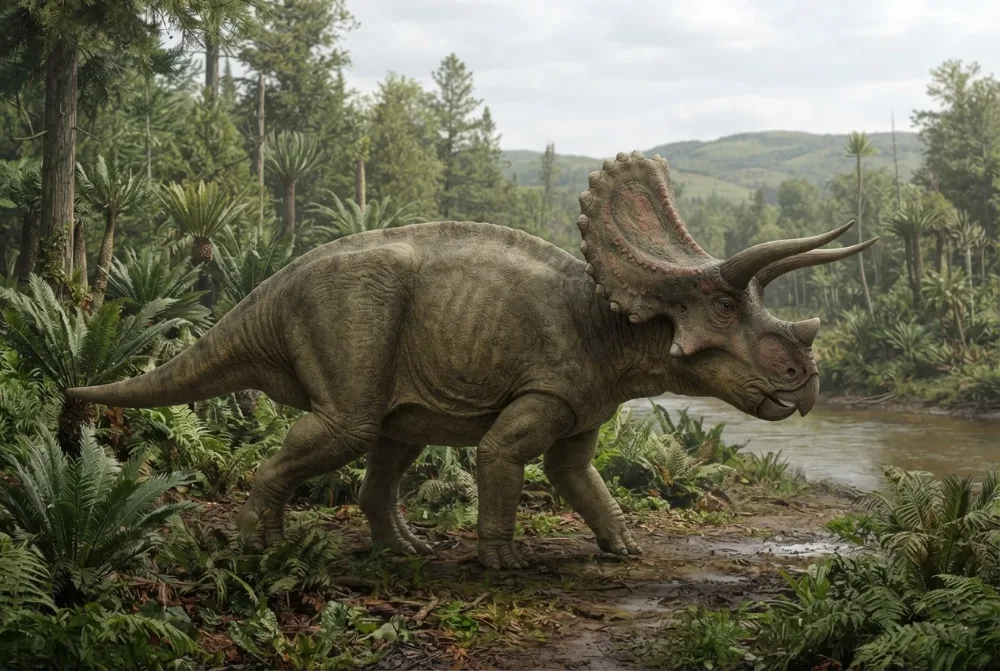
Arrhinoceratops lived a few million years before its famous relative Triceratops.1
The name 'Arrhinoceratops' means 'no nose-horn face', but scientists later realized it actually did have a nose horn, just a short one.1
Only one complete skull of Arrhinoceratops has been found, so scientists do not know much about the rest of its body.12
Its skull had a broad, square frill with two oval openings and a scalloped rear edge.1
The frill of Arrhinoceratops was decorated with about nine bony bumps called osteoderms along the sides.1
Arrhinoceratops lived in a wet coastal environment with warm summers and cool winters, and may have been hunted by the tyrannosaur Albertosaurus.1
The first Arrhinoceratops skull was found by a University of Toronto expedition in 1923 along the Red Deer River in Alberta.1
Nsɛm a wɔbisa bebree fa Arrhinoceratops ho
?How big was Arrhinoceratops?
Estimates vary. Some popular science books estimate it was about 6 metres (20 ft) long, while Gregory S. Paul estimated 4.5 metres (15 ft) and 1.3 tonnes (2,900 lb).12
?What did Arrhinoceratops eat?
Arrhinoceratops was a herbivore. It likely ate ferns, cycads and conifers, using its sharp beak to bite off leaves or needles.1
?When did Arrhinoceratops live?
It lived during the Late Cretaceous, about 72 to 67 million years ago, a few million years before Triceratops.21
?Where was Arrhinoceratops found?
Its remains have been found in Canada, specifically along the Red Deer River in Alberta.12
?Did Arrhinoceratops have a nose horn?
Yes, it did have a nose horn, but it was short and blunt. The name 'no nose-horn face' was based on a misunderstanding.1
Atosɛm sɛefoɔ
Atosɛm: Arrhinoceratops had no nose horn at all.
Nokorɛ: It actually had a short, blunt nose horn, like many other horned dinosaurs.1
Ma dino ho animdefoɔ
- Nyansahu din
- Arrhinoceratops
- Obi a ɔtoo din
- Parks 19254
- Kuo
- Dino a wɔwɔ mmɛn
- Abusua / kuo kɛseɛ
- Ceratopsidae4
- Nkyekyɛmu
- Ornithischia > Ceratopsia > Ceratopsidae4
- Abotan no mfeɛ
- mfeɛ ɔpepem 84 kɔsi 66 (Campanian / Maastrichtian)4
- Abotan nhyehyɛeɛ
- Horseshoe Canyon4
- Aman
- Kanada4
- Fɔsil nkyerɛwee
- 3 wɔ The Paleobiology Database mu4
- Nhunumu
- William Arthur Parks named Arrhinoceratops in 1925 based on a skull found in Alberta, Canada, by a University of Toronto expedition in 1923.14
- Wɔda so gye ho akyinnye
- Scientists are not sure exactly how Arrhinoceratops is related to other horned dinosaurs like Torosaurus and Anchiceratops.1
Baabi a nsɛm no firi
- Arrhinoceratops (en.wikipedia.org)
- Arrhinoceratops | Natural History Museum (nhm.ac.uk)
- Arrhinoceratops | Part of the Ceratopsian Family of Dinosaurs (dinosaurmadness.com)
- Arrhinoceratops in The Paleobiology Database (CC BY 4.0): mfeɛ, mmeaeɛ, abotan nhyehyɛeɛ, nkyekyɛmu.
Asɛm biara a ɛwɔ krataafa yi so wɔ nɔma a ɛkyerɛ baabi a ɛfiri. Sɛ yɛfom biribi a, kafra, yɛyɛ dino dɔfoɔ, yɛnyɛ nyansahu nsɛmma krataa. Ka kyerɛ yɛn wɔ [email protected] na yɛbɛsiesie.
 Ɔkɔm de Rex! Dino Wiki yɛ agya bi adwuma a ɔyɛɛ maa ne babarima a ɔdɔ dino. Ɛyɛ kwa, dawurubɔ biara nni mu, akyidifoɔ biara nni mu. Mpanimfoɔ bɛtumi ama Rex aduane kakra, na aboa ama Dino Wiki atena intanɛt so.Ma Rex aduane
 Triceratops
 Protoceratops
 Ojoceratops
 Tatankaceratops
 Psittacosaurus
 Centrosaurus
 Tyrannosaurus
 Velociraptor
 Spinosaurus
 Ankylosaurus
 Parasaurolophus
 Pteranodon