 Woyɛ dino bɛn? Nsɛmmisa agoro
 Dino ko
 Dino mmirikatuo
 Dino agodie nketewa
 Stika nwoma
 Dino TOP nhyehyɛeɛ
 Ma me nwanwa!
Bonapartesaurus
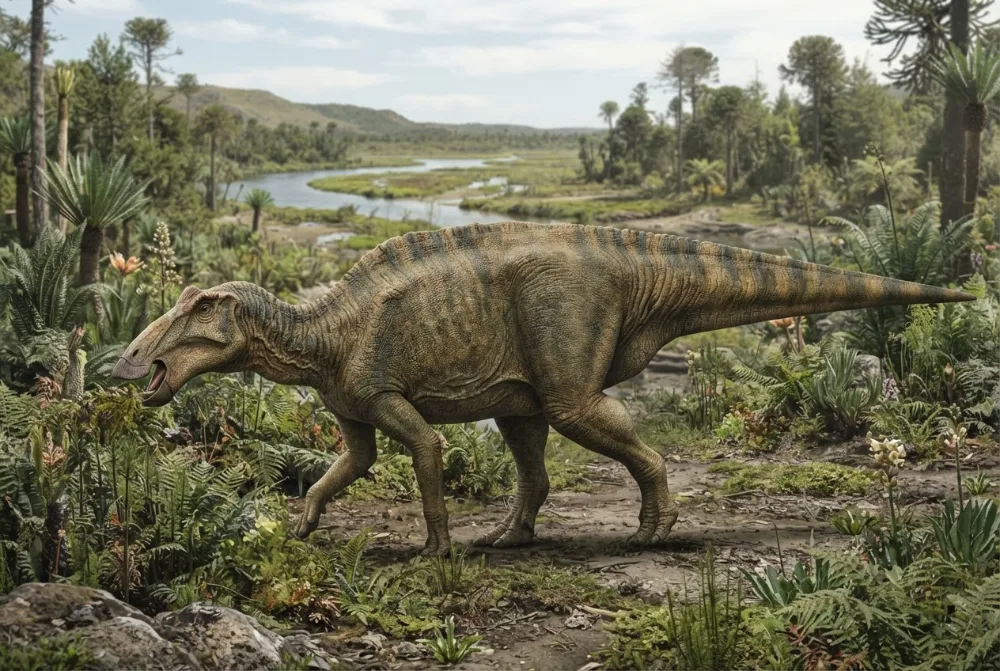
Bonapartesaurus was a duck-billed dinosaur that lived in what is now Argentina, about 72 to 66 million years ago. It walked on two legs or all fours and used its wide, toothless beak to snip off plants. This dinosaur was a hadrosaur, a group known for their amazing teeth that could grind up tough leaves.41
Berɛ bɛn na ɛtenaa ase?
Na ne kɛseɛ yɛ sɛn?
Na ne tenten yɛ sɛn?
Na ne korɔn yɛ sɛn?
nsusuiɛ
Na ne mu yɛ duru sɛn?

 ne tenten te sɛ nkraman 7 firi hwene kɔsi dua🍌ne tenten te sɛ kwadu 38 a wɔde abɔ toatoa sone mu duru te sɛ nkraman 92🍉ne mu duru te sɛ watamɛlɔn 370🧸ne mu duru te sɛ nkɔkɔaa sukuu mmofra 97🎒ne mu duru te sɛ sukuu mmofra 58🐻❄️ne mu duru te sɛ polar bea 4🏃anka ɔbɛtumi atu mmirika mita 100 wɔ sikɛn 13 mu (onipa a ɔyɛ ntɛm sen biara hia 9.6)
Bonapartesaurus kɛseɛ yɛ sɛn sɛ wode toto WO ho a?
Akontaa nko ara wɔ wo browser mu. Yɛnkora biribiara so, na yɛmmfa biribiara nkɔ baabiara.
Na ɛyɛ ntɛm sɛn?


Nsɛm a ɛyɛ anigye
Bonapartesaurus had very long neural spines on its tail vertebrae, up to four times the height of the backbone center. This may have supported a tall tail fin or sail.2
Its name honors José Bonaparte, a famous Argentine paleontologist who discovered many South American dinosaurs.1
The only known skeleton is a partial, articulated specimen that includes parts of the spine, hips, legs, and feet.1
Bonapartesaurus belongs to the group Saurolophini, which includes duck-billed dinosaurs like Saurolophus and Prosaurolophus.42
Scientists think Bonapartesaurus or its ancestors migrated from North America to South America during the Late Cretaceous.2
Nsɛm a wɔbisa bebree fa Bonapartesaurus ho
?How big was Bonapartesaurus?
No exact size is given in the sources, but it was a medium-sized hadrosaur, probably around 6 to 8 metres long based on related duck-billed dinosaurs.12
?What did Bonapartesaurus eat?
It was a herbivore that ate plants. It used its wide, toothless beak to snip off leaves and branches, and its cheek teeth ground up tough plant material.1
Ma dino ho animdefoɔ
- Nyansahu din
- Bonapartesaurus
- Obi a ɔtoo din
- Cruzado-Caballero and Powell 20174
- Kuo
- Dabodabo ano dino
- Abusua / kuo kɛseɛ
- Hadrosauridae4
- Nkyekyɛmu
- Ornithischia > Ornithopoda > Iguanodontia > Hadrosauridae4
- Abotan no mfeɛ
- mfeɛ ɔpepem 72 kɔsi 66 (Maastrichtian)4
- Abotan nhyehyɛeɛ
- Allen4
- Aman
- Argentina4
- Fɔsil nkyerɛwee
- 1 wɔ The Paleobiology Database mu4
- Nhunumu
- The fossils were first dug up in 1984 by paleontologist Jaime Powell and his team. In 2017, scientists Cruzado-Caballero and Powell named the new genus Bonapartesaurus after studying the bones.14
- Wɔda so gye ho akyinnye
- Scientists are not sure exactly how Bonapartesaurus is related to other duck-billed dinosaurs, because its skeleton is incomplete.2
Baabi a nsɛm no firi
- Bonapartesaurus (en.wikipedia.org)
- Bonapartesaurus rionegrensis, a new hadrosaurine dinosaur from South America: implications for phylogenetic and biogeographic relations with North America (rid.unrn.edu.ar)
- Bonapartesaurus rionegrensis | Dinosaur Database by DinoAnimals.com (dinoanimals.com)
- Bonapartesaurus in The Paleobiology Database (CC BY 4.0): mfeɛ, mmeaeɛ, abotan nhyehyɛeɛ, nkyekyɛmu.
Asɛm biara a ɛwɔ krataafa yi so wɔ nɔma a ɛkyerɛ baabi a ɛfiri. Sɛ yɛfom biribi a, kafra, yɛyɛ dino dɔfoɔ, yɛnyɛ nyansahu nsɛmma krataa. Ka kyerɛ yɛn wɔ [email protected] na yɛbɛsiesie.
 Ɔkɔm de Rex! Dino Wiki yɛ agya bi adwuma a ɔyɛɛ maa ne babarima a ɔdɔ dino. Ɛyɛ kwa, dawurubɔ biara nni mu, akyidifoɔ biara nni mu. Mpanimfoɔ bɛtumi ama Rex aduane kakra, na aboa ama Dino Wiki atena intanɛt so.Ma Rex aduane
 Parasaurolophus
 Edmontosaurus
 Saurolophus
 Hypacrosaurus
 Corythosaurus
 Kritosaurus
 Tyrannosaurus
 Triceratops
 Velociraptor
 Spinosaurus
 Ankylosaurus
 Pteranodon