 Woyɛ dino bɛn? Nsɛmmisa agoro
 Dino ko
 Dino mmirikatuo
 Dino agodie nketewa
 Stika nwoma
 Dino TOP nhyehyɛeɛ
 Ma me nwanwa!
Berɛ bɛn na ɛtenaa ase?

Na ne kɛseɛ yɛ sɛn?
Na ne tenten yɛ sɛn?
Na ne korɔn yɛ sɛn?
Na ne mu yɛ duru sɛn?
 ne tenten te sɛ fie agyinamoa 4 firi hwene kɔsi dua🍌ne tenten te sɛ kwadu 11 a wɔde abɔ toatoa so🍉ne mu duru te sɛ watamɛlɔn 4🏃anka ɔbɛtumi atu mmirika mita 100 wɔ sikɛn 10 mu (onipa a ɔyɛ ntɛm sen biara hia 9.6)
Byronosaurus kɛseɛ yɛ sɛn sɛ wode toto WO ho a?
Akontaa nko ara wɔ wo browser mu. Yɛnkora biribiara so, na yɛmmfa biribiara nkɔ baabiara.
Na ɛyɛ ntɛm sɛn?


Nsɛm a ɛyɛ anigye
Byronosaurus had a large brain for its size, making it one of the smartest non-bird dinosaurs.1
Its eyes faced forward, so it could judge distances well, which helped it hunt.2
Two baby Byronosaurus skulls were found inside a nest of oviraptorid eggs, probably as leftovers from a predator.1
Unlike other troodontids, Byronosaurus had smooth teeth without serrations, like its close relative Xixiasaurus.1
The first Byronosaurus fossils were discovered in 1993 by an American Museum of Natural History expedition to the Gobi Desert.1
Byronosaurus lived during the Late Cretaceous, about 80 to 71 million years ago.1
Its bones were mixed with bones of other animals when found, and scientists had to carefully sort them out.2
Nsɛm a wɔbisa bebree fa Byronosaurus ho
?How big was Byronosaurus?
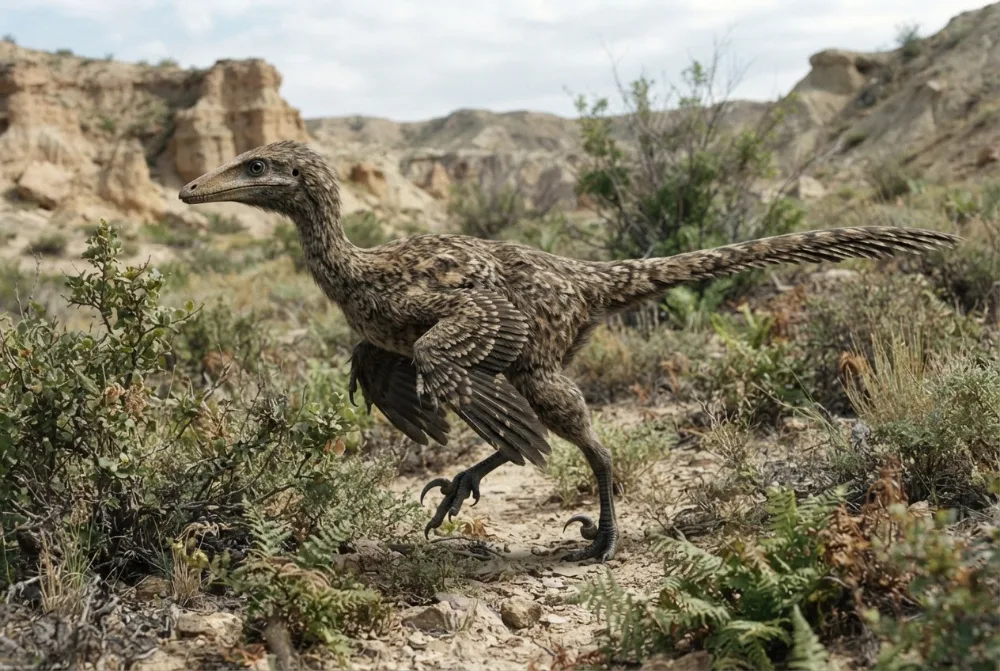
Byronosaurus was a small dinosaur, about 1.5 to 2 metres (5 to 6.6 feet) long and 50 cm (20 inches) tall. It weighed only about 4 to 20 kg (9 to 44 pounds), about the size of a large bird.12
?What did Byronosaurus eat?
Scientists are not sure. Some think it ate meat, others think it may have eaten plants or both. Its smooth teeth without serrations suggest it may have had a different diet from other troodontids.1
?When did Byronosaurus live?
Byronosaurus lived during the Late Cretaceous Period, about 80 to 71 million years ago. Its fossils were found in Mongolia.12
?Was Byronosaurus a dinosaur?
Yes, Byronosaurus was a small theropod dinosaur, specifically a troodontid. It was not a bird, but it was closely related to birds.1
Atosɛm sɛefoɔ
Atosɛm: Some people think all troodontids were meat-eaters with serrated teeth.
Nokorɛ: Byronosaurus had smooth teeth without serrations, so it may have been an omnivore or herbivore, not a pure carnivore.1
Ma dino ho animdefoɔ
- Nyansahu din
- Byronosaurus
- Obi a ɔtoo din
- Norell et al. 20003
- Kuo
- Raptɔ
- Abusua / kuo kɛseɛ
- Troodontidae3
- Nkyekyɛmu
- Theropoda > Troodontidae3
- Abotan no mfeɛ
- mfeɛ ɔpepem 84 kɔsi 72 (Campanian)3
- Abotan nhyehyɛeɛ
- Djadokhta3
- Aman
- Mongolia3
- Fɔsil nkyerɛwee
- 3 wɔ The Paleobiology Database mu3
- Nhunumu
- Byronosaurus was named in 2000 by Mark Norell, Peter Makovicky, and James Clark. The first skeleton was found in 1993 at Ukhaa Tolgod, Mongolia, and a second skull was found in 1996 at Bolor's Hill.1
- Wɔda so gye ho akyinnye
- Scientists are not sure what Byronosaurus ate. Its smooth teeth suggest it might have been an omnivore or herbivore, but some experts think it was still a carnivore.1
Baabi a nsɛm no firi
- Byronosaurus (en.wikipedia.org)
- Byronosaurus jaffei | AMNH (amnh.org)
- Byronosaurus in The Paleobiology Database (CC BY 4.0): mfeɛ, mmeaeɛ, abotan nhyehyɛeɛ, nkyekyɛmu.
Asɛm biara a ɛwɔ krataafa yi so wɔ nɔma a ɛkyerɛ baabi a ɛfiri. Sɛ yɛfom biribi a, kafra, yɛyɛ dino dɔfoɔ, yɛnyɛ nyansahu nsɛmma krataa. Ka kyerɛ yɛn wɔ [email protected] na yɛbɛsiesie.
 Ɔkɔm de Rex! Dino Wiki yɛ agya bi adwuma a ɔyɛɛ maa ne babarima a ɔdɔ dino. Ɛyɛ kwa, dawurubɔ biara nni mu, akyidifoɔ biara nni mu. Mpanimfoɔ bɛtumi ama Rex aduane kakra, na aboa ama Dino Wiki atena intanɛt so.Ma Rex aduane
 Velociraptor
 Microraptor
 Deinonychus
 Asiamericana
 Richardoestesia
 Saurornitholestes
 Tyrannosaurus
 Triceratops
 Spinosaurus
 Ankylosaurus
 Parasaurolophus
 Pteranodon