 Woyɛ dino bɛn? Nsɛmmisa agoro
 Dino ko
 Dino mmirikatuo
 Dino agodie nketewa
 Stika nwoma
 Dino TOP nhyehyɛeɛ
 Ma me nwanwa!
Berɛ bɛn na ɛtenaa ase?

Na ne kɛseɛ yɛ sɛn?
Na ne tenten yɛ sɛn?
Na ne korɔn yɛ sɛn?
Na ne mu yɛ duru sɛn?

 ne tenten te sɛ nkraman 3 firi hwene kɔsi dua🍌ne tenten te sɛ kwadu 17 a wɔde abɔ toatoa so🍉ne mu duru te sɛ watamɛlɔn 5🏃anka ɔbɛtumi atu mmirika mita 100 wɔ sikɛn 8.4 mu (onipa a ɔyɛ ntɛm sen biara hia 9.6)
Coelophysis kɛseɛ yɛ sɛn sɛ wode toto WO ho a?
Akontaa nko ara wɔ wo browser mu. Yɛnkora biribiara so, na yɛmmfa biribiara nkɔ baabiara.
Na ɛyɛ ntɛm sɛn?


Nsɛm a ɛyɛ anigye
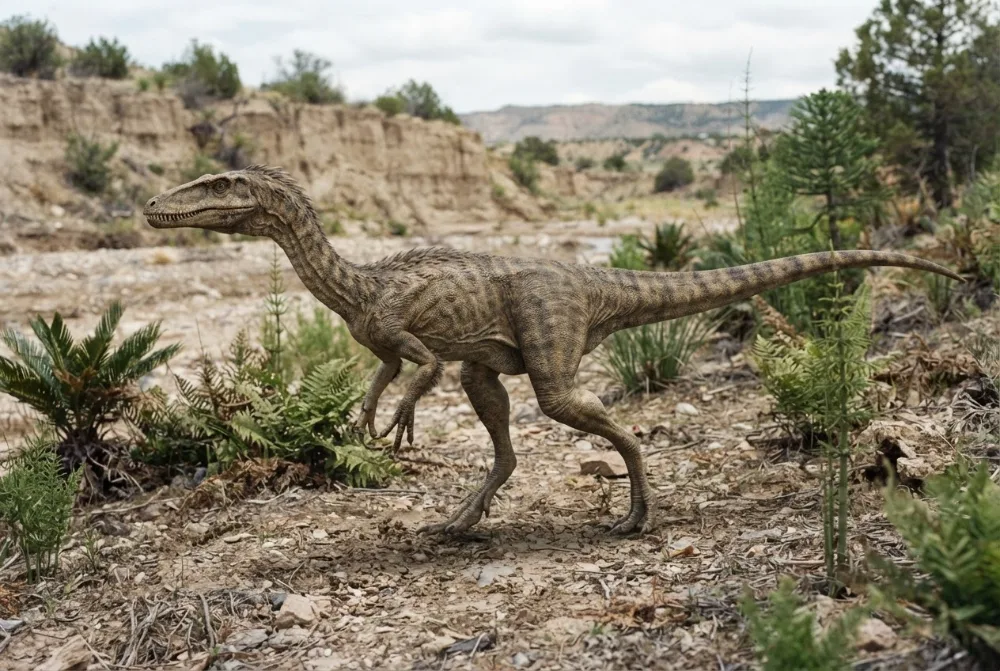
Coelophysis is one of the earliest known dinosaur genera, living about 215 to 201 million years ago.1
A huge pile of hundreds of Coelophysis skeletons was found at Ghost Ranch in New Mexico in 1947.2
Coelophysis had about 26 teeth in its upper jaw and 27 in its lower jaw.1
Its arms were flexible but weak, so it probably hunted animals much smaller than itself.1
Coelophysis was very light, weighing only about as much as a big dog.2
Some scientists once thought Coelophysis was the same as another dinosaur called Rioarribasaurus, but now most agree they are different.1
Nsɛm a wɔbisa bebree fa Coelophysis ho
?How big was Coelophysis?
Coelophysis was small, growing up to about 3 metres (9.8 feet) long. It weighed only about 18 to 23 kg (40 to 50 pounds).12
?What did Coelophysis eat?
Coelophysis was a carnivore, meaning it ate meat. It probably hunted small, fast animals like lizards and early mammal relatives.12
?When did Coelophysis live?
Coelophysis lived during the Late Triassic period, about 215 to 201 million years ago.1
?Where was Coelophysis found?
Coelophysis fossils have been found in the southwestern United States, especially in New Mexico. Similar animals have been found in South Africa and Zimbabwe.13
?How fast could Coelophysis run?
Maybe up to about 43 km/h (27 mph), faster than a fast human runner. This is an estimate from its size. It had long legs and a light body, made for running.13
?Why is Coelophysis called Coelophysis?
The name Coelophysis means 'hollow form', because its limb bones were hollow. This made its body light and helped it be a swift hunter.3
?Did Coelophysis have feathers?
Scientists don't know for sure if Coelophysis had feathers. No feathers have been found with its fossils, but some related dinosaurs may have had them.1
?Was Coelophysis bigger than a human?
Coelophysis was about 3 metres (9.8 feet) long, which is longer than a human is tall, but it was very light, weighing only about 18 to 23 kg (40 to 50 pounds).12
?Could Coelophysis swim?
There is no evidence that Coelophysis could swim. It was a land-dwelling dinosaur that ran on two legs.1
Atosɛm sɛefoɔ
Atosɛm: Coelophysis swallowed its young whole.
Nokorɛ: A fossil once thought to show a baby Coelophysis inside an adult is actually a different reptile or a mistake. There is no proof it ate its own young.1
Ma dino ho animdefoɔ
- Nyansahu din
- Coelophysis
- Obi a ɔtoo din
- Cope 18894
- Kuo
- Dino a wɔwe nam
- Abusua / kuo kɛseɛ
- Coelophysidae4
- Nkyekyɛmu
- Theropoda > Coelophysoidea4
- Abotan no mfeɛ
- mfeɛ ɔpepem 227 kɔsi 193 (Norian / Sinemurian)4
- Abotan nhyehyɛeɛ
- Chinle, Petrified Forest, Tecovas4
- Aman
- Amerika4
- Fɔsil nkyerɛwee
- 26 wɔ The Paleobiology Database mu4
- Wɔsan frɛ no
- Rioarribasaurus (din dada no nso, yɛkan no sɛ aboa korɔ no ara)4
- Nhunumu
- Edward Drinker Cope named Coelophysis in 1889, based on bones collected by David Baldwin in 1881 from New Mexico, USA.14
- Wɔda so gye ho akyinnye
- Scientists still debate whether some fossils from other parts of the world belong to Coelophysis or to similar dinosaurs.1
Baabi a nsɛm no firi
- Coelophysis (en.wikipedia.org)
- Coelophysis | Triassic, Carnivore, Reptile | Britannica (britannica.com)
- Coelophysis | Natural History Museum (nhm.ac.uk)
- Coelophysis in The Paleobiology Database (CC BY 4.0): mfeɛ, mmeaeɛ, abotan nhyehyɛeɛ, nkyekyɛmu.
Asɛm biara a ɛwɔ krataafa yi so wɔ nɔma a ɛkyerɛ baabi a ɛfiri. Sɛ yɛfom biribi a, kafra, yɛyɛ dino dɔfoɔ, yɛnyɛ nyansahu nsɛmma krataa. Ka kyerɛ yɛn wɔ [email protected] na yɛbɛsiesie.
 Ɔkɔm de Rex! Dino Wiki yɛ agya bi adwuma a ɔyɛɛ maa ne babarima a ɔdɔ dino. Ɛyɛ kwa, dawurubɔ biara nni mu, akyidifoɔ biara nni mu. Mpanimfoɔ bɛtumi ama Rex aduane kakra, na aboa ama Dino Wiki atena intanɛt so.Ma Rex aduane
 Allosaurus
 Carnotaurus
 Dilophosaurus
 Giganotosaurus
 Compsognathus
 Paronychodon
 Nothosaurus
 Massospondylus
 Plateosaurus
 Simosaurus
 Thecodontosaurus
 Eudimorphodon